
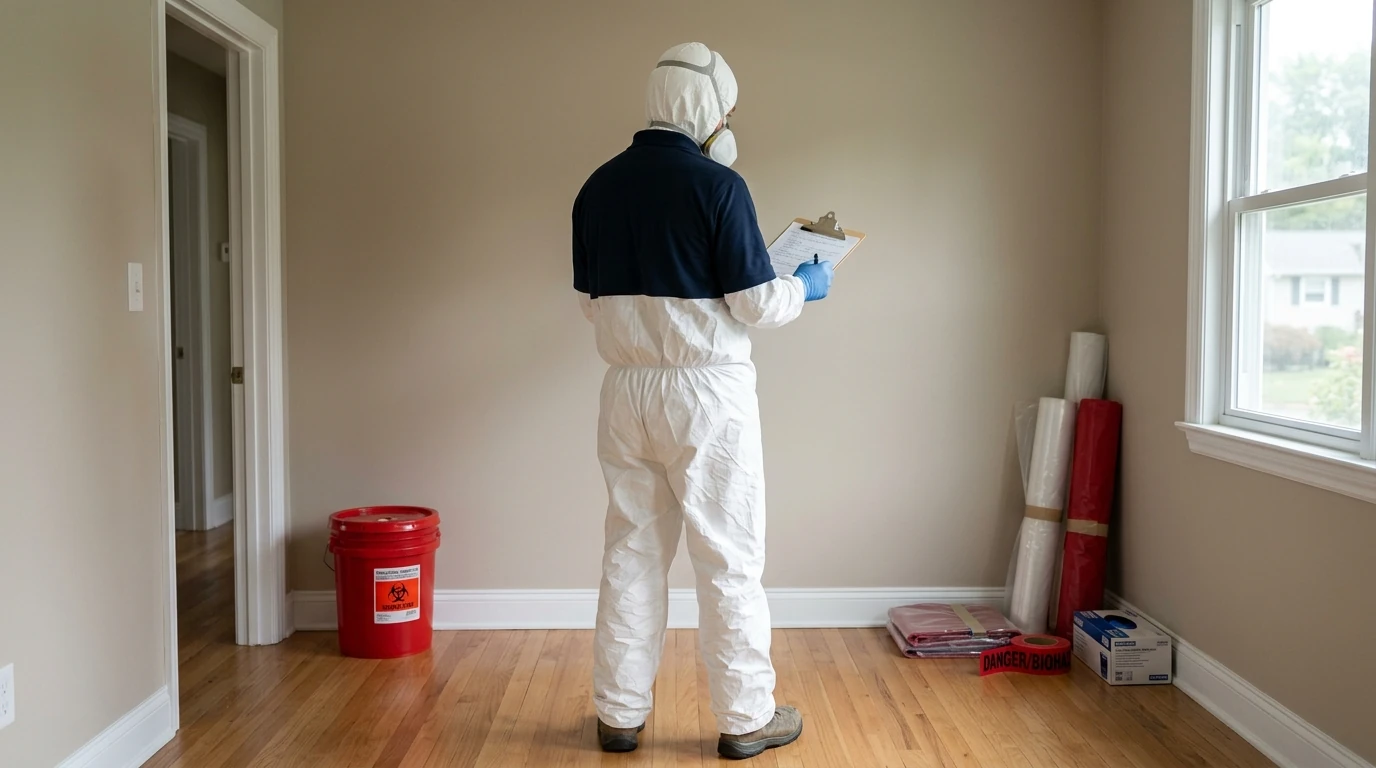
TL;DR: Biohazard cleanup in Fair Lawn, NJ typically costs between $500 for a small, contained spill and $12,000 or more for an unattended death with advanced decomposition or a larger contaminated area. Most residential jobs fall between $1,500 and $5,000. The price moves on square footage, how many porous materials (carpet, drywall, subfloor) have to be removed, how much time passed before cleanup started, and biohazard waste disposal and clearance testing fees.
If you are pricing out biohazard cleanup in Fair Lawn before you call anyone, you are likely doing this during one of the hardest weeks a family or property owner can face. The cost is harder to predict than, say, a basement flood, because the number depends less on the address and more on what the scene actually needs: how much area is contaminated, how many surfaces have to be removed instead of disinfected, and how quickly cleanup starts. Here is what typically drives the price, what the work actually involves, and what to ask for in a written scope before anyone begins.
How much does biohazard cleanup cost in New Jersey?
Biohazard cleanup in New Jersey typically runs from about $500 for a small, single-surface spill to $12,000 or more for an unattended death with significant decomposition or a job spanning multiple rooms. Most residential calls land between $1,500 and $5,000.
The ranges below are typical industry figures for this type of work, not a quote. Every scene is different, and a reputable company gives you a written scope before work begins.
| Scenario | Typical Cost Range |
|---|---|
| Small biohazard spill, single surface | $500 - $1,500 |
| Sharps or needle cleanup | $300 - $900 |
| Crime scene cleanup, single room | $1,500 - $4,500 |
| Unattended death, single room, discovered quickly | $1,500 - $5,000 |
| Unattended death with advanced decomposition | $3,500 - $12,000+ |
| Larger-scale or multi-room contamination | $5,000 - $20,000+ |
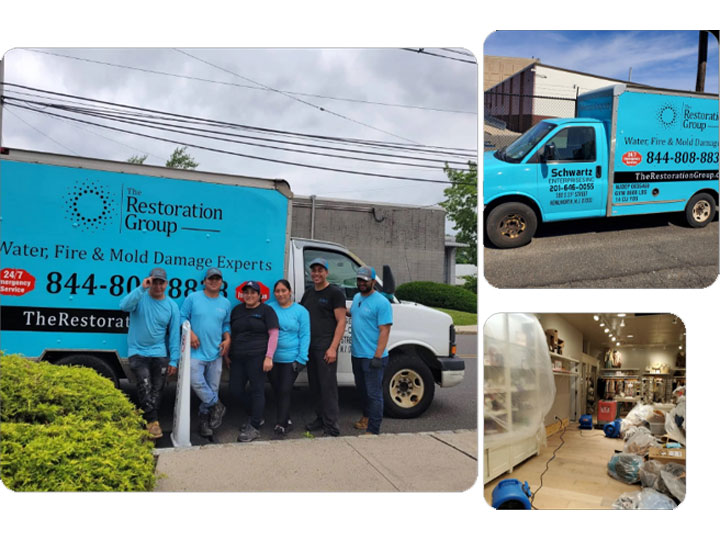
Recent job photo from The Restoration Group.
What changes the price: square footage, porous materials and timing
Three factors move the number more than anything else: how much area is affected, how much has to be removed rather than cleaned, and how long the scene sat before cleanup began.
Square footage is the obvious one. A single bathroom or bedroom costs less to treat than a scene that has spread into a hallway, subflooring, or a finished basement, common in Fair Lawn’s older Radburn-era and postwar homes where cast-iron drains and original subfloor framing sit close together.
Porous materials drive cost the most. Carpet, padding, drywall, upholstery and subfloor that have absorbed fluids typically cannot be fully disinfected and have to be removed and disposed of as regulated medical waste, which adds both labor and disposal fees. Non-porous surfaces like tile, sealed concrete and finished wood usually just need cleaning and disinfection.
Time since the event matters too. Biological material becomes harder (and more expensive) to remediate the longer it sits, particularly with temperature, humidity and decomposition involved. A scene addressed within a day or two generally costs less than one discovered a week or more later.
Why waste disposal and testing fees add to the bill
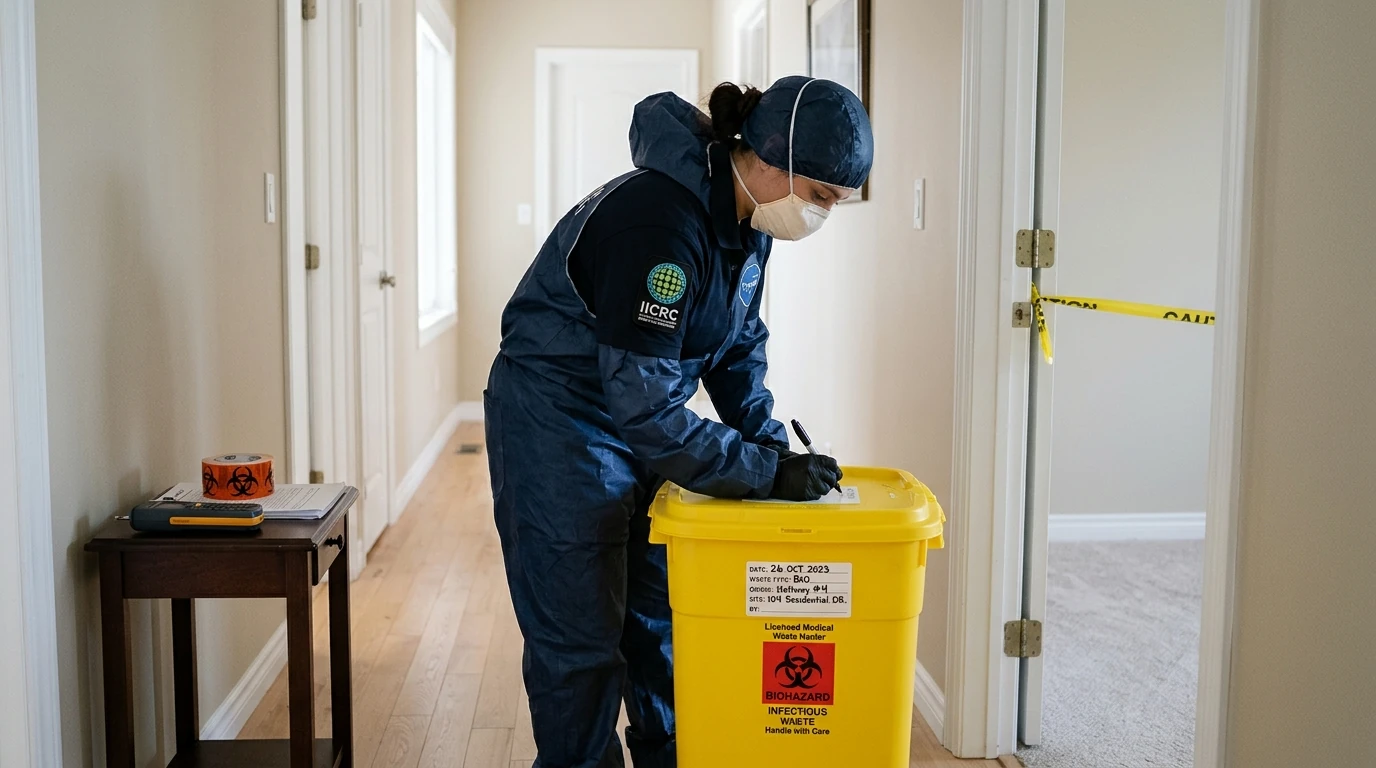
Biohazard waste cannot go out with regular trash; it has to be packaged, transported and disposed of by a licensed medical waste hauler, and that regulated chain of custody is a real line item on most invoices.
Disposal fees are usually billed by weight or by container, separate from labor. A job that generates several bags or bins of contaminated material will cost more in disposal alone than a contained, single-surface spill. Cleanup work also follows OSHA’s bloodborne pathogens standard, which governs how technicians handle, package and dispose of potentially infectious material, and that compliance is part of what you are paying for, not an optional extra.
Some jobs also call for post-cleaning clearance testing (ATP or similar surface testing) to confirm the area is safe to re-occupy. When it is requested or required, expect it as a separate line item.
Does homeowners insurance cover biohazard cleanup?
Coverage depends heavily on the policy and the cause. Some homeowners policies include limited coverage for trauma or biohazard cleanup tied to a covered event, such as a crime or an unattended death, but many cap it with a sublimit or exclude it entirely unless it is connected to a separately covered peril.
Because coverage varies so much by insurer and by what caused the biohazard situation, the safest step is to call your insurance company before cleanup begins and ask directly whether biohazard or trauma cleanup is covered under your policy, and whether there is a sublimit. Keep the written scope of work and the final invoice; most insurers want an itemized breakdown of labor, materials removed and disposal fees to process any claim. If a death or crime occurred on a rental property, landlord policies and liability coverage sometimes apply differently than a standard homeowners policy, so check with the carrier directly rather than assuming.
What happens during a biohazard cleanup, step by step
A biohazard cleanup generally moves through the same sequence regardless of scope:
- Assessment and containment. The technician evaluates the affected area, contains it to prevent cross-contamination, and sets up PPE and ventilation controls.
- Removal of contaminated materials. Porous materials that cannot be safely disinfected (carpet, padding, affected drywall or subfloor) are removed and bagged for regulated disposal.
- Cleaning and disinfection. Remaining surfaces are cleaned and treated with hospital-grade disinfectants following industry protocols such as the IICRC S540 standard for trauma and crime scene cleanup.
- Odor treatment. Lingering odor from biological material is addressed separately from disinfection, often with the same equipment used for our odor removal service.
- Disposal. Bagged biohazard waste is transferred to a licensed medical waste hauler for proper disposal, with documentation kept for the file.
- Clearance check. Where requested, a final walkthrough or surface test confirms the space is safe to re-occupy.
- Documentation. Photos, the scope of work and the invoice are provided, useful for insurance or legal purposes.
For jobs that involve a violent crime scene specifically rather than an unattended death, the sequence is similar but typically involves closer coordination with law enforcement before cleanup can start; see our trauma scene cleanup page for that distinction.
Getting a written estimate before work starts
Ask for an itemized written scope before any cleanup begins: square footage treated, what is being removed versus disinfected, disposal fees, and whether odor treatment or clearance testing is included.
A vague verbal number is a red flag for this kind of work, since the final cost depends so much on what technicians find once containment begins. A written scope protects you either way, whether you are paying out of pocket or submitting the invoice to an insurer. If the scope changes once work is underway (for example, more subfloor is affected than initially visible), a professional crew documents that change and the reason for it rather than just adding to the bill.
We cover the full range of what to expect, including how to vet a company for this kind of work, in our companion guide, Best Biohazard Cleanup Company in Fair Lawn, NJ.
If you are facing this situation in Fair Lawn, Radburn, Warren Point or anywhere nearby and need a written estimate, call The Restoration Group at (844) 808-8838. The team answers 24/7 and can typically be on-site within about 60 minutes to assess the scene and provide a scope of work.
About The Restoration Group
The Restoration Group is an IICRC Certified Firm (#210213) and a New Jersey Licensed Home Improvement Contractor, based at 8 Harlow Crescent in Fair Lawn since 2021. Their crews handle water, fire, storm, mold, sewage and biohazard cleanup across northern and central New Jersey, the New York City metro and eastern Pennsylvania, answering calls 24/7. This guide was prepared with input from Michael Oren and The Restoration Group’s team.