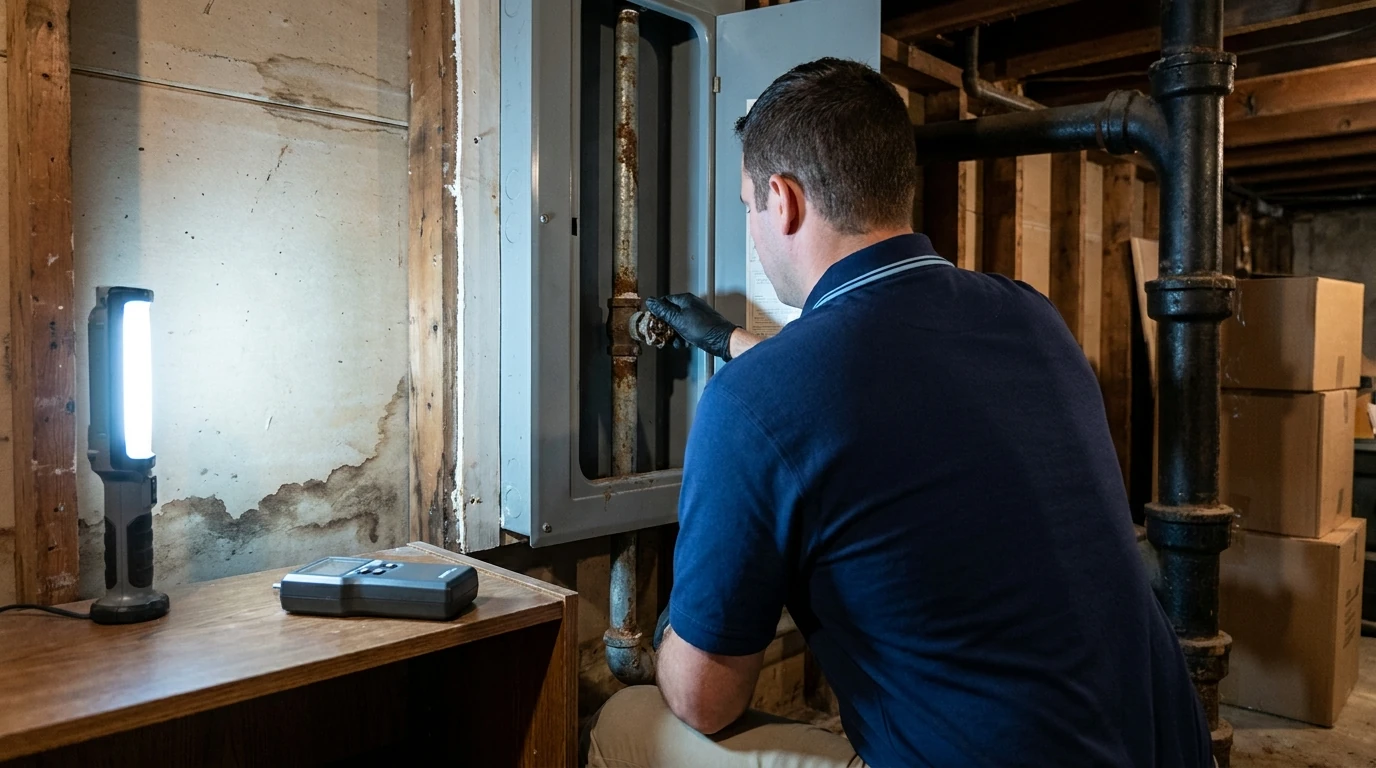
TL;DR: Shut off your home’s main water valve and cut power to any wet electrical areas right now. Call a licensed plumber to stop the leak at its source, and call a water damage restoration company at the same time, because drying has to start within hours or mold becomes the next problem. One company stops the flood; a different company handles the water that’s already on your floors and inside your walls.
If you’re standing in a Fair Lawn bathroom or basement watching water spread across the floor toward a finished wall near Radburn’s original 1920s plumbing, or a laundry line let go in a Warren Point cape, you don’t have time to research. Here’s exactly what to do, in order, and who to call first.
What should you do in the first 60 seconds after a pipe bursts?
Shut off the main water supply valve first, then cut electricity to the affected room at the breaker if water is anywhere near outlets or fixtures. These two actions stop the damage from getting worse while you figure out next steps.
The main shutoff is usually near where the water line enters the house: close to the water heater, in the basement, or in a utility closet on the street-facing side. Turn the valve clockwise until it stops. If you can’t find it or it won’t budge, don’t force it and don’t waste more than a minute looking. Move to electrical safety instead. Never step into standing water near an outlet, power strip, or appliance cord. If the panel itself is wet, leave it alone and call an electrician.
Once the water is off, move anything you can lift away from the wet area. Rugs, furniture legs, boxes stored on a basement floor. You’re not cleaning up yet. You’re limiting what gets ruined while you make calls.
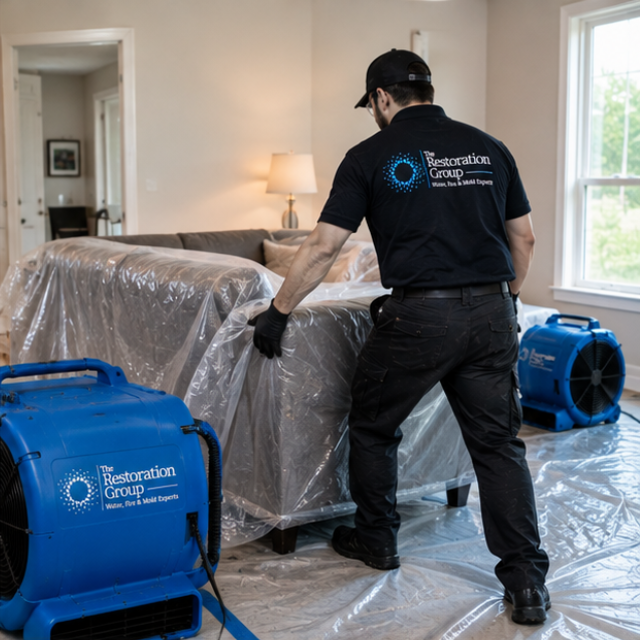
Recent job photo from The Restoration Group.
Who do you call first, a plumber or a restoration company?
Call both, right away, not one after the other. A licensed plumber stops the leak at the source; a water damage restoration company removes the standing water and starts structural drying, and both jobs need to start the same day.
A plumber’s job ends once the pipe is repaired or replaced. They don’t own extraction equipment, industrial dehumidifiers, or the training to track moisture that’s already migrated into drywall, subfloor, and framing. That’s a separate trade, governed by its own standard, the ANSI/IICRC S500, which spells out how fast water needs to come out and how dry a structure needs to get before it’s considered safe from mold. In Fair Lawn’s older housing stock, the galvanized supply lines and cast-iron drains common in Radburn and the postwar capes along Broadway and Fair Lawn Avenue mean a burst almost always means water sitting inside a finished wall cavity, not just on the surface.
This is the part The Restoration Group handles for Fair Lawn homeowners: water extraction, structural drying with commercial air movers and dehumidifiers, and documentation your insurance adjuster will actually accept. Line up the plumber for the repair, and get the drying crew moving in parallel. The hours between the water stopping and the drying starting are the ones that decide whether this is a one-week fix or a mold remediation on top of it.
What happens in the first 24 hours after the water stops?
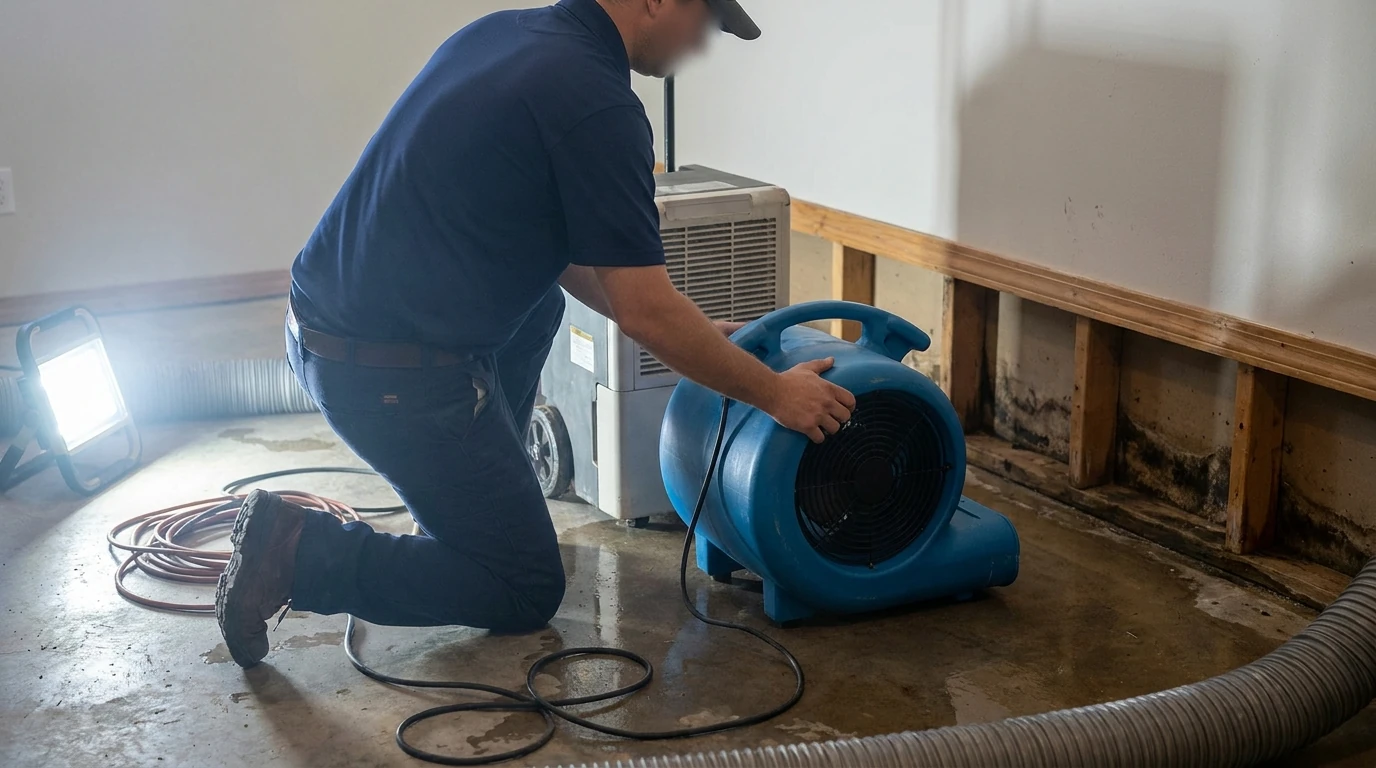
In the first 24 hours, a restoration crew extracts standing water, pulls back carpet and baseboards to check what’s wet underneath, and sets drying equipment running continuously. Moisture readings get taken and logged so you can see progress day by day.
Expect a walk-through first: a technician with a moisture meter checks drywall, subfloor, and framing well beyond where water is visible, because it wicks sideways and up. Anything soaked that can’t be dried, like saturated insulation or swollen particleboard cabinetry, gets removed rather than dried in place. Air movers and dehumidifiers then run around the clock, typically for three to five days depending on how much material got wet and how long it sat before drying started. If the burst happened overnight and sat for hours before anyone found it, expect the drying window to run longer.
Will homeowners insurance cover burst pipe damage in NJ?
Most New Jersey homeowners policies cover sudden, accidental water damage from a burst pipe, including the cost to dry and repair the structure, though the cost of the plumbing repair itself is often excluded. According to the Insurance Information Institute, a standard policy typically covers water damage that happens suddenly, but not damage from a leak that was slow or long-term and could have been caught sooner.
That distinction matters for the claim. Photograph the damage before anything gets moved or torn out, note the time you discovered it, and keep the plumber’s invoice separate from the restoration invoice, since they’re usually paid differently under the policy. Our related guide on whether homeowners insurance covers water damage walks through what adjusters typically ask for. A detailed drying log and moisture readings from the restoration crew are exactly the documentation that keeps a claim from getting delayed or denied.
If you’re still working through what to grab and in what order, the burst pipe emergency checklist covers the step-by-step beyond this post.
Don’t wait to see how bad it looks before calling. Call The Restoration Group at (844) 808-8838 once the water’s off and the plumber is on the way. They answer 24/7 and can start the drying side of this before the damage spreads further into your Fair Lawn home.