When a restoration crew shows up at your house after a pipe bursts, a fire scorches a kitchen, or mold turns up behind the drywall, you’re not just hiring equipment. You’re letting strangers into your home during one of the more stressful weeks you’ll have this year. What happens next, whether the crew treats the job (and your house) with care, tends to matter as much as the drying charts and moisture readings.
One recent review of The Restoration Group’s work put it simply:
Excellent work. The staff were responsible, friendly, and above all, very clean. I was very satisfied and I recommend them 100%.
, dessy, verified Google review
It’s a short review, but it names three things homeowners actually notice when a job goes well: responsibility, friendliness, and cleanliness. Here’s what each of those looks like in practice on a real restoration job.
What does “responsible” mean on a restoration job?
A responsible crew shows up when they say they will, follows the scope of work they laid out, and doesn’t leave a job half-finished. That sounds basic, but it’s the piece homeowners worry about most when they’re inviting contractors into a house full of belongings.
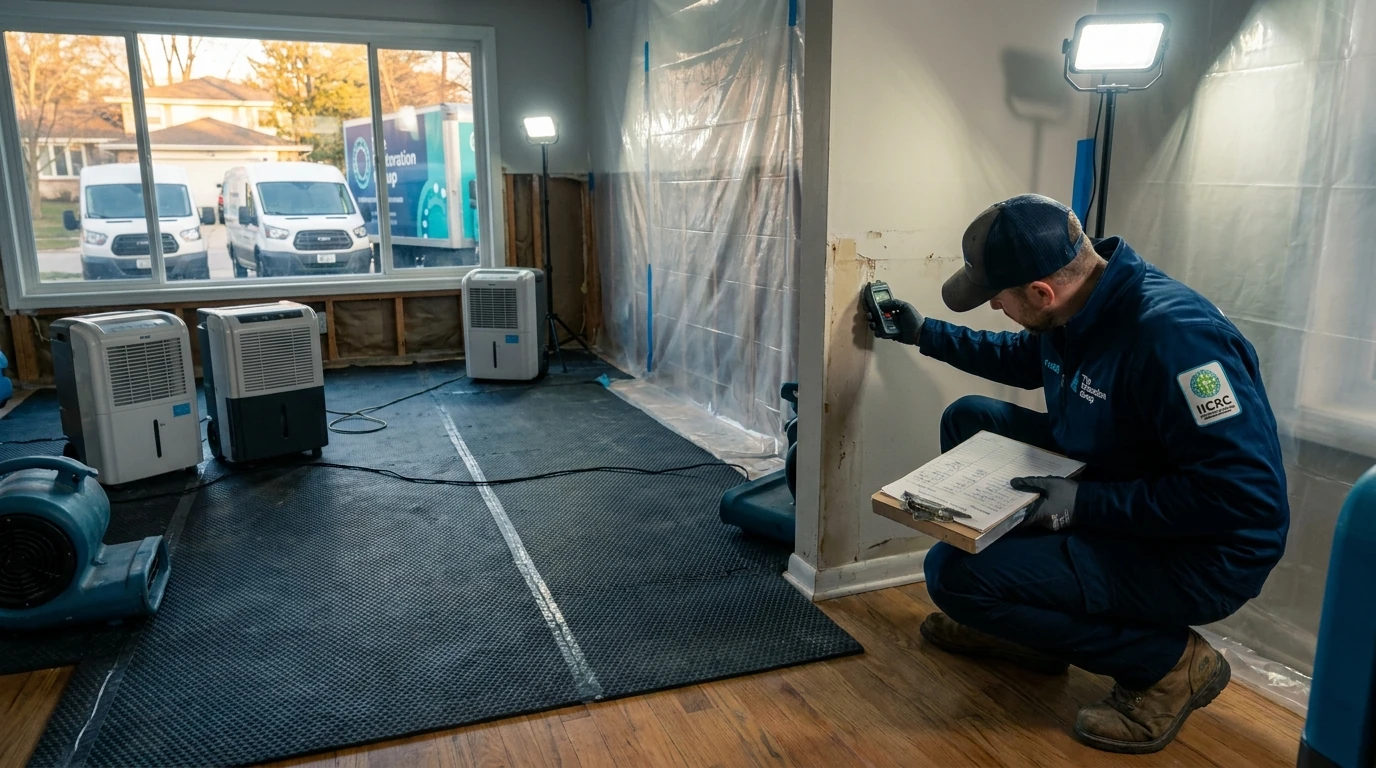
On a water, fire, or mold job, responsibility shows up in small, checkable ways: a written scope before work starts, moisture readings logged daily so drying equipment doesn’t stay longer than it needs to, and someone accountable for the job from the first phone call to the final walkthrough. For a company operating under an IICRC Certified Firm designation, that documentation isn’t optional. It’s part of following the industry’s IICRC S500 water damage standard, which spells out how a job should be assessed, dried, and verified before it’s called complete.
Responsibility also means being straightforward about what’s covered under insurance and what isn’t, rather than leaving the homeowner to figure it out mid-claim. That’s a big part of why our water damage restoration crews document everything they do, room by room, before, during, and after.
Why does “friendly” matter during a stressful loss?
Friendly, in this context, usually means a crew that explains what they’re doing instead of working around the homeowner in silence. When someone’s kitchen is full of fans or their basement smells like wet carpet, uncertainty is often worse than the damage itself.
A crew that talks through the plan, what’s getting removed, what’s salvageable, how long drying will take, gives the homeowner something concrete to hold onto. That’s a different experience than a crew that shows up, runs equipment, and disappears until the invoice arrives. Reviews that mention “friendly” staff are usually describing communication, not just personality: someone answered questions, explained the next step, and treated the homeowner as a partner in the process rather than an obstacle to it.
Why does “very clean to work with” matter more than people expect?
A clean jobsite means containment barriers stay up, floors and furniture get protected before equipment goes in, and debris gets bagged and removed daily instead of piling up. For a homeowner, this is often the difference between a stressful week and a genuinely disruptive one.
On mold jobs specifically, cleanliness isn’t cosmetic, it’s containment. Plastic sheeting and negative-air setups keep spores from spreading to unaffected rooms while a mold remediation crew works, which is exactly what the EPA’s mold guidance recommends for any remediation beyond a small surface area. On fire and smoke jobs, keeping soot contained to the affected rooms during a fire damage restoration project protects everything else in the house from secondary damage. “Very clean” isn’t a nice-to-have. It’s a sign the crew understood what they were protecting, not just what they were removing.
What does it take to earn a “recommend at 100%”?
A full recommendation usually means all three things lined up: the crew did what they said, communicated along the way, and left the house in better shape than the chaos they walked into. None of those things happen by accident. They come from a process a company repeats on every job, not a lucky day.
If you’re evaluating restoration companies in Union County or the surrounding area, ask how they document a job, how they handle containment, and who your point of contact will be from start to finish. Those answers tell you more than a sales pitch ever will.
The Restoration Group is an IICRC Certified Firm (#210213) based in Kenilworth, NJ, serving Union County and the surrounding region. If you’re dealing with water, fire, mold, or storm damage and want a crew that documents the job and keeps the site clean while they work, request an assessment and we’ll walk you through the process before anything starts.