TL;DR: Standard flood insurance through the National Flood Insurance Program (NFIP) covers direct physical damage to your home’s structure and personal property caused by rising surface water, storm surge, or overflow from a body of water. It does not cover burst pipes, sewer backup unless flood water caused it, most basement contents, or losses from moisture and mold that developed over time. If you bought a policy within the last 30 days, a waiting period likely applies before coverage kicks in.
After Hurricane Ida hit New Jersey in September 2021, thousands of homeowners in Cranford, Springfield, Elizabeth, and Union filed flood claims, only to discover that their standard homeowners policy excluded flood entirely. Some had NFIP policies but were surprised to learn how little those policies paid for finished basements. If you are trying to figure out what your flood insurance actually covers before a storm, or right after one, this guide walks through the covered-vs-excluded breakdown in plain terms.
What does flood insurance actually cover?
NFIP flood insurance covers two categories: the building itself (your structure policy) and your belongings (your contents policy). You can buy one or both, and they are separate policies with separate limits.
Building coverage (up to $250,000 for residential structures) pays for:
- Foundation walls, anchorage systems, and staircases
- Electrical and plumbing systems
- HVAC equipment, including central air, heat pumps, and furnaces
- Water heaters and built-in appliances (refrigerators, dishwashers, ranges)
- Permanently installed carpeting over unfinished floors
- Drywall, paneling, and wall surfaces
- Detached garages (up to 10% of the building limit)
- Debris removal
Contents coverage (up to $100,000) pays for:
- Clothing, furniture, and electronics
- Portable and window air conditioners
- Carpets not covered under building coverage
- Washer and dryer
- Freezers and the food inside them
- Certain valuable items such as artwork, up to $2,500
The full list of covered property is published by FloodSmart.gov, the FEMA-managed resource for NFIP policyholders.
What does flood insurance NOT cover?
This is where most homeowners get a painful surprise. The NFIP excludes a long list of losses that feel flood-related but fall outside the policy definition.
Burst pipes and internal water damage. If a pipe bursts inside your home and water spreads across your floors, that is not a flood. Flood, by NFIP definition, means surface water that overflows from a natural source, storm drain, or similar external source. Burst-pipe losses belong to your homeowners policy. For help understanding that distinction, see our guide Does Homeowners Insurance Cover Water Damage?
Sewer and drain backup. Sewer backup is excluded from standard NFIP policies unless the backup was directly caused by flood water entering the sewer system from outside. In most cases, a backed-up floor drain or ejector pump failure is not covered by flood insurance. Some private flood policies and homeowners endorsements offer sewer-backup coverage separately.
Basement contents (the big one for NJ homeowners). The NFIP’s basement limitation is the most misunderstood part of flood coverage. For any area of your home that is below grade on all sides, the NFIP covers only:
- The mechanical systems (furnace, water heater, sump pump, electrical panel)
- Cleanup costs
- Drywall on a per-square-foot basis
It does NOT cover finished basement contents: furniture, electronics, a home theater, gym equipment, stored clothing, or personal property of any kind below grade. For homes in Westfield, Summit, and Millburn with finished basements worth $30,000 or more, this gap is significant. Our basement flooding cleanup team documents this distinction in writing for every job so your adjuster sees exactly what is above grade and what is not.
Temporary living expenses. Unlike some homeowners policies, NFIP flood coverage does not include additional living expenses (ALE) if you have to leave your home during repairs.
Landscaping, decks, patios, and fences. These are excluded from NFIP coverage.
Vehicles. Cars and trucks are not covered by flood insurance. That falls under your auto policy’s comprehensive coverage.
Mold and moisture damage that developed over time. NFIP covers mold damage that results directly from a covered flood event, but only if you took reasonable steps to mitigate it promptly. Mold that grew because a slow seepage problem was ignored is not covered. For context on how quickly mold can develop after a water event, see How Quickly Does Mold Grow After Water Damage?
| Loss Type | NFIP Flood Insurance | Homeowners Policy |
|---|---|---|
| Rising water from a river or storm | Covered | Excluded |
| Storm surge | Covered | Excluded |
| Burst pipe inside the home | Not covered | Typically covered |
| Sewer backup | Usually not covered | Needs endorsement |
| Basement mechanical systems | Covered | Depends |
| Finished basement contents | NOT covered | Depends |
| Temporary housing costs | Not covered | Often covered |
| Vehicles | Not covered | Auto comprehensive |
| Landscaping and fences | Not covered | Not covered |
Does flood insurance cover basement flooding?
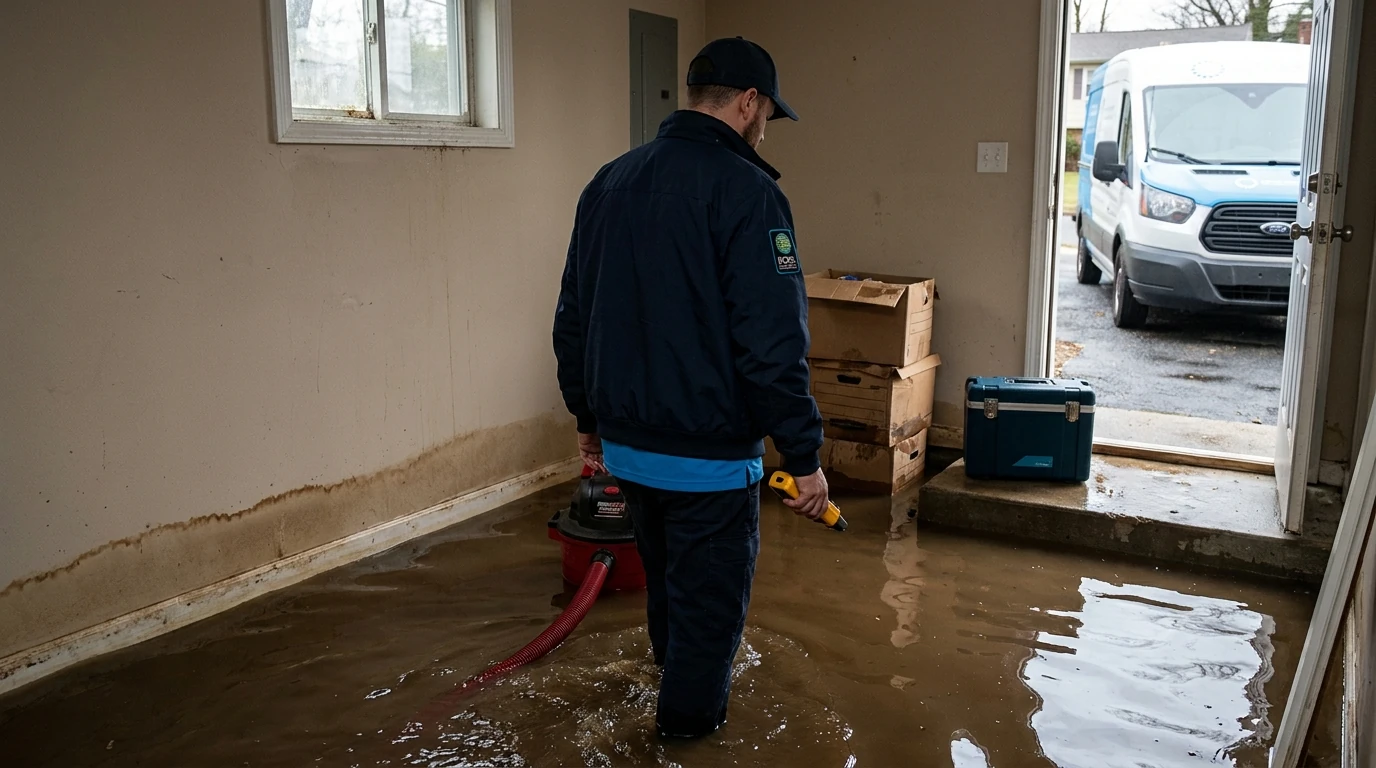
Flood insurance covers basement flooding only in a limited way. If rising surface water enters your basement during a declared flood event, the NFIP will pay to restore your mechanical systems, remove debris, and dry the structure. What it will not pay for is the finished space or any personal property stored below grade.
This matters enormously in New Jersey. The prewar housing stock in Cranford, Kenilworth, and Rahway is almost entirely full-basement construction. After Ida, many homeowners discovered their NFIP policy paid for the furnace and the drywall but nothing for the finished family room, the stored holiday decorations, or the chest freezer full of food.
If you have a finished basement, document everything in it now, before a storm. A home inventory with photos and receipts gives you the best chance of recovering losses through any available channel, including a separate contents endorsement or a private flood policy that may offer broader below-grade coverage.
What is the NFIP waiting period, and when does it matter?
Most NFIP policies have a 30-day waiting period before coverage takes effect. If you buy or renew a flood policy today and a storm hits in two weeks, you have no coverage.
There are three exceptions:
- Loan closing: If you are required to purchase flood insurance as a condition of a federally backed mortgage, coverage can begin on the loan closing date.
- Policy renewal: A renewal with no lapse in coverage takes effect immediately.
- Map revision: If your property was newly mapped into a high-risk flood zone, you have a 13-month window to purchase at the lower preferred-risk rate, and coverage begins in 1 day.
The practical takeaway: do not wait until a storm is named to check your flood coverage. By the time a hurricane or nor’easter is in the forecast, the 30-day window makes a new policy useless for that event. The NJ Department of Banking and Insurance has additional guidance on flood insurance requirements for New Jersey homeowners.
Flood insurance vs. homeowners insurance: which one pays?
The simplest rule: if the water came from outside your home (rain accumulation, river overflow, storm surge, overloaded storm drains), flood insurance is the right policy. If the water came from inside your home (burst pipe, failed appliance, overflowing bathtub), homeowners insurance is the right policy.
The line blurs in two common New Jersey scenarios:
Combined sewer backup during a flood. When heavy rain overwhelms the municipal sewer system, sewage can back up into basements. If the backup was caused by flood water entering the sewer from outside, NFIP may cover it. If the backup happened independently of a flood event, it is typically excluded from both policies without a specific sewer-backup endorsement.
Water intrusion through foundation walls. Hydrostatic pressure pushing water through a foundation wall or floor drain during a storm is generally treated as flood damage, not a plumbing failure. Your flood policy, not your homeowners policy, is the right place to start that claim.
When you are not sure which policy applies, file with both and let the adjusters sort out coordination. Do not delay mitigation waiting for a coverage determination. The IICRC S500 standard for water damage response requires that drying begin as quickly as possible to prevent secondary damage, and most policies require you to take reasonable steps to protect your property.
What should you do right after a flood?
Documentation is the single most important thing you can do in the first hours after a flood. Before any cleanup begins:
- Photograph every affected room, every damaged item, and every waterline mark on walls.
- Note the water depth at its highest point (a pencil mark on a wall works).
- Do not throw anything away before the adjuster sees it or you have photos.
- Call your insurance company to open a claim and get a claim number.
- Begin mitigation: extract standing water, open windows if safe, run fans. Waiting for the adjuster to arrive before starting drying can result in denied mold claims later.
For a full step-by-step, see What To Do in the First 24 Hours After Water Damage.
The Restoration Group responds 24/7 across New Jersey and works directly with NFIP adjusters and private flood carriers. Their crews document moisture readings, waterlines, and affected materials in the format adjusters need, which protects your claim from the start. If you have standing water or a flood-damaged structure, request a flood damage assessment before secondary damage compounds the loss.
About The Restoration Group
The Restoration Group is an IICRC Certified Firm (#210213) serving New Jersey since 2021. Licensed as an NJ Home Improvement Contractor and available 24/7, their crews handle flood damage restoration, water damage restoration, basement flooding cleanup, mold remediation, fire and smoke damage restoration, sewage cleanup, and related services across Union, Essex, Bergen, Middlesex, and Hudson counties. Every job includes written documentation designed to support the insurance claim process.
Video Transcript
Flood insurance sounds like a safety net, until you file a claim and realize half your damage isn’t covered. Here’s what New Jersey homeowners actually need to know. NFIP flood insurance has two parts: a building policy covering your structure, and a contents policy covering your belongings. You have to buy them separately. Building coverage pays for your foundation, electrical, HVAC, plumbing, built-in appliances, and drywall, up to $250,000 for a residential home. Contents coverage, up to $100,000, pays for furniture, electronics, clothing, your washer and dryer, and even food in your freezer. Now the painful part. Burst pipes, sewer backups, and internal water damage are NOT covered by flood insurance. Those belong to your homeowners policy. Finished basements are the biggest surprise. NFIP only covers mechanical systems below grade, your furnace, water heater, and electrical panel. Finished walls, flooring, and personal property are excluded. Flood insurance also won’t pay for temporary housing, landscaping, decks, fences, or your vehicles. Those fall under separate policies. Mold is covered only if it results from a declared flood and you acted quickly to stop it. Mold from a slow seepage problem ignored over time is not covered. Don’t navigate this alone. Read the full guide at therestorationgroup.com. For emergency help, call The Restoration Group at (855) 650-7422 for a free estimate.