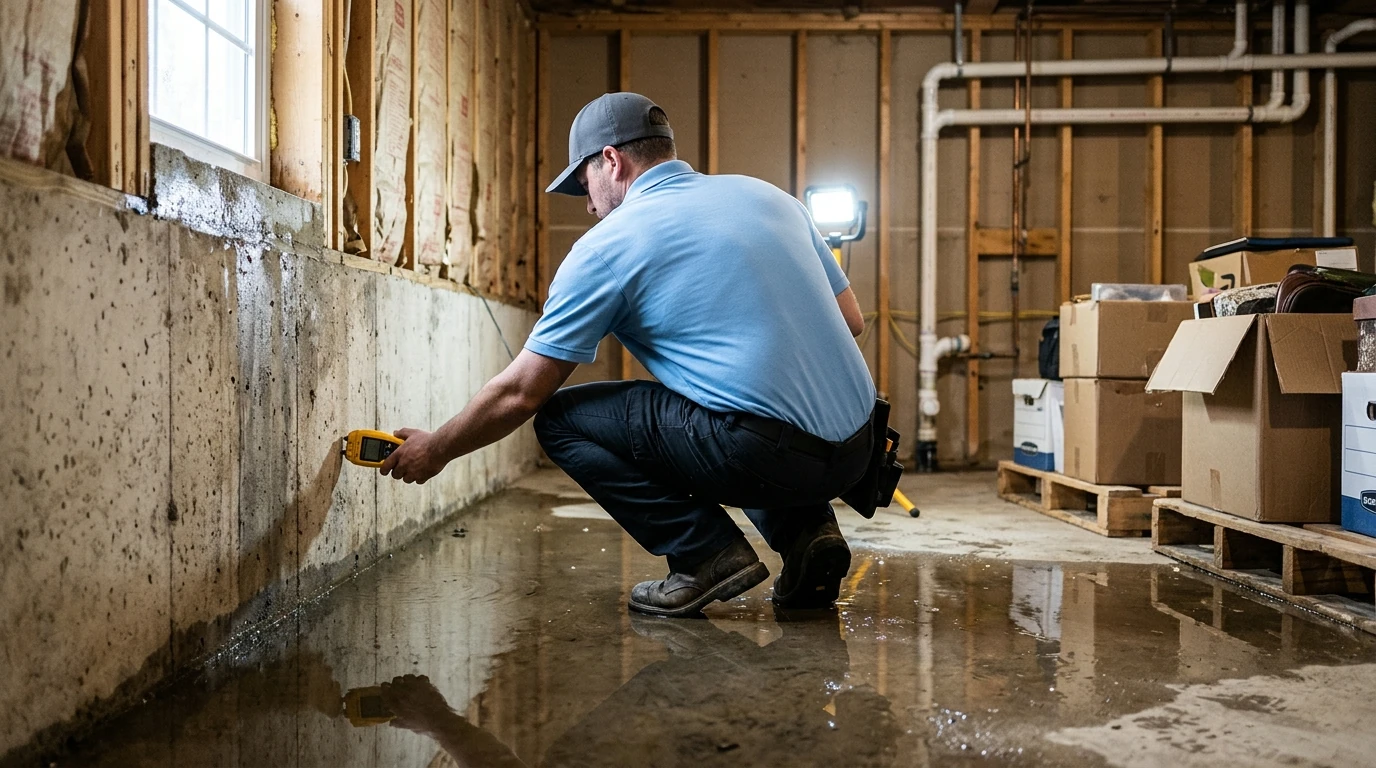
If water is rising in your Fair Lawn basement right now, call The Restoration Group at (844) 808-8838. The company answers around the clock and is an IICRC Certified Firm (#210213), so a water removal crew can start extraction and drying before standing water turns into a mold problem. That’s the short version. The order you make calls in, and what you do in the first ten minutes, matters almost as much as who answers the phone.
Fair Lawn basements flood for two very different reasons, and the reason changes what happens next. Homes near River Road and Saddle River Road take on water when the Saddle River or Passaic River rises, the way whole blocks did during Ida in 2021. Homes further from the water, including many of the capes and colonials around Radburn, flood because a sump pump quit or an aging cast-iron drain backed up during a hard rain. Both situations start with the same first move: get people out of the water, then start making calls.
Is it safe to go down into a flooded basement?
Not until you’ve cut power to the basement at the breaker panel, and not if the water is more than ankle-deep or touching outlets, a power strip, or the furnace. Standing water and live circuits are the most common injury risk in a basement flood, and a quick look from the top of the stairs with a flashlight tells you which situation you’re in.
If the breaker panel itself is wet or you can’t reach it safely, don’t touch it. Call PSE&G instead and ask them to cut power to the house before anyone goes near the water. If the water is coming from a sewer or floor drain rather than a clean supply line, treat it as contaminated (what restoration crews call Category 3, or black water, under the IICRC S500 standard) and stay out until a crew in proper gear can assess it. Ready.gov has the same basic rule for any flood water you didn’t expect: assume it’s unsafe until you know otherwise.
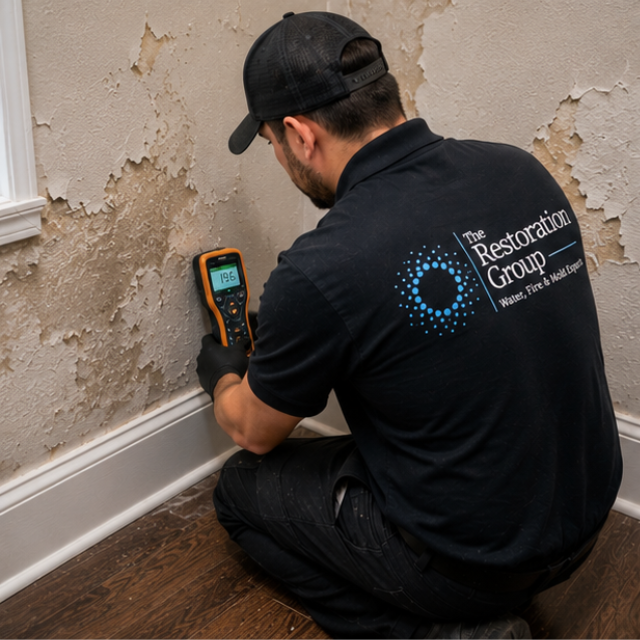
Recent job photo from The Restoration Group.
Should I call a plumber, a water removal crew, or my insurer first?
Call whichever one stops the water first. If a supply line or the sump pump itself failed and water is still actively flowing, a plumber needs to shut it off. If the water has already stopped rising, a water removal crew should come next, because every hour standing water sits raises the odds of warped flooring and mold. Call your insurer after mitigation starts, not before, since most policies expect you to limit the damage while you wait on a claim decision.
A plumber fixes or replaces the failed part, whether that’s a burst line, a valve, or the pump itself; a water damage crew handles everything the water touched once it’s in the house, including extraction, drying equipment, and the documentation an adjuster will want to see. The Restoration Group’s technicians don’t repair plumbing or pump hardware, so if the fix is mechanical, you’ll still need a licensed plumber for that piece. If you’re unsure which situation you’re in, start with our basement flooding cleanup page or just call and describe what you’re seeing.
Sump pump failure or groundwater seepage, does it change who I call?
It changes what your insurer will say more than who shows up with a wet vac. A failed sump pump or float switch usually lets in groundwater, which restoration crews classify as Category 2 (gray) water, and most standard homeowners policies only cover that kind of loss if you added a water backup or sump overflow endorsement. Plain groundwater seepage through foundation walls under hydrostatic pressure falls into the same category and the same coverage gap.
Fair Lawn’s older cast-iron drains and original supply lines, especially in the postwar capes and colonials away from Radburn’s planned-community homes, make pump failures and slow seepage a routine call here. Either way, the pump or float switch itself is a plumber’s job. The water already on your basement floor is a drying and extraction job, and that’s where a restoration crew starts right away rather than waiting on the pump to get fixed first. Our earlier guide to the first 24 hours after water damage walks through the drying timeline in more detail, and this breakdown of what homeowners insurance actually covers explains the endorsement question further.
What happens when the water removal crew arrives?
Expect a crew to check in with a timeframe close to an hour from your call, then start by measuring how far the water traveled before setting up extraction and drying equipment. Have your policy number, the location of your main shutoff, and any photos you’ve already taken ready when they arrive.
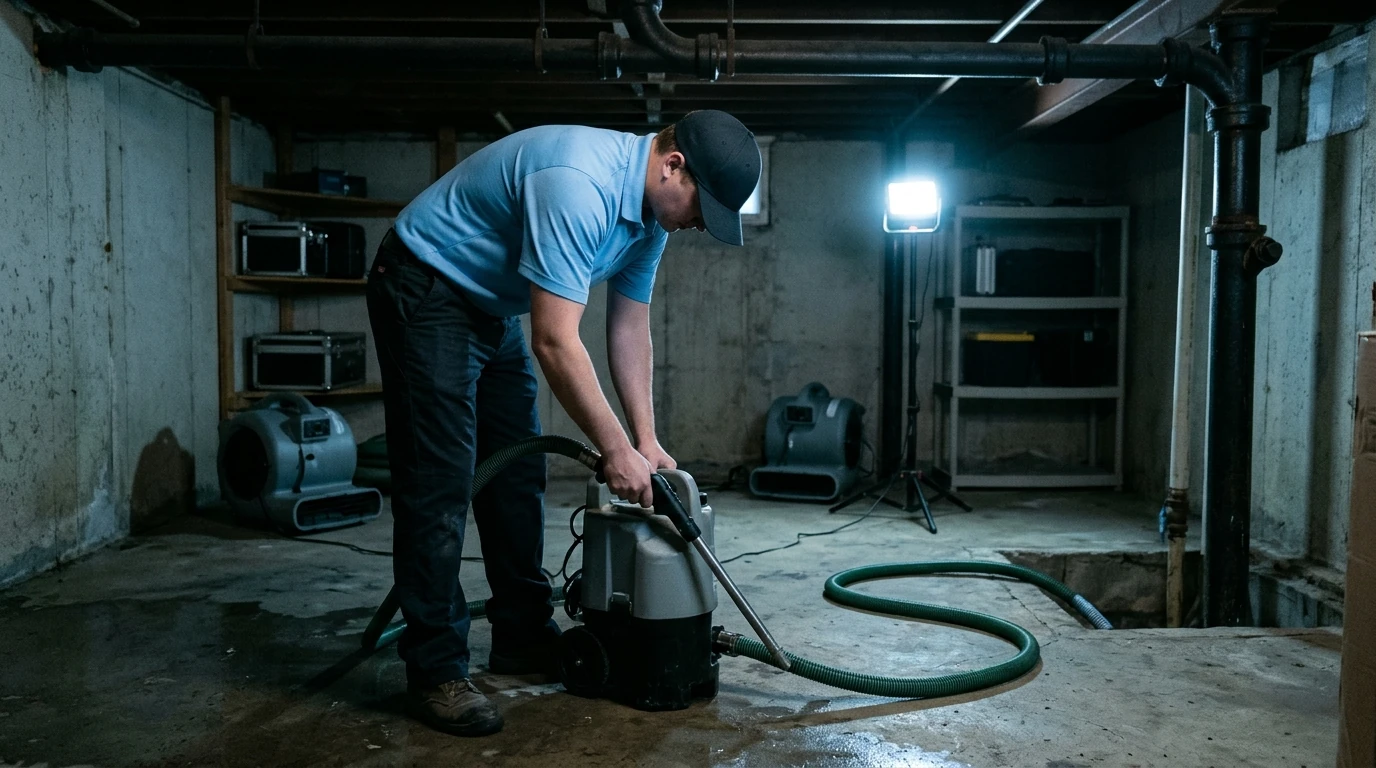
On site, the first step is usually pulling standing water with truck-mounted or portable extraction equipment, then mapping moisture in the walls and subfloor with a meter so nothing wet gets missed behind drywall. From there it’s emergency water removal: positioning air movers and dehumidifiers, pulling baseboards or drywall where the water sat long enough to soak in, and writing down what was done and when, which becomes the paper trail your insurer will ask for.
What photos should I take before cleanup starts?
Take wide shots of every affected room before anything gets moved or dried, including a clear shot of the waterline on the walls and any furniture or boxes sitting in the water. Photograph the source if you can see it (the sump pit, the water heater, the spot where water is entering), and get close-up shots of anything with a serial number or model number that was damaged, since that speeds up a contents claim later.
If the basement is still filling or you’re not sure where to start, call (844) 808-8838 and describe what you’re seeing. Dispatch can walk you through what’s safe to do while a crew gets moving, and our Fair Lawn basement flooding cleanup page has more on how jobs here typically go.
About The Restoration Group
This IICRC Certified Firm (#210213) has served Fair Lawn and the surrounding Bergen and Union County area since 2021, answering emergency calls 24/7 and operating as a NJ Licensed Home Improvement Contractor through the NJ Division of Consumer Affairs. Crews handle water, flood, fire, mold, and storm damage restoration, including basement flooding cleanup, emergency water removal, and sewage cleanup, with Fair Lawn as one of its office locations.
Video Transcript
Water rising in your Fair Lawn basement? Don’t wait. What you do in the next ten minutes matters most. Call The Restoration Group right away. They’re available 24/7 and IICRC certified, so extraction and drying can start before mold sets in. Before anyone goes downstairs, cut power at the breaker panel. If it’s wet or unreachable, call PSE&G to shut power first. If water’s coming from a sewer or floor drain, treat it as contaminated and stay out until a trained crew arrives. Still flowing? Call a plumber first. Already stopped? Call a water removal crew, every hour of standing water adds more damage. A failed sump pump or groundwater seepage is common in Fair Lawn’s older homes. Check your policy, many plans don’t cover it. Call your insurer after mitigation starts, not before. Most policies expect you to limit the damage while your claim is being reviewed. When the crew arrives, they’ll measure how far the water traveled, then set up extraction and drying equipment to pull out moisture fast. Moisture meters check walls and subfloors so nothing stays hidden behind drywall. Air movers and dehumidifiers go to work right away. Take photos of every room before cleanup starts, it helps your claim. Call The Restoration Group at (844) 808-8838 for a free estimate.