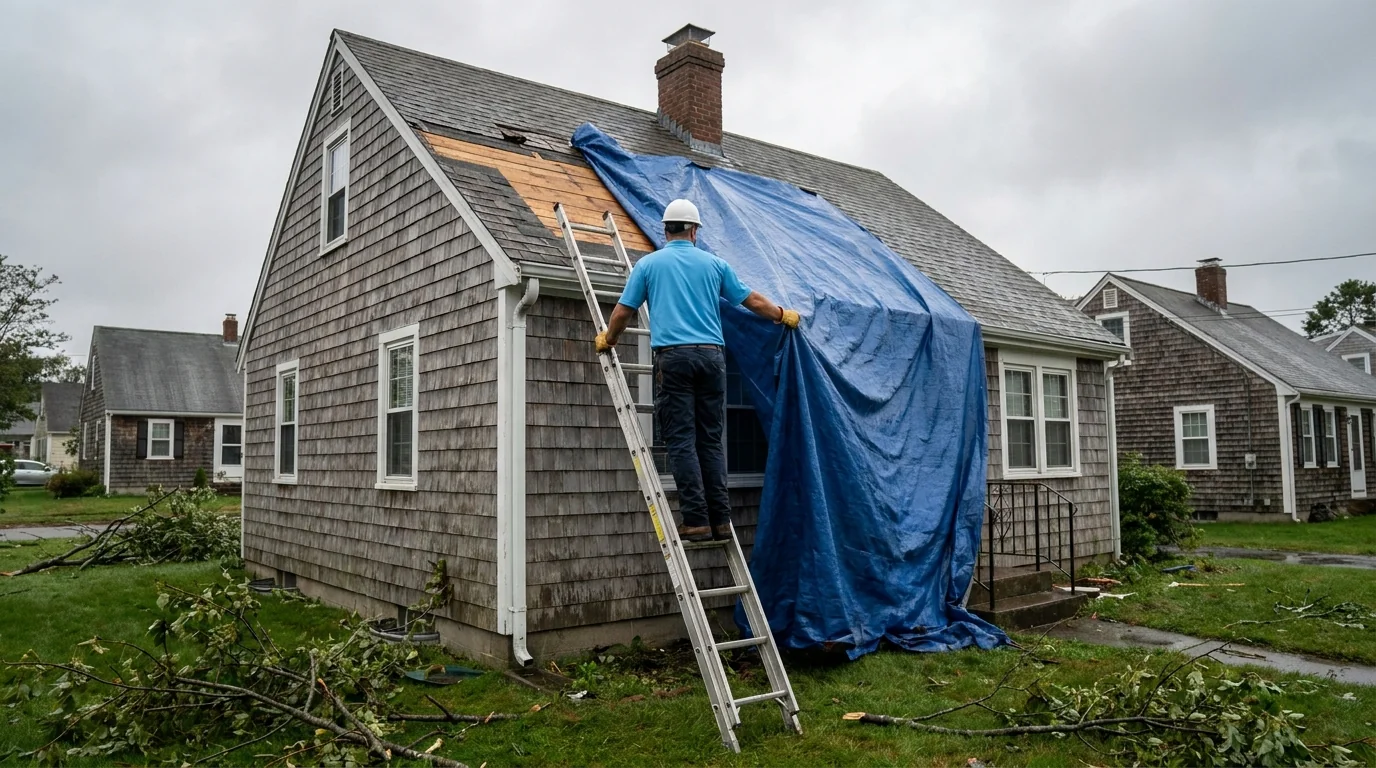
24/7 Emergency Storm Damage Restoration in Highland Park
24/7 emergency storm damage restoration in Highland Park, NJ. IICRC-certified, insurance billing accepted. Call (855) 650-7422.
Our IICRC-certified technicians are dispatched from our Fair Lawn, NJ headquarters and are typically on-site in Highland Park within 60 minutes of your call.
Storm damage emergency in Highland Park? We answer 24/7. Call now and our crew can be on-site within 60 minutes to secure the property and stop further damage.
When Tropical Storm Ida swept through Middlesex County in September 2021, the Raritan River crested well above flood stage and swallowed the low-lying stretches of River Road and Donaldson Park, leaving dozens of Highland Park homeowners staring at waterlogged basements, downed trees, and roofs stripped of shingles before the sun came back out. Storm damage in this borough doesn’t follow a tidy script, and cleaning it up requires knowing the specific ways Highland Park’s landscape, housing stock, and river geography combine to make a bad storm worse.
Why Highland Park Properties Are Especially Vulnerable to Storm Damage
Highland Park’s southern edge is defined by the Raritan River, and that geography is the single biggest amplifier of storm risk in the 08904 ZIP code. Stormwater has nowhere to drain quickly when the river is already running high, so even a moderate nor’easter can back up through catch basins and push water into finished basements across Livingston Manor and the Meadow neighborhood, areas that sit in natural low pockets between the ridge and the riverbank.
The housing stock adds a second layer of vulnerability. The borough’s dense grid of 1910s–1940s colonials, bungalows, and two-family homes was built before modern roof-sheathing standards, and many still carry original supply plumbing and cast-iron drains. When a storm drops a large oak limb onto a century-old hip roof, the decking underneath often splinters rather than dents, opening a gap that lets wind-driven rain saturate the attic insulation and run down interior walls before anyone realizes the extent of the breach. Older clay-tile and slate roofs common in the Triangle neighborhood require different patching protocols than asphalt shingle, and mismatched emergency tarping can cause secondary damage if it traps moisture against the original material.
The Raritan Avenue business corridor adds a commercial dimension: restaurants and retail storefronts with flat or low-slope roofs are prone to ponding after heavy rain, and a single clogged interior drain can turn a manageable roof leak into a ceiling collapse.
Our Storm Damage Restoration Process in Highland Park
Every storm job starts with a damage assessment that separates what’s cosmetic from what’s structurally urgent. In Highland Park’s older homes, that distinction matters more than it does in newer construction, a soft spot in a plaster ceiling may indicate that water has been wicking through original horse-hair lath for hours, while the exterior still looks intact.
Our process moves through four stages:
- Emergency stabilization, tarping compromised roof sections, boarding broken windows, and extracting any standing water from basements or crawlspaces before secondary damage compounds the loss.
- Moisture mapping, thermal imaging and calibrated moisture meters to trace water migration through walls, subfloors, and framing. In pre-war homes, water travels farther and faster through plaster than through modern drywall, so we extend the mapping perimeter beyond the obvious wet zone.
- Structural drying, commercial desiccant dehumidifiers and high-velocity air movers positioned to dry cavities, not just surfaces. Drying timelines are validated against the IICRC S500 standard and logged daily.
- Repair and rebuild, from replacing storm-damaged roofing and siding to restoring finished interiors. We hold an NJ Licensed Home Improvement Contractor credential, which means we can carry the job from emergency response through final reconstruction without handing it off.
Reaching Highland Park Around the Clock
The Restoration Group operates 24/7, and our Kenilworth headquarters puts us within a short drive of Highland Park via Route 1 or the Garden State Parkway to Route 27, routes that remain passable in most storm conditions. For addresses in North Highland Park or near the Landing Lane Bridge, we typically stage from the north side of the borough to avoid any road closures along River Road that frequently accompany Raritan River flooding events. Because Highland Park is one of our established service areas, our crews are already familiar with the borough’s one-way streets and the access constraints around Donaldson Park’s lower parking areas during high-water events.
Insurance Documentation for Highland Park Storm Claims
Most storm losses in Highland Park are covered under standard homeowners’ policies as sudden and accidental damage, but the documentation burden falls on the property owner to establish cause and scope. We photograph and catalog every affected material before any debris is removed, produce moisture logs that satisfy adjuster requirements, and can bill most major carriers directly. For multi-unit properties near the Rutgers University corridor, where a single storm event may affect several rental units simultaneously, we coordinate a single consolidated claim package to streamline the process for landlords managing multiple affected tenants.
Local Note
One pattern we see repeatedly in the Meadow and Livingston Manor sections of Highland Park: finished basements in the area’s two-family homes were often converted without permits in the 1970s and 1980s, which means the framing sits directly on a concrete slab with no vapor barrier. After a Raritan River backflow event, the bottom plate of those stud walls absorbs water like a wick and tests elevated on moisture meters even after the visible water is gone. We always probe the base of finished walls in these neighborhoods before closing out a drying job, skipping that step is how a “dry” basement develops a mold problem three weeks later.
If a storm has left your Highland Park property with a compromised roof, a flooded basement, or tree damage you’re not sure how to scope, call (855) 650-7422. We’re available around the clock and can be on-site to assess the damage before the next weather system moves through.
Serving Highland Park from our Fair Lawn headquarters — ★ 4.8 · 166 Google reviews
“Great workers, so nice and efficient! And Ottavio is the best” - Emma, October 2026Read our reviews on Google →
Storm Damage Restoration in Highland Park: Service Coverage
Frequently Asked Questions
How fast can you arrive for storm damage restoration in Highland Park?
How quickly can The Restoration Group reach a storm-damaged property in Livingston Manor or the Meadow neighborhood?
Does the Raritan River flooding history near Donaldson Park affect how you approach storm damage claims in Highland Park?
Are the older pre-war homes in the Triangle and North Highland Park neighborhoods harder to dry after storm water intrusion?
What storm damage scenarios are most common along the Raritan Avenue business corridor?
How do you handle tree damage to a roof on a Highland Park property when the tree belongs to a neighbor or falls across a property line?
Will my homeowners insurance cover storm damage restoration in Highland Park?
Storm Damage Restoration response in Highland Park
Most Highland Park calls see a technician on-site within 60 minutes from our Fair Lawn headquarters.
Nearby & Related
- 24/7 Emergency Storm Damage Restoration in Kenilworth
- Restoration Services in Highland Park
- 24/7 Emergency Fire Damage Restoration in Highland Park
- Mold Remediation in Highland Park
- 24/7 Emergency Storm Damage Restoration in Bayonne
- 24/7 Emergency Storm Damage Restoration in Bloomfield
- Contact The Restoration Group