Mold Remediation in Wayne
24/7 mold remediation in Wayne, NJ. IICRC-certified, insurance billing accepted. Call (855) 650-7422.
Our IICRC-certified technicians are dispatched from our Fair Lawn, NJ headquarters and are typically on-site in Wayne within 60 minutes of your call.
Wayne’s position between the Passaic and Pompton Rivers isn’t just a flooding footnote, it’s a mold incubator. When Ida soaked Hoffman Grove and Mountain View in 2021, many homeowners pumped out the standing water and assumed the job was done. Weeks later, that familiar musty odor crept up from finished basements and crawl spaces where moisture had never fully dried. Mold colonizes porous materials within 24 to 48 hours of a water event, and in Wayne’s older housing stock, it rarely stops at the surface.
Why Wayne Properties See Elevated Mold Risk
The town’s geography stacks the deck. The lake communities, Packanack Lake, Pines Lake, and Lionshead Lake, are largely built on midcentury ranches and split-levels where finished basements sit just feet above the water table. Sump pumps run constantly through wet springs, and when they fail during a storm, the water doesn’t announce itself. It seeps under laminate, behind drywall, and into the fiberglass batts that were standard insulation in 1960s construction.
Beyond the flood zones, Wayne’s broader housing stock of 1950s–70s colonials and capes carries its own vulnerabilities. Aging galvanized supply lines and cast-iron drain stacks develop slow leaks inside wall cavities, the kind that go undetected for months. By the time a homeowner in the 07470 ZIP code notices a soft spot in drywall or a dark stain on a ceiling tile, a significant mold colony may already be established behind it. The region’s humid summers, humidity regularly climbs above 70% from June through September, accelerate growth on any surface that stayed damp after a leak.
Our Mold Remediation Process in Wayne
Every job begins with a thorough inspection before a single piece of material is removed. Technicians use moisture meters and thermal imaging cameras to map hidden wet zones, critical in Wayne homes where water from a river event may have traveled laterally through slab cracks or along framing members before pooling somewhere unexpected.
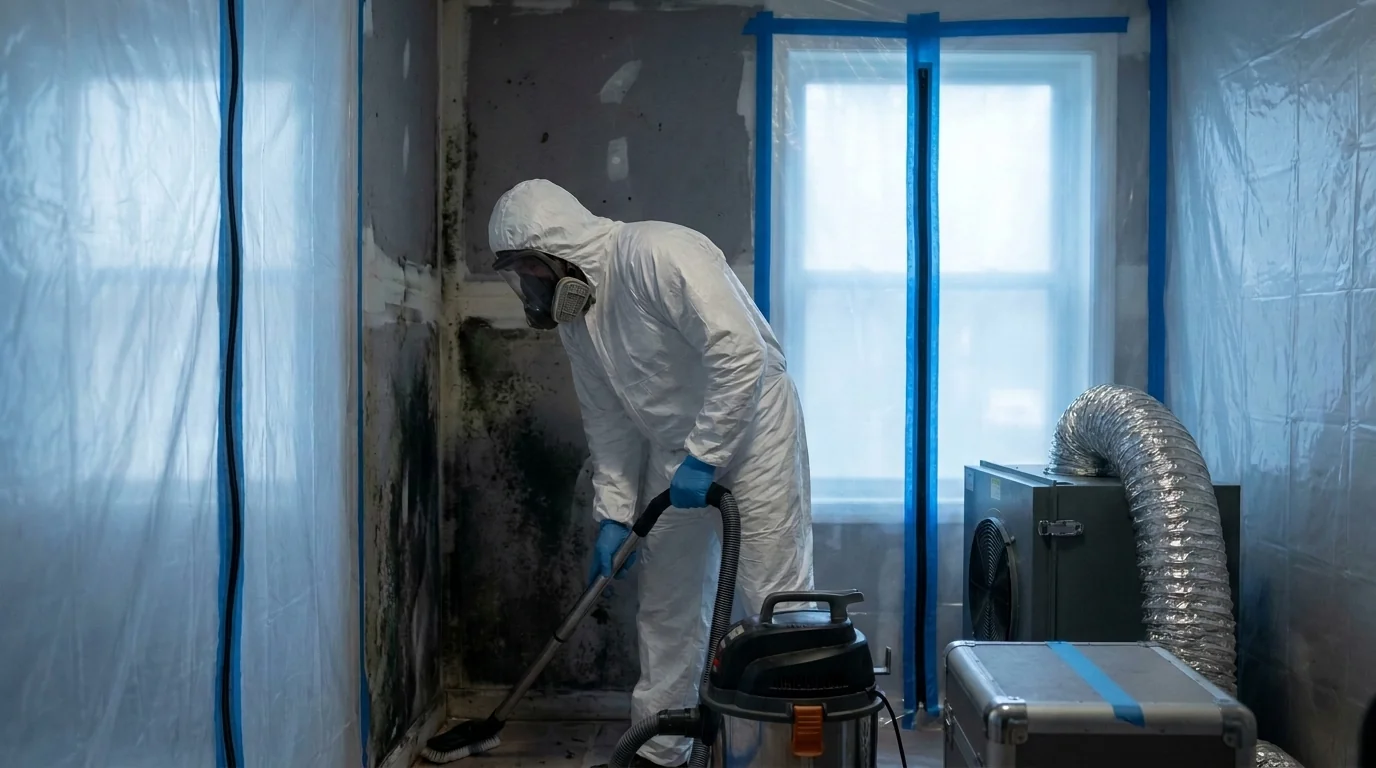
Once the scope is confirmed, the affected area is isolated with negative-air containment barriers. HEPA-filtered air scrubbers run continuously to capture airborne spores and prevent cross-contamination to unaffected rooms. Mold-damaged porous materials, drywall, insulation, subfloor sections, are removed, bagged, and disposed of per New Jersey DEP guidelines. Structural surfaces that can be preserved are treated with EPA-registered antimicrobial agents and dried to verified moisture content before any reconstruction begins.
As an IICRC Certified Firm (#210213), the remediation follows the S520 Standard for Professional Mold Remediation, which governs containment protocols, clearance criteria, and documentation, the same documentation your insurance adjuster will want to see.
Reaching Wayne from Kenilworth
The Restoration Group’s base in Kenilworth puts Wayne well within reach around the clock. The most direct route runs north on the Garden State Parkway to I-287 West, putting crews into Wayne in under 30 minutes under normal conditions. For calls originating near the Route 23 corridor or the Willowbrook Mall area, the approach via Route 46 West is often faster during off-peak hours. Because Wayne has genuine 24/7 emergency needs, river flooding doesn’t wait for business hours, the team is available any time, day or night.
Wayne Insurance Coordination
Mold claims in Wayne frequently originate from documented flood events, which changes how they’re handled compared to a simple pipe-burst claim. Insurance carriers often distinguish between “sudden and accidental” water damage and gradual seepage or flood-related losses, and that distinction matters enormously for coverage. The Restoration Group documents the loss thoroughly from the first inspection, photographs, moisture readings, scope of affected materials, and works directly with adjusters to support your claim. Homeowners in the Hoffman Grove and Mountain View sections who experienced Ida losses may also have separate flood insurance through NFIP, and the documentation requirements differ; the team is familiar with both tracks.
Local Note
One pattern that comes up repeatedly in Wayne’s lake communities: the finished basements in Packanack Lake and Pines Lake ranches were often built with wood-paneled walls over furring strips directly against the foundation block, no vapor barrier, no air gap. When moisture migrates through the block after a high-water event, it feeds mold growth in the cavity behind the paneling without any visible sign on the panel face. Probing and moisture mapping behind those walls before assuming a basement is dry is standard practice on Wayne jobs; skipping that step is how mold gets missed and comes back.
If you’re dealing with a musty smell, visible discoloration, or you’ve had standing water in your Wayne home recently, the window to act before mold spreads further is short. Call The Restoration Group at (855) 650-7422, the team is available 24/7 and can schedule an inspection for any address in Wayne, from the river corridors near Mountain View to the hillside neighborhoods closer to High Mountain Park Preserve.
Serving Wayne from our Fair Lawn headquarters — ★ 4.8 · 166 Google reviews
“Prompt, knowledgeable, skillful and honest. Highly recommend. They remediated within 24 hours. Total peace of mind restored. Worth every penny.” - Anne, October 2026Read our reviews on Google →
Mold Remediation in Wayne: Service Coverage
Frequently Asked Questions
How fast can you arrive for mold remediation in Wayne?
Are homes in Packanack Lake and Pines Lake more prone to recurring mold than other Wayne neighborhoods?
My Wayne home flooded during Ida in 2021 and I had it dried out — could mold still be a problem now?
Does the Hoffman Grove area's chronic flooding history affect how mold remediation is scoped or priced?
What does mold containment actually involve, and why does it matter in an occupied Wayne home?
How does mold remediation documentation work for a Wayne homeowner filing an insurance claim after a water loss?
Mold Remediation response in Wayne
Most Wayne calls see a technician on-site within 60 minutes from our Fair Lawn headquarters.