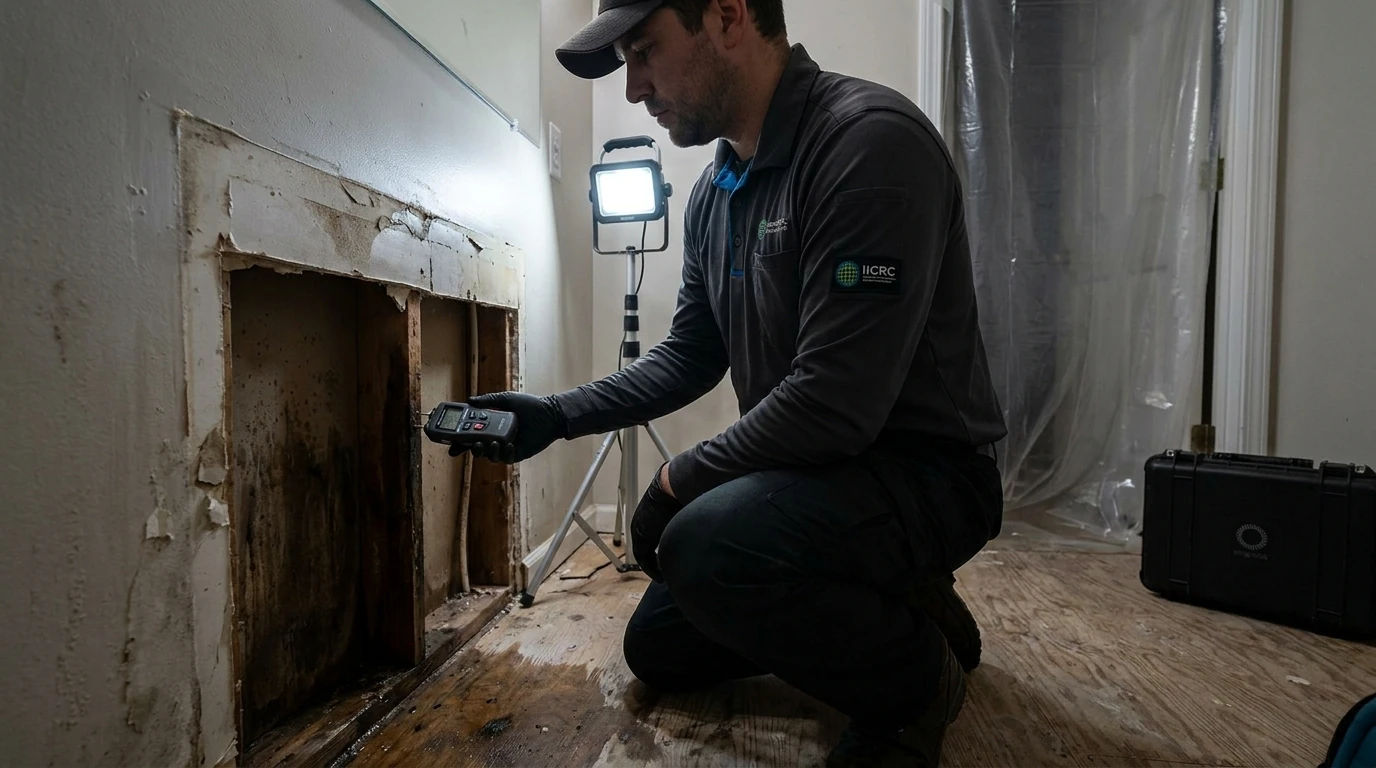
TL;DR: Homeowners insurance usually covers black mold remediation only when the mold grew from a sudden, covered event, such as a burst pipe or an appliance that failed unexpectedly. If the mold traces back to a slow leak, poor ventilation, or deferred maintenance, most policies deny the claim. Most standard policies also cap mold coverage at a $5,000 to $10,000 sublimit, even when the cause is covered. The faster you act after water damage, the stronger your claim.
You noticed dark staining behind the drywall during a bathroom renovation, or your adjuster flagged mold during a water damage inspection, and now you are trying to figure out whether your policy will pay. The answer depends almost entirely on one question: what caused the moisture that fed the mold? If it was a sudden, accidental event your policy already covers, mold remediation is usually included, up to the policy’s sublimit. If it was a slow drip you did not catch for months, the claim is almost certainly denied.
Does homeowners insurance cover black mold?
Homeowners insurance covers mold remediation when the mold is a direct result of a covered peril. A covered peril is an event your policy explicitly insures against, such as a burst pipe, a failed water heater, an appliance leak that happened suddenly, or accidental discharge from a plumbing fixture. In those cases, the mold is treated as a byproduct of the covered water damage, and remediation costs are included, subject to any mold sublimit in your policy.
Most standard HO-3 policies do NOT cover mold that results from:
- A slow or gradual leak (a dripping supply line behind a wall that went unnoticed for weeks)
- Flooding from outside (that requires a separate NFIP or private flood policy, covered in detail at What Does Flood Insurance Cover for New Jersey Homeowners)
- High indoor humidity or condensation
- Deferred maintenance (a roof leak you knew about but did not repair)
- Seepage through foundation walls
The EPA’s mold guidance notes that mold can begin growing within 24 to 48 hours of a moisture event. That growth window matters enormously for your claim: the longer water sits, the harder it is to argue the damage was sudden and quickly addressed.
What is the mold coverage limit on a homeowners policy?
Most standard homeowners policies carry a mold sublimit, a separate, lower cap that applies specifically to mold-related losses even when the underlying cause is covered. Typical sublimits run $5,000 to $10,000. A few policies offer $25,000 or more, and some carriers offer mold endorsements that raise the limit for an added premium.
If your remediation estimate exceeds the sublimit, you pay the difference out of pocket. Professional mold remediation for a single affected room in a typical New Jersey home commonly runs $2,000 to $6,000. A whole-basement or multi-room job can reach $15,000 or higher, which is why knowing your sublimit before you file matters.
Check your declarations page for a line item labeled “Mold,” “Fungi,” or “Microorganism Coverage.” If you do not see one, call your agent and ask directly. Some carriers exclude mold entirely unless you purchase an endorsement.
Is mold covered if it came from a burst pipe?
Yes, in most cases. A burst pipe is a sudden, accidental event that virtually every HO-3 policy covers. If mold grew because water from that burst pipe saturated your drywall, insulation, or subfloor before it was dried, the mold remediation is generally covered as part of the same claim, up to the sublimit.
The documentation you produce in the first 48 hours is what protects that claim. Adjusters look for evidence that:
- The pipe failure was sudden, not a slow pinhole leak that worsened over time
- You took reasonable steps to stop the water and begin drying immediately
- A qualified contractor documented moisture readings before, during, and after drying
For a step-by-step guide to the first hours after a pipe failure, see the Burst Pipe Emergency Checklist. The IICRC S520 standard governs professional mold remediation and is the framework adjusters and remediation contractors both reference when scoping a mold claim.
Does insurance cover mold from a slow leak?
Almost never. Gradual leaks are the most common reason mold claims are denied. Insurance policies are designed to cover sudden, accidental losses, not maintenance failures or conditions that developed over time. A supply line that dripped slowly inside a cabinet for two months, a toilet that ran and seeped at the base, a roof flashing that let in water for a season: these are maintenance issues, and most policies explicitly exclude them.
The practical test adjusters apply: would a reasonable homeowner have discovered this leak if they performed normal maintenance and inspection? If the answer is yes, the claim is likely denied.
There are two partial exceptions worth knowing:
- Hidden decay: A handful of carriers cover “hidden” gradual leaks, meaning a pipe inside a wall that you genuinely could not see or detect. Coverage is narrow and requires documentation that the leak was not visible from any accessible surface.
- Endorsements: Some policies add gradual-leak coverage as a rider. Check your policy or ask your agent.
If you are not sure whether your mold traces to a sudden event or a slow leak, a professional mold inspection and testing can establish the timeline. Moisture mapping, material sampling, and a written report give your adjuster a factual basis to evaluate the claim rather than defaulting to a denial.
What documentation protects a mold insurance claim?
Strong documentation is the difference between a paid claim and a denied one. Start collecting evidence immediately, before any cleanup begins.
Before remediation starts:
- Photographs and video of all visible mold and water damage, with timestamps
- Moisture meter readings of affected and adjacent materials (a contractor can provide these)
- Written notes on when you first noticed the water event and what you did in response
- Any plumber or contractor invoices related to the source repair
During remediation:
- A written scope of work from an IICRC-certified firm, referencing the S520 standard
- Daily moisture logs showing drying progress
- Air sampling or surface sampling results if the adjuster or your contractor recommends them
- Photographs of containment setup, equipment placement, and material removal
After remediation:
- Clearance testing results confirming mold counts are within normal limits
- Final invoice with line-item detail
Adjusters are trained to look for gaps in this record. A remediation contractor who handles insurance work regularly will produce most of this documentation as a matter of course. If you are not sure what your current mold situation looks like, the 7 Signs You Have Hidden Mold post covers what to look for before you call anyone.
What should you do if you find mold after water damage?
Call a remediation contractor before you call your adjuster. That order matters. A contractor can assess the scope, document moisture conditions, and give you a written estimate. That estimate tells you whether the job is likely within your sublimit or well above it, which shapes how you approach the claim conversation.
Here is the sequence that protects your claim:
- Stop the water source if it is still active
- Photograph everything before any cleanup
- Call a certified remediation contractor for an assessment
- Notify your insurance carrier promptly (most policies require “timely” notice)
- Do not remove mold-affected materials before the adjuster documents them, unless the contractor advises it for safety
- Get a written scope and cost estimate to submit with your claim
Mold grows fast. The IICRC S520 and EPA both note that 24 to 48 hours is enough for mold to establish on wet organic material. Waiting even a few days after discovering water damage can turn a manageable remediation into a much larger job, and it can complicate your claim by making the timeline harder to establish.
Not sure whether what you are seeing is black mold or something less serious? The Black Mold vs Regular Mold post explains the visual and practical differences without requiring a lab test to understand.
If you have active mold growth or recently discovered water damage in your home, The Restoration Group is an IICRC Certified Firm (Firm #210213) serving New Jersey and the NY metro area around the clock. Their team handles mold remediation and water damage restoration and produces the written documentation adjusters require. Reach them at (855) 650-7422.
About The Restoration Group
The Restoration Group is an IICRC Certified Firm (#210213) founded in 2021, serving New Jersey and the New York metro area with 24/7 emergency response. Their crews handle water damage restoration, flood damage, mold remediation, mold inspection and testing, fire and smoke damage, sewage cleanup, storm damage, and biohazard cleanup across Union, Essex, Bergen, Middlesex, and Hudson counties and into Brooklyn, Manhattan, and Staten Island. They are a licensed New Jersey Home Improvement Contractor and carry insurance on every job.
Video Transcript
Found black mold in your home and wondering if insurance will pay for it? The answer depends on one critical question. Homeowners insurance typically covers mold only when it results from a sudden, accidental event your policy already covers. Think burst pipes, a failed water heater, or an appliance that suddenly leaked. Those events make mold remediation part of your claim. But if mold grew from a slow drip, poor ventilation, or a roof leak you ignored, most policies will deny that claim entirely. Flooding from outside is also excluded from standard policies. That requires a separate flood insurance policy altogether. Most standard policies cap mold coverage at five to ten thousand dollars, even when the cause is covered. Know your limit before you file. Mold grows within 24 to 48 hours of water damage. Acting fast protects both your home and your insurance claim. Document everything before cleanup starts. Photos, moisture readings, and a contractor’s written report are what get claims approved. A professional mold inspection can establish the timeline of damage, giving your adjuster facts instead of guesswork. Don’t navigate a mold claim alone. Call The Restoration Group at 855-650-7422 for a free estimate today.