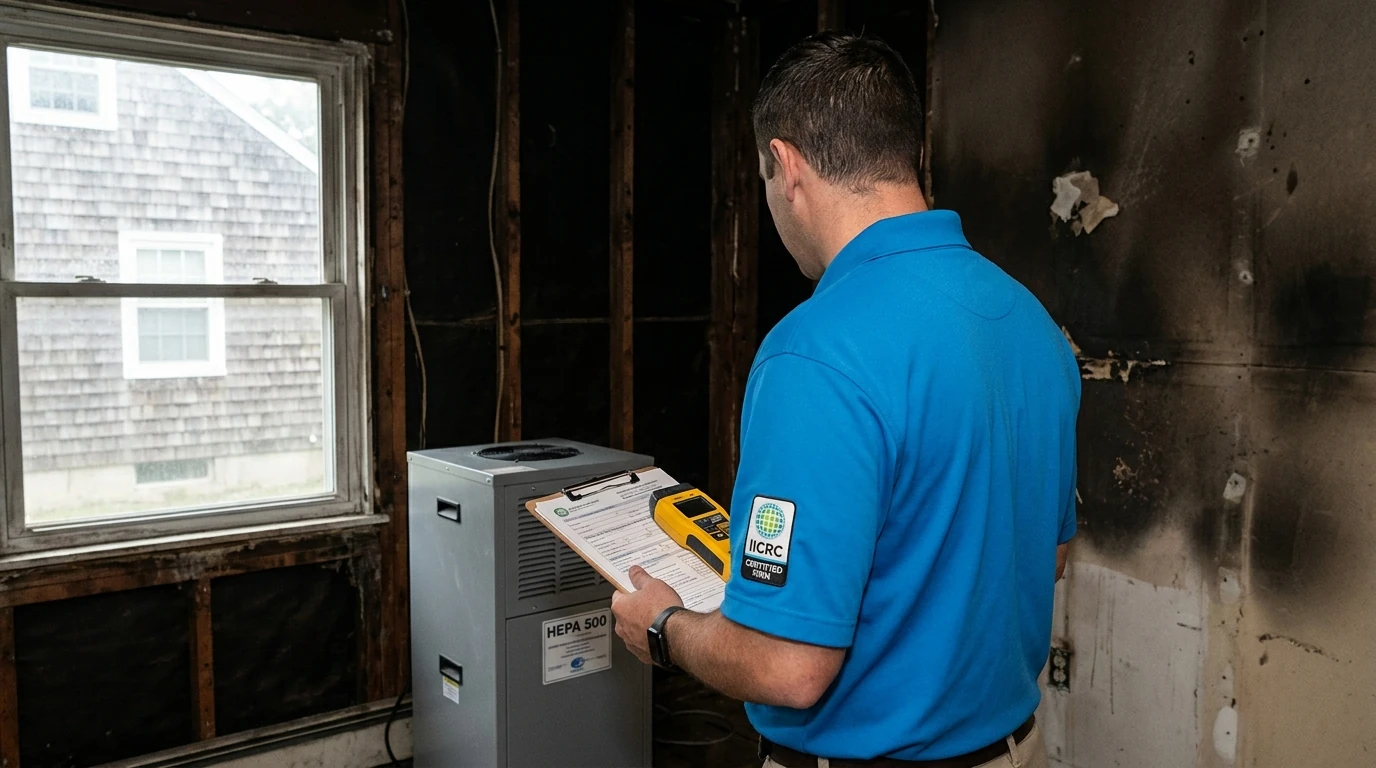
TL;DR: Most homeowners insurance policies cover fire damage to your home’s structure, your belongings, and smoke or soot damage even without direct flame contact, since fire is a standard named peril. Coverage splits into three parts: dwelling, personal property, and additional living expenses if you can’t stay home during repairs. Arson by the policyholder and damage tied to a long-vacant home are typically excluded. Always confirm the specifics against your own policy.
If a kitchen fire or an electrical short just forced your family out of the house, you’re probably staring at a stack of insurance paperwork and wondering what actually gets paid for. In New Jersey, most standard HO-3 homeowners policies are built to respond to exactly this. The coverage is broader than people expect, but it’s also split into pieces that pay out differently, and a few specific situations can limit or void it.
Does homeowners insurance cover fire damage?
Yes. Fire is one of the named perils every standard homeowners policy (HO-1 through HO-5) covers by default, which means you don’t have to prove negligence, just that a fire happened and damaged covered property. That applies to accidental fires from cooking, wiring, lightning, candles and most other everyday causes.
The payout, though, isn’t one lump sum. It’s broken into separate coverage limits for the structure, your belongings, and the cost of living somewhere else while repairs happen, each with its own dollar cap. According to the Insurance Information Institute, this three-part structure is standard across nearly all U.S. homeowners policies, New Jersey included.
What’s the difference between dwelling, contents, and loss-of-use coverage?
These are the three coverage buckets a fire claim draws from, and each has its own limit on your declarations page. Dwelling coverage (often called Coverage A) pays to repair or rebuild the structure itself, from studs and drywall to the roof and built-in cabinetry. Personal property coverage (Coverage C) pays to repair or replace your belongings, furniture, clothing, electronics, and is typically set at 50 to 70 percent of your dwelling limit. Additional living expenses, or ALE (Coverage D), reimburses hotel stays, temporary rentals, extra meal costs and other reasonable expenses while your home is unlivable.
ALE is the one homeowners forget about until they need it. If smoke damage makes a bedroom wing uninhabitable for six weeks of reconstruction, that coverage is what pays the hotel bill, not your savings account. It’s usually capped as a percentage of dwelling coverage or a set number of months, so check your declarations page for the actual limit.
Does insurance cover smoke and soot damage without flame contact?
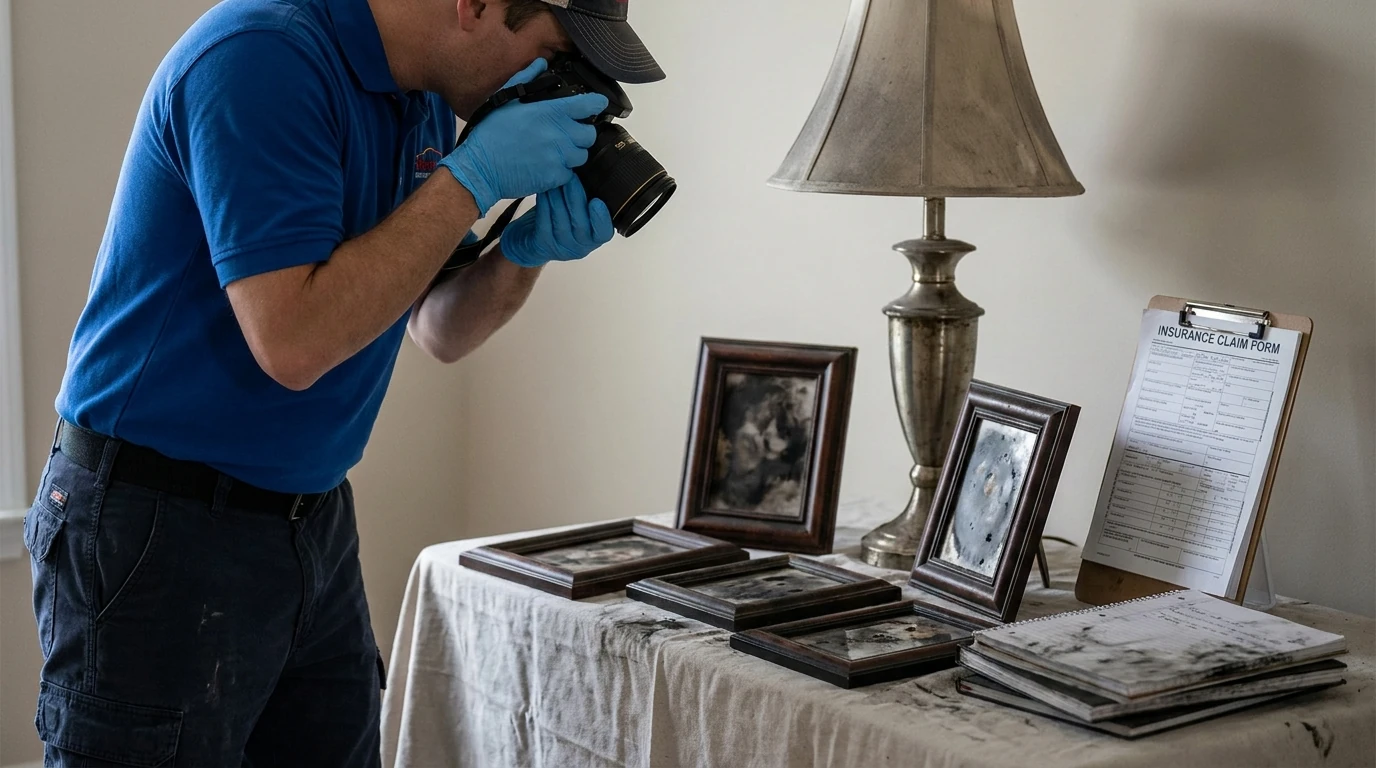
Yes, smoke damage is generally covered under the same fire peril, even in rooms the flames never reached. Smoke travels through HVAC ducts, wall cavities and door gaps, and soot residue, along with the acidic byproducts of combustion, can damage drywall, finishes and contents throughout a home within hours.
This also extends to a fire that started next door. If smoke from a neighbor’s house damages your property, your own homeowners policy is typically what pays your claim, not the neighbor’s insurer, since you file against your own coverage regardless of where the fire originated. You may have a separate path to recover your deductible from the neighbor’s insurer if their policy finds them at fault, but that’s a secondary process, not your first claim. For cleanup itself, our smoke damage restoration team runs air scrubbers, thermal fogging and surface cleaning to address residue that’s often invisible until it starts yellowing paint or lingering in fabric weeks later.
What fire damage isn’t covered by homeowners insurance?
The biggest exclusion is intent: arson or any fire the policyholder deliberately sets or has set on their behalf is never covered, and insurers investigate suspicious fires closely before paying a claim. A second major exclusion is vacancy. Most policies suspend or void coverage if a home has sat unoccupied for a defined period, commonly 30 to 60 days, unless you’ve added a vacancy endorsement.
A few other situations commonly reduce or deny a fire claim:
- Deferred maintenance. Damage traced to known, unrepaired wiring or chimney issues can be denied as a maintenance failure rather than a sudden loss.
- Business property on-site. Home-based business equipment often has lower sub-limits or no coverage under a standard homeowners policy.
- Code-upgrade gaps. Rebuilding to current fire and electrical code can cost more than your original dwelling limit unless you carry ordinance-or-law coverage.
None of this is legal advice. Every policy’s exact wording and exclusions differ, so read your declarations page and endorsements, or ask your agent directly, before assuming either way.
What if my home is hard to insure in NJ?
Homeowners who’ve been dropped by a standard carrier, often after a prior claim or because of an older electrical system, can still get fire coverage through the New Jersey FAIR Plan, the state’s insurer of last resort. The FAIR Plan is administered through the New Jersey Department of Banking and Insurance and provides basic fire and property coverage when the standard market won’t write a policy. It’s not a substitute for full market coverage, coverage limits and endorsements tend to be narrower, but it keeps a home insurable and a fire claim payable while the owner works toward standard coverage again.
How do you file a fire insurance claim, and who pays for restoration while it’s pending?
Call your insurer within 24 to 48 hours, document every room with photos before anything is moved, and get mitigation started immediately to prevent secondary smoke and water damage from firefighting efforts. Most adjusters expect an immediate mitigation call; waiting lets soot etch into finishes and standing water from suppression start a second, separate mold claim.
In practice, a restoration company often performs emergency board-up, water extraction from firefighting runoff, and content pack-out before the adjuster has even finished the first site visit, then bills that work directly to the claim once it’s approved. That’s the model our fire damage restoration crews follow: stabilize the property first, document everything with photos and moisture logs the adjuster can use, and keep you informed of what’s covered and what isn’t as the scope develops. For a full first-24-hours walkthrough, see our guide on what to do after a house fire.
If you’re comparing this against a water-loss claim, the coverage logic is similar but the exclusions differ quite a bit. Our companion post, does homeowners insurance cover water damage, walks through that side by side.
Fire claims move fastest when the paperwork and the mitigation happen in parallel, not in sequence. Getting a documented, insurance-ready scope started the same day you report the loss is usually what separates a smooth claim from a stalled one.
About The Restoration Group
The Restoration Group is an IICRC Certified Firm (#210213) serving Kenilworth and the surrounding New Jersey, New York City metro and eastern Pennsylvania region since 2021. The company is a NJ Licensed Home Improvement Contractor registered with the NJ Division of Consumer Affairs, and answers calls 24/7. Their crews handle fire, smoke, water, storm and mold damage restoration, from emergency mitigation through full reconstruction.
Need help now? Call The Restoration Group at (855) 650-7422.