TL;DR: Wait for the fire department to officially release the property before re-entering, even once the flames are out. Call your insurance company within 24 hours and avoid touching soot-covered surfaces or running the HVAC system until a professional assesses smoke contamination. Get the structure boarded up and tarped the same day to stop weather and theft exposure. Most homeowners policies cover fire damage, and restoration on a moderate structure fire typically runs two to six months from the first call to final repairs.
If the fire trucks just pulled away and you’re standing on the sidewalk looking at your own front door, the next few hours matter more than you’d think. What you do, and don’t do, in this window affects how much of your home and belongings can actually be saved, and how smoothly your insurance claim goes. This guide walks through that first day in order, then what follows in the weeks after.
What’s the first thing to do after a house fire?
The first thing to do is confirm the fire department has officially released the property back to you, because re-entering before that release is both illegal and dangerous. Smoldering embers inside walls can reignite hours later, and structural members weakened by heat can fail without warning.
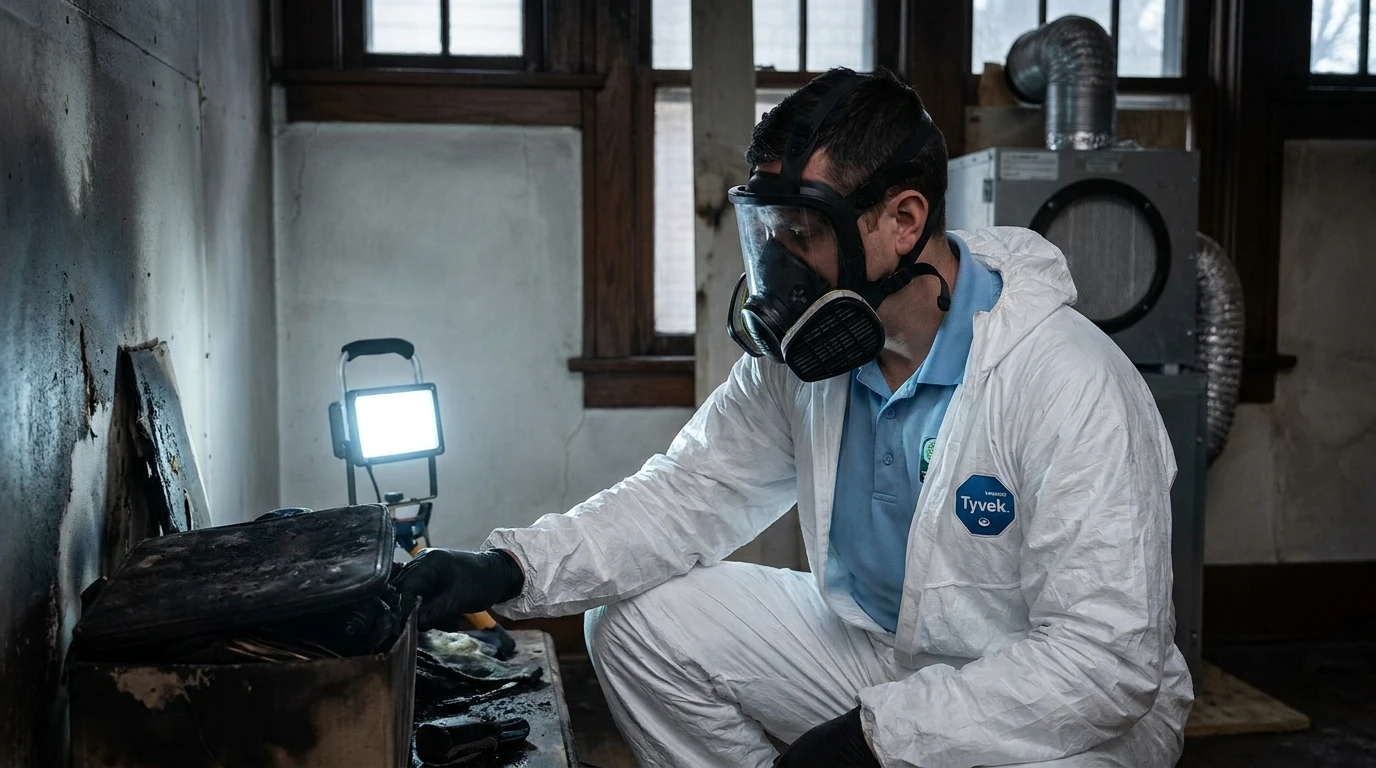
Once released, do a walk-through only if it’s been cleared as structurally safe, and only to retrieve medications, phones, or documents you genuinely need right away. Wear closed-toe shoes and avoid touching soot with bare hands, since it can be acidic and irritating to skin. If the fire department or a utility worker has shut off gas, water, or electric service to the structure, leave those off until a licensed technician inspects the lines; a fire that’s damaged wiring or gas piping can create a second emergency if power is restored too early.
This is also the moment to start documentation. Photograph every room, every damaged item, and the exterior from multiple angles before anything gets moved or cleaned. Insurance adjusters rely heavily on this early photo record, and it’s much harder to reconstruct later.
What happens after a house fire, in the days that follow?
In the days after a fire, the property typically gets secured with board-up and tarping, you file the insurance claim, and a restoration company assesses smoke, soot, and structural damage before any cleanup begins. This sequence protects the property from further loss and creates the paper trail your claim depends on.
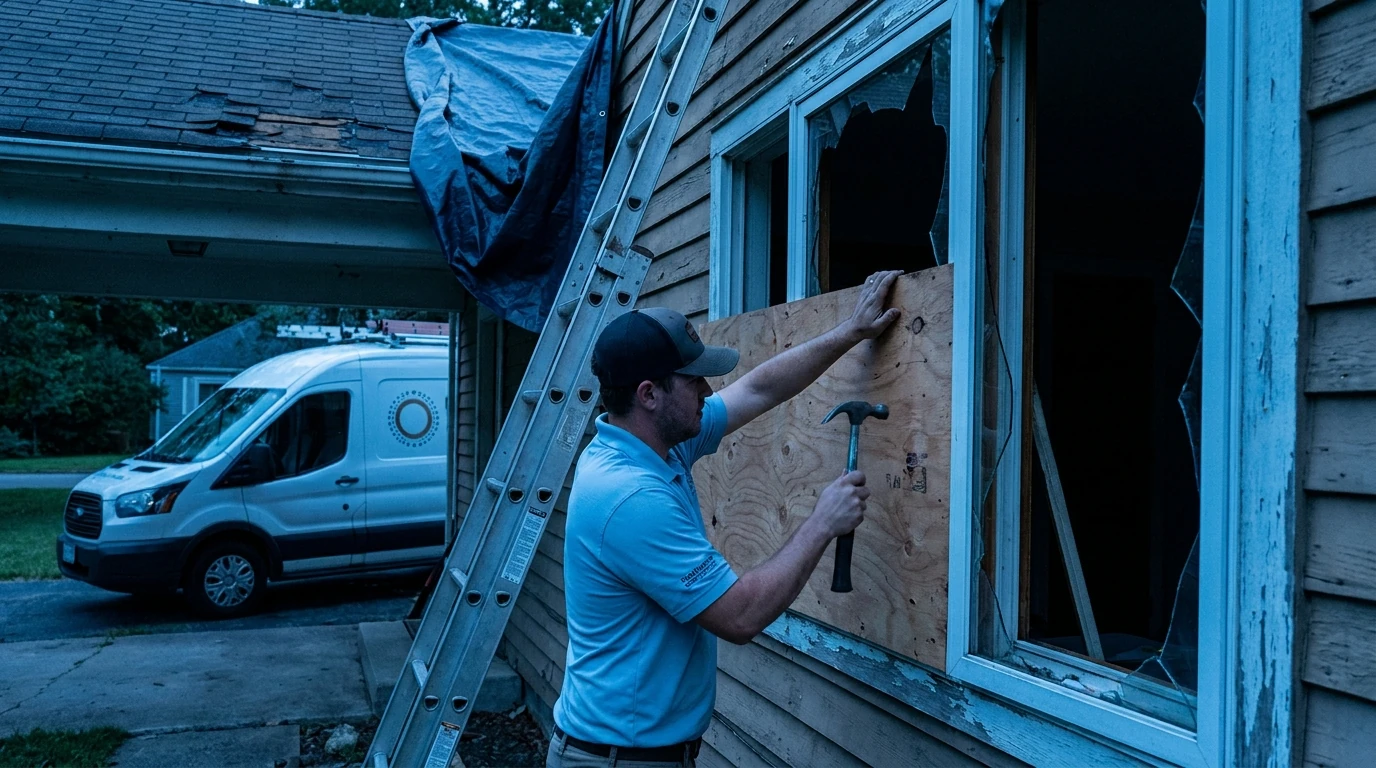
Boarding up broken windows and tarping a damaged roof the same day as the fire (or the next morning at the latest) stops rain, wind, and opportunistic theft from adding a second layer of damage on top of the first. Most policies actually require you to take reasonable steps to prevent further loss, so prompt board-up and tarping isn’t optional from a coverage standpoint either.
Call your insurance company within 24 hours if you haven’t already. Give them the basics: date, cause if known, and whether the home is currently habitable. They’ll assign an adjuster and may authorize emergency mitigation work immediately, which is where a restoration company’s initial scope and moisture/soot assessment comes in. Expect them to use IICRC S700, the industry standard for fire and smoke restoration published by the IICRC, to guide how cleaning, deodorization, and structural drying get sequenced.
This part of the process looks different in multifamily or shared-wall housing, which is common across Union County’s older Kenilworth, Union, and Elizabeth neighborhoods. A fire confined to one apartment or one side of a duplex can still smoke out an entire building through shared attics, shared HVAC returns, or simply open stairwells, which means neighboring units may need odor and soot assessment even if flames never reached them. Landlords in these buildings should expect to coordinate mitigation across units, not just the unit of origin.
For a deeper look at how the phases unfold, see our fire damage restoration process breakdown.
What should you not do after a house fire?
The biggest mistake people make is cleaning soot or smoke residue themselves before a professional assessment, because household cleaners can set soot into porous surfaces permanently. What looks like a quick wipe-down can actually smear acidic soot deeper into drywall, grout, and fabric.
Avoid turning the HVAC system back on until it’s been inspected. Smoke particles pulled through ductwork during the fire settle inside the system, and running it afterward redistributes soot and odor through rooms that may not have been directly affected. Don’t throw away damaged items before they’re photographed and logged for your claim, even items that look like a total loss; your adjuster needs that inventory. And don’t eat food that was in the kitchen or a refrigerator that lost power during the fire, since smoke and heat exposure can contaminate food in ways that aren’t visible.
One more: don’t assume insurance will deny the claim because of how the fire started. Most homeowners policies cover accidental fires regardless of cause (a grease fire, an electrical fault, a space heater) as long as it wasn’t intentional or the result of ignoring a known hazard. If you’re unsure where you stand, our guide on whether to file an insurance claim walks through similar decision points, though it’s written for water losses, the documentation logic carries over.
Can you live in a house after a fire, and how bad is the structural damage?
Whether you can live in a house after a fire depends on smoke penetration, structural integrity, and utility status, and in many moderate fires the answer is no, at least temporarily. Even when flames stayed contained to one room, smoke odor and soot residue often spread through the whole HVAC system and settle into carpets, upholstery, and wall cavities elsewhere in the house.
Structural red flags that mean the home isn’t safe to occupy include charred or sagging roof framing, warped floor joists, buckled walls, and any area the fire department has flagged with warning tape. A structural engineer or your restoration contractor’s assessment will typically note which framing members need sistering or replacement versus which can be cleaned and sealed.
Even in homes that are structurally sound, lingering smoke odor is the most common reason people can’t move back in right away. Odor molecules bond to porous materials and often require thermal fogging, ozone or hydroxyl treatment, and sealing of affected surfaces before they clear. Our breakdown of how professionals remove smoke odor covers why DIY approaches like febreze and open windows rarely solve it.
If you need to be out of the home during mitigation, ask about a contents pack-out: salvageable belongings get inventoried, cleaned off-site, and stored until the structure is ready, which also protects them from further soot exposure during repairs.
Who pays for fire damage restoration, and how long does it take?
Most homeowners insurance policies pay for fire damage restoration under the dwelling and personal property coverage, after your deductible, as long as the fire wasn’t caused by arson or deliberate negligence. Additional Living Expenses (ALE) coverage, often included in standard policies, can pay for a hotel or short-term rental while the home is unlivable.
Timeline depends heavily on severity. A contained kitchen or single-room fire with limited smoke spread might be mitigated, cleaned, and repaired in four to eight weeks. A fire that damaged structural framing, required full reconstruction of a room or floor, and involved whole-house smoke remediation can take two to six months, sometimes longer if structural engineering reports or permitting are involved. The U.S. Fire Administration and the American Red Cross both publish immediate-aftermath checklists worth keeping on hand alongside your insurer’s claim number.
Ask for a written scope of work before mitigation starts. It should separate emergency services (board-up, tarping, water used for fire suppression, initial soot encapsulation) from the full restoration and reconstruction phase, since insurers typically process these as distinct line items.
Getting these first steps right, the fire department release, the same-day board-up, the photo documentation before cleanup, sets up everything that follows. A restoration company that’s done this sequence hundreds of times can keep the insurance side organized while the structural and smoke work happens in parallel.
About The Restoration Group
The Restoration Group is an IICRC Certified Firm (#210213) and NJ Licensed Home Improvement Contractor serving Kenilworth and the greater Union County area since 2021, with crews covering northern and central New Jersey, the NYC metro, and eastern Pennsylvania. As a 24/7 operation, they handle fire, smoke, water, storm, and mold restoration, from emergency board-up through full reconstruction, with documentation built for insurance claims.