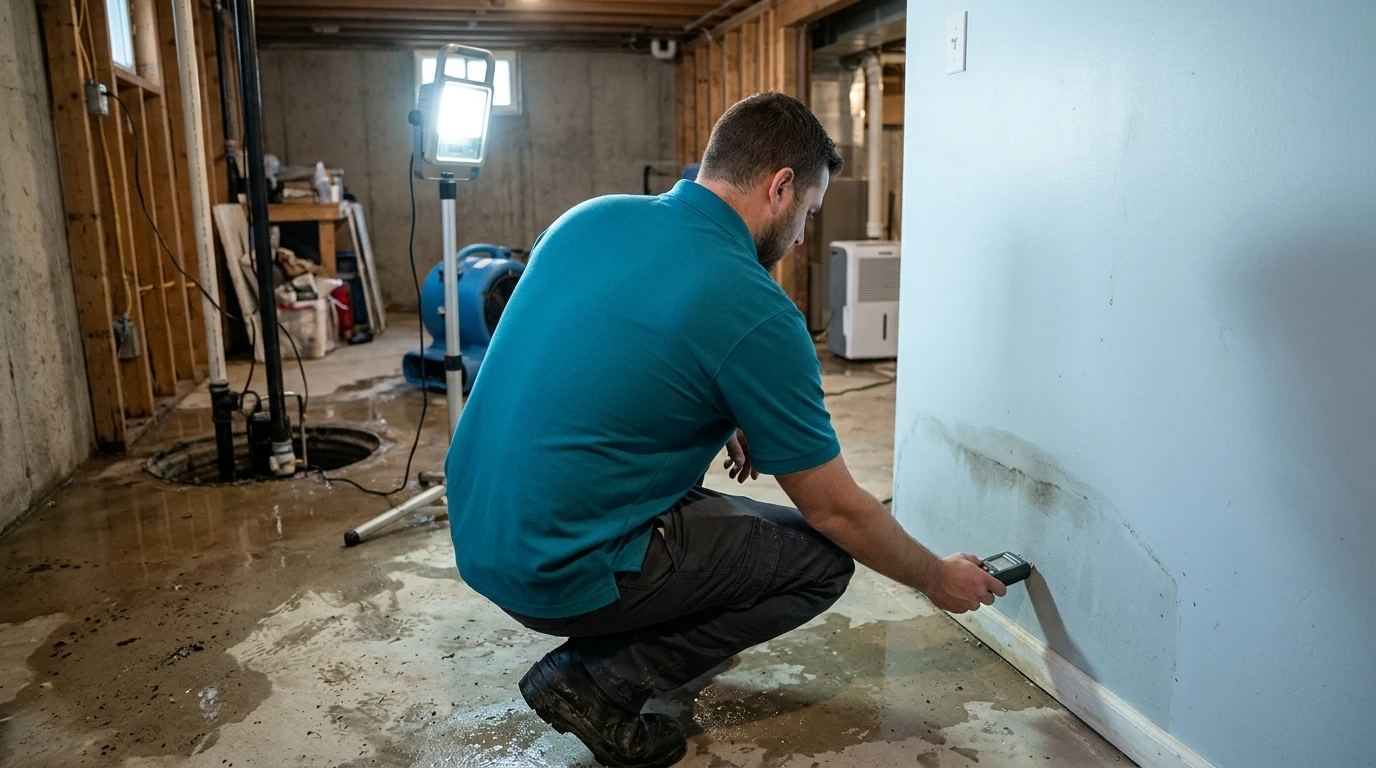
TL;DR: Flood cleanup in Fair Lawn typically costs $3 to $9 per square foot for extraction, drying and sanitizing, with a flooded basement often landing between $4,000 and $15,000 depending on the water’s contamination level and how many days the drying equipment has to run. Groundwater and river flooding from the Passaic or Saddle River usually cost more than a clean-water loss because contaminated materials come out rather than get dried in place. A written scope before work starts protects both the budget and the insurance claim.
If storm water from the Saddle River or the Passaic has come up through your Fair Lawn basement, maybe not for the first time if you’re on River Road or Saddle River Road, you’re probably trying to figure out what this is going to cost before you sign anything. Flood cleanup pricing depends less on the address and more on three things: how much square footage took on water, what category that water falls into, and how many days structural drying has to run. Here’s what actually moves the number, and where insurance usually stops paying.
How Much Does Flood Cleanup Cost in Fair Lawn, NJ?
Flood cleanup in Fair Lawn typically runs $3 to $9 per square foot of affected space, which works out to roughly $4,000 to $15,000 for an average flooded basement, depending on contamination level and drying time. Whole-floor losses and heavily contaminated water push past that range.
| Scenario | Typical Cost Range |
|---|---|
| Clean-water appliance or supply-line flood, single room | $1,500 - $4,000 |
| Groundwater seepage, finished basement (500-800 sq ft) | $4,000 - $9,000 |
| River or storm flood water (Category 3), basement | $7,000 - $15,000 |
| Sewage backup combined with flood water | $6,000 - $14,000 |
| Crawl space flood cleanup | $2,000 - $6,000 |
| Whole first-floor flooding, storm surge or river overflow | $15,000 - $35,000+ |
These are typical industry ranges for northern New Jersey, not a quote. Every flood is different, square footage, how long water sat, and what materials it touched all move the final number, so a written scope is worth getting before any work begins.
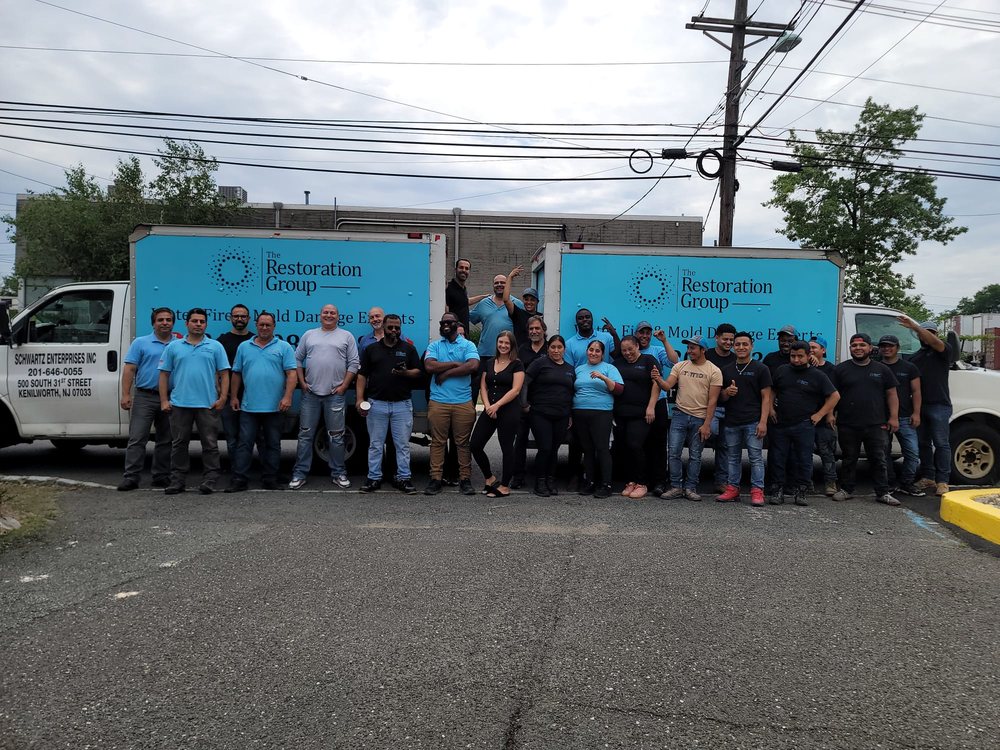
Recent job photo from The Restoration Group.
What Drives the Price Up or Down?
Four factors set most of the bill: square footage, water category, drying days, and what materials got wet. Everything else is a variation on these.
- Square footage affected sets the baseline. Extraction and air-mover placement are priced per square foot or per room.
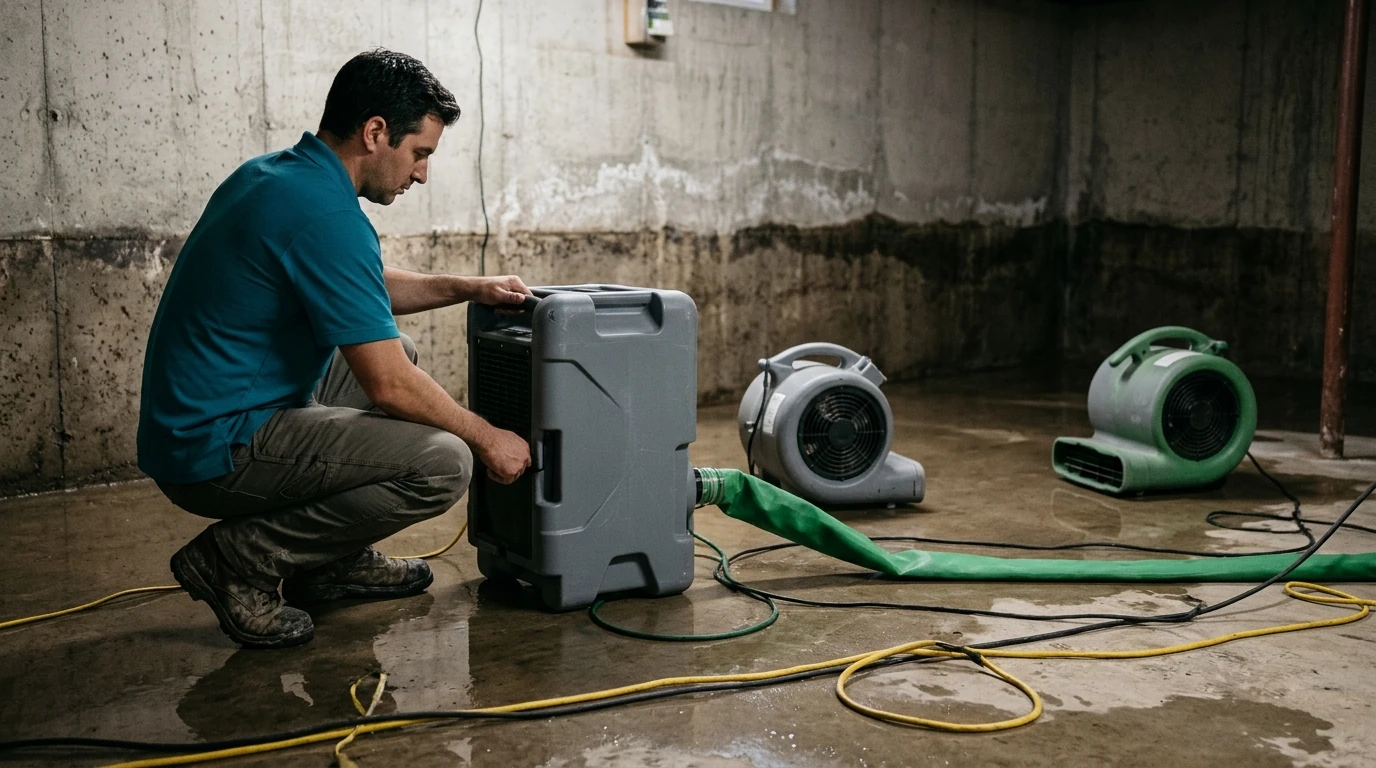
- Drying days add up. Air movers, LGR dehumidifiers and air scrubbers are typically billed per unit per day until a moisture meter confirms the structure is dry, usually 3 to 5 days for a contained basement, longer for groundwater intrusion through concrete.
- Materials affected matter. Drywall cut to 2 feet above the waterline, soaked insulation, and carpet pad are usually removed rather than dried, since Category 2 and 3 water saturates porous materials faster than it can be safely dried in place.
- Access and layout change labor time. A finished basement with built-ins and furniture takes longer to clear and protect than an open slab.
Does the Type of Water Change the Cost?
Yes. Category 3 water (sewage, river flooding, storm surge) costs more to clean up than Category 1 clean water because more material has to be removed and treated rather than dried. The ANSI/IICRC S500 standard sets the categories restoration crews use to scope a job.
A burst supply line or water heater failure starts as Category 1, clean water, but can degrade if it sits or touches contaminants. Groundwater seeping in through a foundation under hydrostatic pressure, which is common after heavy rain along the Saddle River and Passaic River corridors, is Category 2, significant contamination, even though it looks like “just rainwater.” River overflow, storm surge, and any water carrying sewage are Category 3 and require antimicrobial treatment, PPE, and near-total removal of porous materials in the affected zone. That’s the main reason a river-flooded basement costs more per square foot than a burst-pipe basement of the same size.
How Do Restoration Companies Bill for Flood Cleanup?
Most restoration companies, including insurance adjusters, price flood jobs using Xactimate, a standardized estimating platform with regional line-item costs for extraction, drying equipment, demolition, and disposal. That’s why an itemized Xactimate estimate is usually the fastest route to a claim payment: the adjuster is reading the same pricing structure the company used to build the scope.
A typical line-item scope breaks out square footage of extraction, number of air movers and dehumidifiers per day, antimicrobial application, and disposal of removed materials. Ask for that itemized breakdown before work starts. It’s also the document your insurer will want if you’re filing a claim.
Does Homeowners Insurance or Flood Insurance Pay for This?
Standard homeowners insurance generally does not cover flood damage from rising rivers, storm surge, or surface water flowing in from outside; that requires a separate flood insurance policy through the National Flood Insurance Program or a private flood carrier. Homeowners policies typically do cover sudden, accidental water damage from inside the home, like a burst pipe, but flood is excluded by name in most standard forms.
A sump pump failure or sewer backup sits in its own category too: that’s usually covered only if you’ve added a water backup endorsement to your policy, not under standard coverage. Given how often the Passaic and Saddle River push water into Fair Lawn basements, it’s worth checking with your agent or the New Jersey Department of Banking and Insurance whether your policy includes that endorsement and whether an NFIP policy makes sense for your address. Our related post on what flood insurance actually covers and whether homeowners insurance covers water damage walks through both in more detail.
Basement Flooding vs Whole-House Flooding: Does Cost Scale Differently?
Costs scale roughly with square footage, but a whole-house flood isn’t just a bigger basement bill. Water that reaches the first floor adds flooring, baseboard, and sometimes lower cabinetry to the scope, and drying has to account for multiple levels instead of one contained space. A dedicated breakdown of basement-specific flood cleanup pricing is coming to this site; for now, expect a basement-only loss to track toward the lower half of the ranges above, and a first-floor or multi-level flood to track toward the top.
If water is actively in your basement right now, shut off electricity to the affected area at the breaker (never enter standing water near outlets or appliances) and photograph the damage before anything is moved. For flood cleanup in Fair Lawn, The Restoration Group can typically get a crew on-site within about 60 minutes to start extraction and document the loss for your insurer, and the company answers the phone 24/7.
Getting water out fast and documented protects both your home and your claim. A moisture assessment the same day you call is the quickest way to know what this particular job will actually cost.
About The Restoration Group
The company is an IICRC Certified Firm (#210213) and an NJ Licensed Home Improvement Contractor, licensed and insured, that has handled water, flood, fire, storm, mold, and sewage cleanup across Bergen, Union, and Essex County communities, including Fair Lawn, since 2021. Crews run 24/7 and typically respond within about 60 minutes of a call, with every job built around a written, Xactimate-based scope before work begins.
Need help now? Call The Restoration Group at (844) 808-8838.
Video Transcript
Water in your Fair Lawn basement after a storm? Let’s break down what flood cleanup actually costs. Flood cleanup typically runs three to nine dollars per square foot, with a flooded basement landing between four and fifteen thousand dollars. Four things drive that price: square footage affected, drying days needed, what materials got wet, and how hard the space is to access. Not all water is equal. Clean water from a burst pipe costs less to dry than groundwater or river water through your foundation. River and storm water carry contamination, so soaked drywall, insulation, and carpet usually get removed instead of dried in place. That’s why a river flood from the Saddle River or Passaic costs more per square foot than a simple appliance leak. Most contractors and adjusters price jobs using the same estimating system, so an itemized scope helps your claim move faster. Standard homeowners insurance usually won’t cover river or storm flooding. That requires separate flood insurance through the National Flood Insurance Program. Sump pump failures and sewer backups are often only covered with a water backup endorsement, so check your policy now. Get a written scope before work starts to protect your budget and support your claim. Call The Restoration Group at (844) 808-8838 to schedule an assessment.