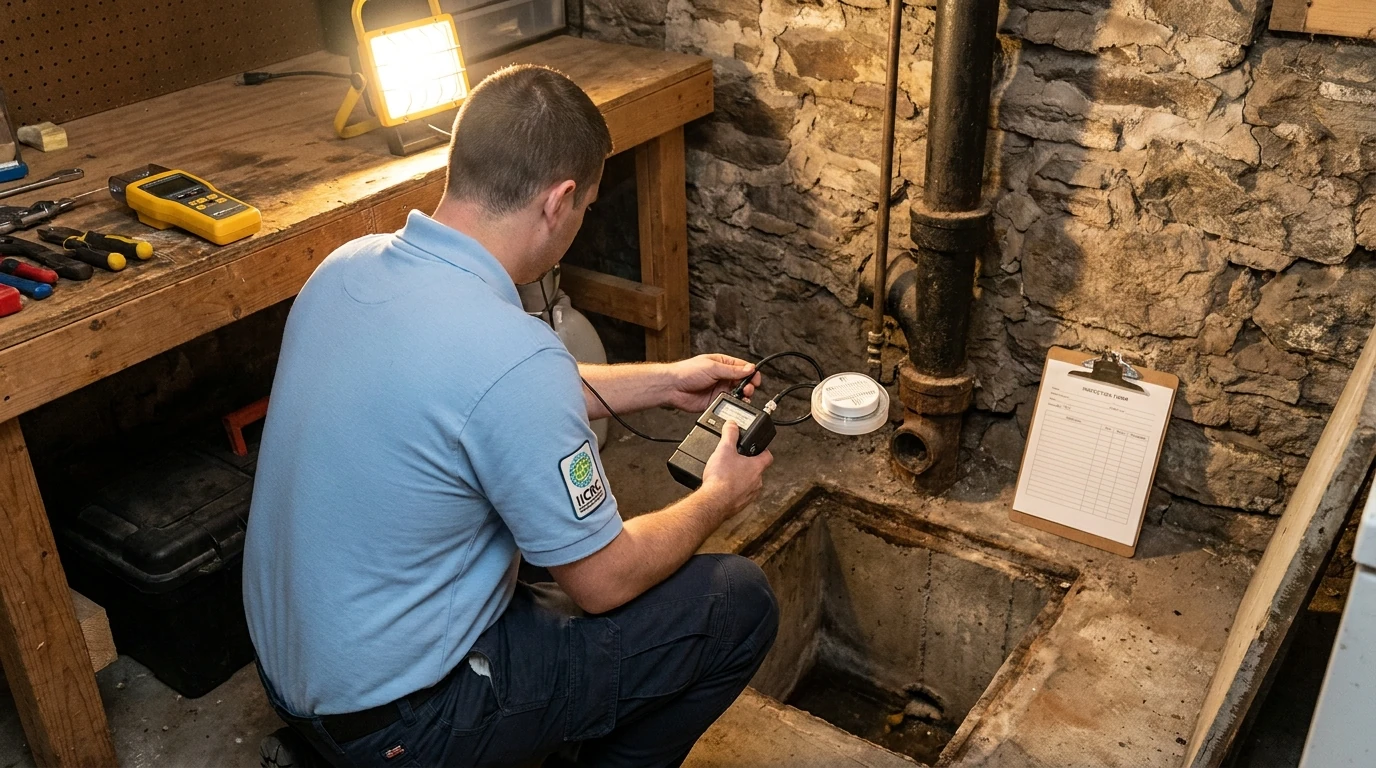
TL;DR: A mold inspection in Fair Lawn, NJ typically costs $300 to $900 for a single-family home. A visual-only walkthrough runs $200 to $350. Adding lab sampling, air cassettes or surface swabs at roughly $30 to $75 per sample, pushes a full inspection to $400 to $1,100. Pre-purchase inspections on Fair Lawn’s older Radburn-era homes often land at the higher end because of crawl spaces and finished basements that need extra attention.
If you’re closing on a 1930s Radburn colonial next month and the home inspector flagged a musty smell near the sump pit, or you just noticed dark spotting on a basement wall after this spring’s storms backed up near River Road, you’re probably trying to figure out what a real mold inspection costs before you commit to one. The price depends almost entirely on how much lab work is involved and how hard the suspect area is to reach, not on a flat per-visit fee.
How much does a mold inspection cost in Fair Lawn, NJ?
Most Fair Lawn homeowners pay $300 to $900 for a mold inspection, with the final number set by how many samples the inspector collects and analyzes. A basic visual inspection with a moisture meter, no lab samples, costs less. A full inspection with air sampling and surface swabs on a larger or more complicated property costs more.
Here’s what that looks like broken into scenarios:
| Scenario | Typical cost |
|---|---|
| Visual inspection only, single room, no lab samples | $200 - $350 |
| Visual inspection + air sampling (2 samples) | $400 - $650 |
| Full-home inspection, air + surface samples (typical Fair Lawn cape or colonial) | $600 - $1,100 |
| Pre-purchase inspection, older Radburn-era home with basement + crawl space | $500 - $900 |
| Post-remediation clearance testing (confirms a prior mold job is clean) | $300 - $600 |
| Commercial or multi-unit inspection (Broadway corridor retail, small multifamily) | $800 - $1,800 |
These are typical industry ranges for northern New Jersey, not a quote. Every property is different, and The Restoration Group provides a written scope before any work begins so there are no surprises.
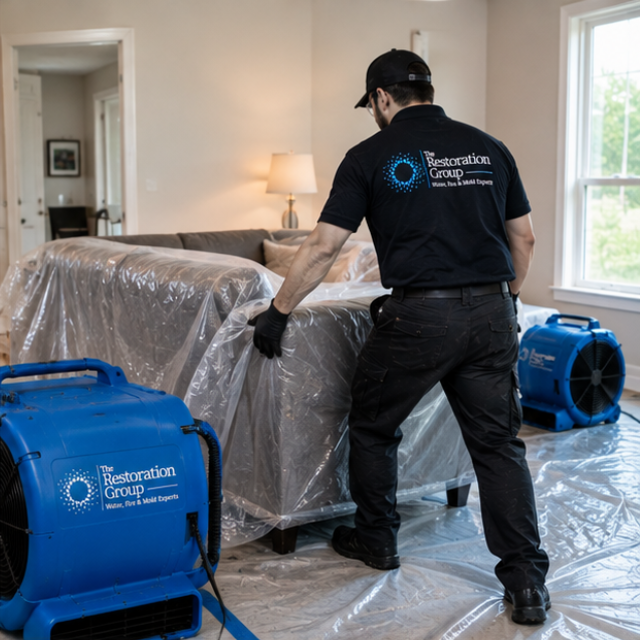
Recent job photo from The Restoration Group.
What actually drives the price up or down?
The number of lab samples is usually the single biggest cost driver, since each cassette or swab carries its own lab fee on top of the inspector’s time. A two-sample inspection and a six-sample inspection can differ by several hundred dollars even though the on-site visit takes about the same amount of time.
Beyond sample count, a few things move the number:
- Square footage and layout. A full Radburn colonial with a finished basement takes longer to inspect than a single flagged room.
- Accessibility. Crawl spaces, tight attic access, and finished basements near the Passaic and Saddle Rivers (both of which flooded during Ida in 2021) often need extra time and sometimes a borescope to check inside wall cavities.
- Purpose of the inspection. Pre-purchase inspections tend to cover the whole structure. Post-remediation clearance testing usually focuses on the specific area that was treated, which can keep the cost lower.
- Air sampling vs. surface sampling. Air samples (spore trap cassettes, usually one indoor sample per suspect area plus one outdoor baseline) run roughly $75 to $150 per sample including lab analysis. Surface samples (tape lifts or swabs of visible growth) are typically a bit less per sample but only tell you about that specific spot, not what’s floating in the air.
Is a mold inspection worth it before buying an older Fair Lawn home?
Yes, for most buyers of pre-1960s housing stock, a standalone mold inspection is worth the cost, especially when the general home inspection notes moisture, odor, or past water intrusion. A standard home inspection is a visual walkthrough; it is not designed to sample air or confirm what’s growing behind drywall.
Fair Lawn’s Radburn-era homes and postwar capes and colonials often sit on full basements with original cast-iron drains and supply lines that have been failing on schedule for years. Add in the flooding the Passaic River and Saddle River produced during Ida, and it’s common for a basement near River Road or Saddle River Road to have had water intrusion that was dried imperfectly. A targeted mold inspection before closing gives you documentation, not just a guess, which matters if you need to negotiate repair credits.
If the inspection does turn up elevated spore counts or visible growth, see our guide on signs of hidden mold for what the report language typically means in practice.
Mold inspection vs. mold remediation: what’s the cost difference?
A mold inspection diagnoses the problem; mold remediation removes it, and remediation almost always costs more than the inspection that identified it. Inspection fees ($300 to $900 in most cases) cover assessment and lab confirmation. Remediation, which includes containment, HEPA air scrubbing, and material removal, is priced separately based on the square footage and severity of the growth found.
Think of it as two separate decisions. The inspection tells you whether you have a problem and how big it is. If mold remediation turns out to be necessary, that inspection report becomes the scope document the remediation crew works from, and in many cases it’s also what an insurance adjuster wants to see before approving coverage.
Does insurance pay for a mold inspection?
Usually not on its own, unless the mold is a direct result of a water loss your policy already covers. Most New Jersey homeowners policies treat mold as excluded unless it stems from a covered peril like a burst pipe or appliance failure, and even then many policies cap mold-related costs at a sublimit, often somewhere between $1,000 and $10,000 depending on the policy.
If you’re filing a claim tied to a recent leak or flood, the inspection and sampling costs tied to documenting that specific loss are more likely to be considered part of the claim than a standalone mold check done out of general concern. Keep every receipt and the written inspection report. That documentation is what an adjuster needs to evaluate the claim, and it’s the same paperwork our mold inspection and testing team provides on every job. For more on how coverage typically plays out, see does homeowners insurance cover black mold.
What does a mold inspection actually involve?
A standard inspection moves through a predictable sequence, whether it’s triggered by a musty smell, a pre-purchase concern, or a follow-up after remediation:
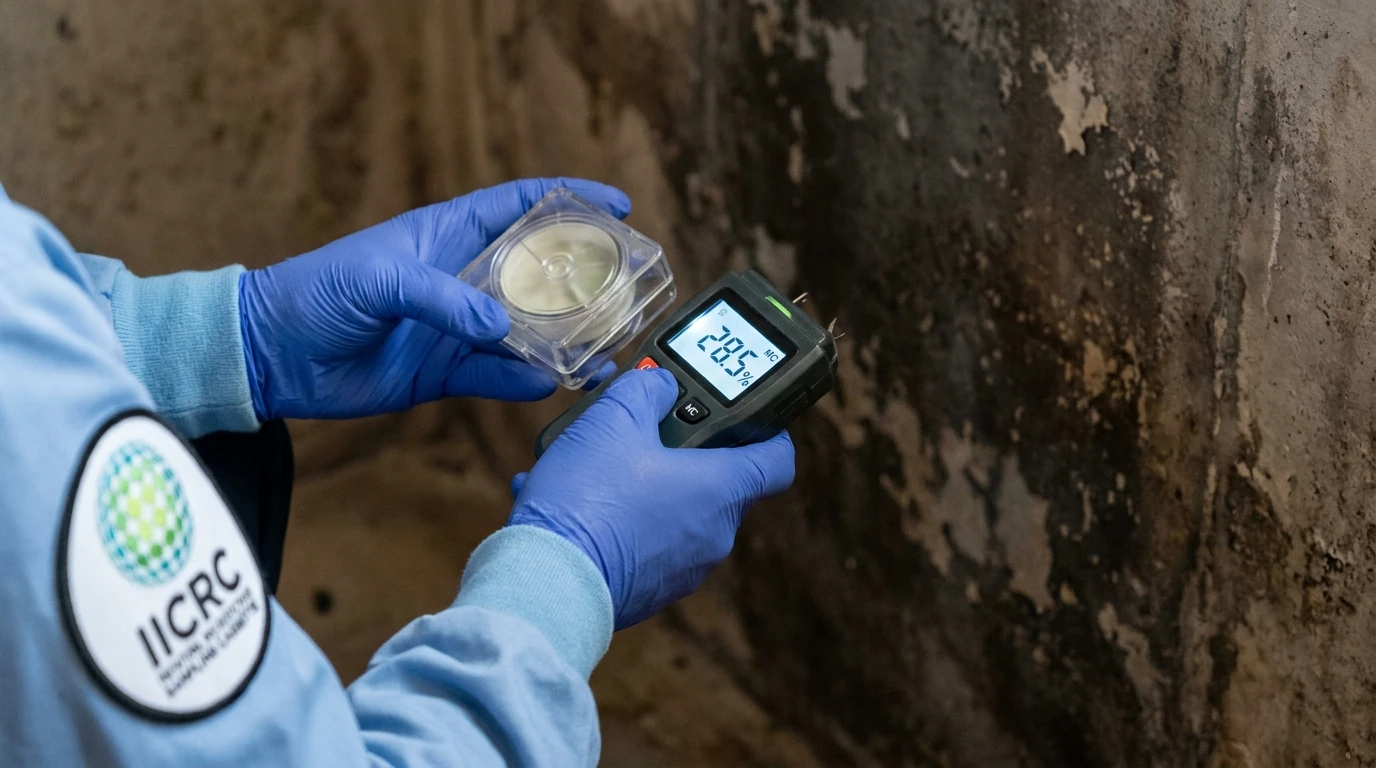
- Visual walkthrough. The inspector checks suspect areas with a moisture meter, looking for visible growth, staining, and elevated moisture readings in walls, framing, and flooring.
- Air sampling. Spore trap cassettes collect an indoor sample from the suspect area and an outdoor baseline sample, so the lab can compare indoor spore counts against what’s naturally in the outside air.
- Surface sampling. If growth is visible, a tape lift or swab sample identifies the specific mold genus present.
- Lab analysis. Samples go to an accredited lab, with results typically back in a few business days.
- Written report. The inspector delivers findings, photos, lab results, and recommendations, following the structure outlined in the EPA’s mold guidance and the IICRC S520 standard for mold assessment and remediation.
If you want to understand the testing methods in more depth before scheduling anything, our post on how to test for mold walks through DIY kits versus a professional inspection and where each one falls short.
A musty smell, a water stain that won’t go away, or a pre-purchase inspection flag are all reasonable triggers to schedule an assessment rather than guess. Schedule a mold inspection with The Restoration Group at (855) 650-7422 and a crew based out of our Fair Lawn location can get a written scope in hand before you make a decision either way.
About The Restoration Group
The Restoration Group is an IICRC Certified Firm (#210213) serving Fair Lawn and the surrounding New Jersey market, with crews based in Fair Lawn as one of the company’s office locations. Founded in 2021 and licensed as a Home Improvement Contractor through the NJ Division of Consumer Affairs, the company handles mold inspection and testing, mold remediation, water damage restoration, and related restoration services across northern and central New Jersey. This post was prepared with the company’s restoration team.