TL;DR: Mold remediation in New Jersey typically costs $450 to $8,000 or more, depending on how much square footage is affected and how much material has to be removed. A small bathroom ceiling patch runs $450 to $1,200. A flooded basement wall with saturated drywall and insulation often runs $3,000 to $8,000. Homeowners insurance usually covers mold removal only when it followed a sudden, covered water loss, such as a burst pipe, not everyday humidity or a slow, ongoing leak.
If you just pulled back a baseboard in your Radburn or Warren Point basement and found a dark, fuzzy patch creeping up the drywall, your first question isn’t about process, it’s about price. Mold jobs in New Jersey range from a few hundred dollars for a contained bathroom spot to five figures for a whole basement after a bad storm. The number depends almost entirely on square footage, what materials got wet, and how long the moisture sat before anyone noticed.
How much does mold remediation cost in NJ?
Most New Jersey homeowners pay somewhere between $450 and $8,000 for mold remediation, with the final number set by square footage, the type of material affected, and whether containment and air filtration equipment are needed. A single contained spot costs far less than a basement that flooded and sat wet for days.
Here’s how that typically breaks down by scenario:
| Scenario | Typical Cost Range |
|---|---|
| Small bathroom or closet spot (under 10 sq ft) | $450 - $1,200 |
| Single room or basement wall section (10-100 sq ft) | $1,500 - $3,500 |
| Whole basement or crawl space remediation | $3,000 - $8,000 |
| HVAC or duct mold contamination | $2,000 - $6,000 |
| Attic mold remediation | $2,500 - $6,500 |
| Severe, widespread mold after a Category 3 water loss | $8,000 - $15,000+ |
These are typical industry ranges, not a quote. Every job is different, and a licensed firm should give you a written scope after an in-person inspection, not a number over the phone.
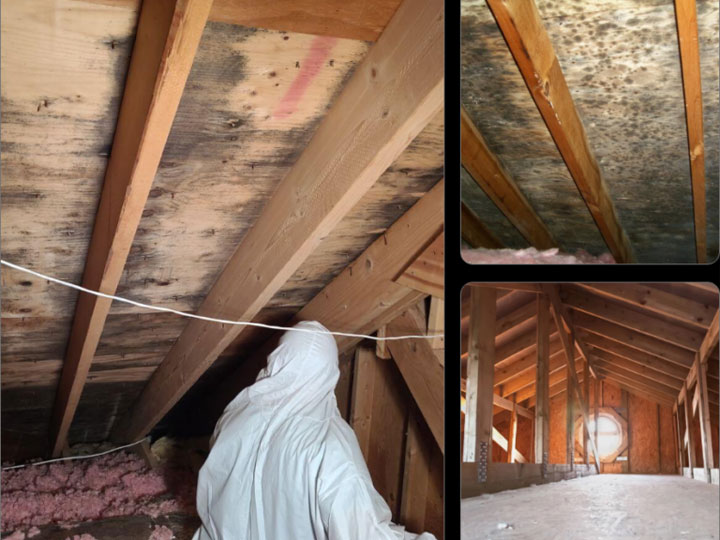
Recent job photo from The Restoration Group.
What drives the price of mold remediation up or down?
The biggest cost driver is how much porous material has to come out versus how much can be cleaned and treated in place. Drywall, insulation, and carpet padding that absorbed water usually get removed entirely rather than dried, because mold grows into the material itself, not just on its surface.
Other factors that move the number:
- Square footage and ceiling height. More surface area means more containment plastic, more labor hours, and more disposal volume.
- Accessibility. A crawl space under a 1920s Radburn-era home or a cramped attic takes longer to work in than an open basement, which raises labor cost.
- How long the moisture sat. Mold that’s been growing for weeks has usually spread further than the visible patch, which means more demolition once walls open up.
- Air scrubbing and negative air pressure. Jobs near occupied living space often need HEPA air scrubbers running for days to control spores, which adds equipment rental time to the invoice.
- Post-remediation verification testing. A third-party clearance test (confirming the air and surfaces are back to normal fungal levels) is sometimes billed separately from the remediation itself.
In Fair Lawn specifically, a lot of mold calls trace back to the same source: aging cast-iron drains and original supply lines in postwar capes and colonials failing quietly behind finished basement walls, often for months before anyone sees staining or smells it. That slow-leak pattern tends to produce wider mold spread than a one-time flood, because the drywall and framing have been wet on and off for a long time.
Will homeowners insurance cover the cost of mold remediation?
Mold coverage under a standard homeowners policy is usually limited, and it typically applies only when the mold resulted from a sudden, accidental covered loss, not from gradual seepage, humidity, or deferred maintenance. Many policies cap mold-related payouts at a few thousand dollars even when the underlying water damage is fully covered.
A burst supply line that soaks a wall and grows mold within 48 hours is the kind of claim insurers typically pay, at least toward the water damage portion. Mold from a basement that’s been slightly damp for a year because of a cracked foundation or an unaddressed sump pump issue is a different story. Insurers treat that as a maintenance problem, and most policies exclude it outright. If the source is a sewer or sump pump backup, that usually needs its own water backup endorsement added to the policy. It is not automatically covered.
Documentation matters either way. Photos of the water source, the date you discovered it, and a written moisture map from the remediation company all help support a claim if one applies. The EPA’s mold cleanup guidance and the Insurance Information Institute’s overview of standard homeowners coverage are both useful starting points before you call your carrier. Our guide to whether black mold is covered by insurance walks through this in more detail.
What does the mold remediation process actually involve?
Professional mold remediation follows a set sequence designed to remove the mold without spreading spores to the rest of the house. The work is guided by the ANSI/IICRC S520 standard for professional mold remediation, the industry benchmark most licensed firms train to.
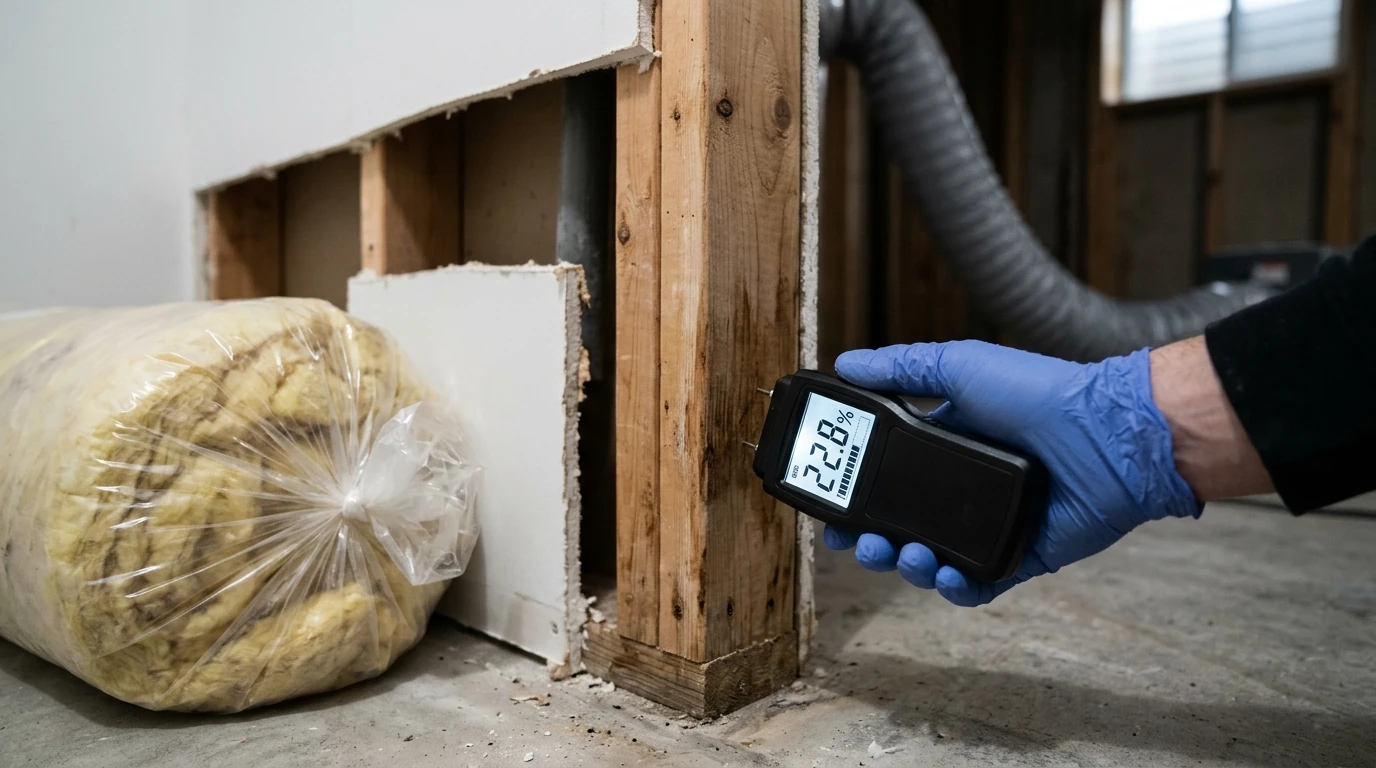
- Inspection and moisture mapping. A technician identifies the water source, measures moisture content in surrounding materials, and defines the affected area. Many jobs start here with an actual mold test; see our guide to how mold testing works if you’re deciding whether you need one first.
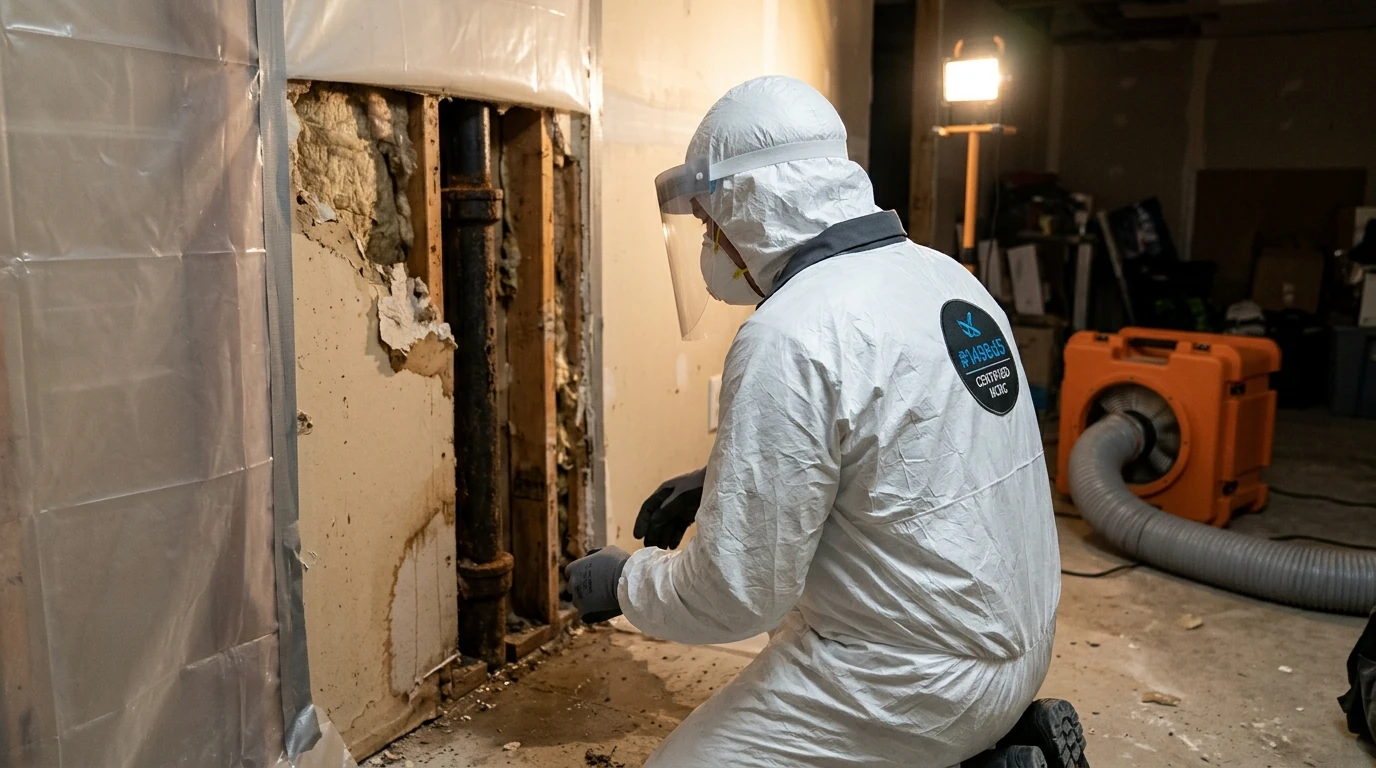
- Containment setup. Poly sheeting seals off the work area and negative air pressure keeps spores from traveling into living spaces during demolition.
- Removal of affected materials. Saturated drywall, insulation, and carpet padding are cut out and bagged for disposal. Structural wood is cleaned and treated rather than replaced when it’s still sound.
- HEPA vacuuming and surface cleaning. All remaining surfaces in the containment area get HEPA-vacuumed and wiped down to remove settled spores.
- Antimicrobial treatment and drying. Remaining materials are treated and the space is dried to normal moisture levels using air movers and dehumidifiers.
- Post-remediation verification. A clearance check confirms spore levels have returned to normal before containment comes down.
For more on how quickly mold takes hold after a water event, see how fast mold grows after water damage.
The Restoration Group provides a written scope of work before any demolition begins, so you know what’s included and what it covers before the invoice arrives. Call The Restoration Group at (844) 808-8838 to schedule a mold inspection if you’re seeing staining, smelling a musty odor, or just found a spot you’re not sure about.
About The Restoration Group
The Restoration Group is an IICRC Certified Firm serving Fair Lawn and the surrounding New Jersey, New York City metro, and eastern Pennsylvania region since 2021. Licensed as a NJ Home Improvement Contractor, their crews handle water, fire, storm, and mold damage restoration, including mold inspection and remediation, with 24/7 emergency response for active water sources.