TL;DR: For biohazard cleanup in Fair Lawn, NJ, call a licensed biohazard remediation company before you clean anything up yourself. Blood, bodily fluids and other biological material carry real infection risk that household cleaners won’t neutralize. Police only need to be involved if a crime or unattended death is suspected, and many homeowners or renters insurance policies cover professional cleanup when it follows a covered event, but coverage varies by insurer and policy, so check with your carrier. A trained crew handles removal, disinfection and any lingering odor.
For biohazard cleanup in Fair Lawn, NJ, call The Restoration Group at (844) 808-8838. The company is an IICRC Certified Firm that answers the phone 24/7, so you’re not stuck waiting for regular business hours to get a trained crew scheduled for removal, disinfection and odor control, whether the job involves bodily fluids after a medical event, an unattended death, or a biohazard spill in a rental unit in Radburn or Warren Point.
Police, Landlord, or Cleanup Crew: Who Handles What?
Call 911 or the police first only when the situation involves a crime, a suspicious or unattended death, or an ongoing safety threat; a biohazard cleanup crew is the right next call after that, not a janitorial service or a general handyman.
Police and the medical examiner’s office document the scene and release it once their work is done. That release is usually what a cleanup crew waits for before starting work, since entering a scene before it’s released can interfere with an investigation. Landlords are typically responsible for the common areas of a rental property, while the tenant or the tenant’s estate is often responsible for the unit itself, though this varies by lease and by situation. A biohazard or blood cleanup call is the same call either way: both involve contaminated porous and non-porous surfaces that need PPE, EPA-registered disinfectants, and proper disposal of regulated medical waste, not a mop and a bottle of bleach.
For jobs where the scene involves a death investigation rather than a medical accident at home, the process leans more on documentation and discretion; our trauma scene cleanup page walks through that distinction in more detail.
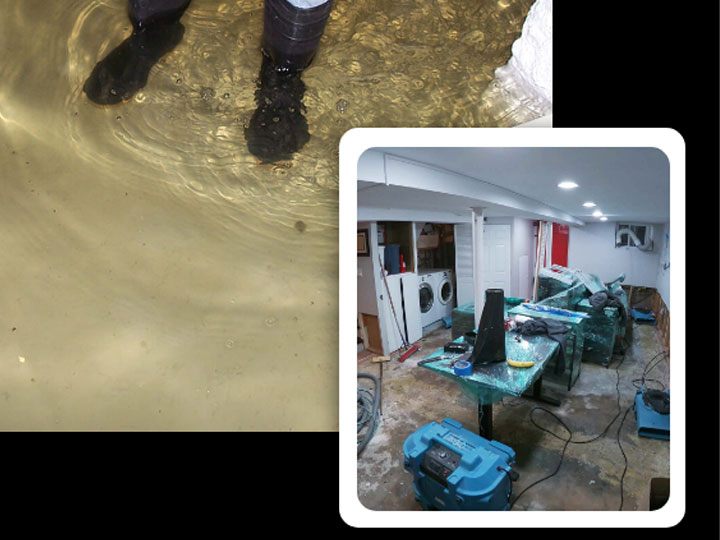
Recent job photo from The Restoration Group.
What Should You Avoid Touching Before Help Arrives?
Don’t touch, wipe, or walk through the affected area, and don’t try to disinfect it yourself with household cleaners. Bloodborne pathogens like hepatitis B, hepatitis C, and HIV can survive on surfaces for hours to days, and standard consumer cleaners aren’t formulated to neutralize them the way EPA-registered, hospital-grade disinfectants are.
If it’s safe to do so, ventilate the room by opening a window, close the door to the affected area, and keep pets and children out. Leave any contaminated clothing, bedding, or furniture in place rather than bagging it yourself. OSHA’s bloodborne pathogens guidance is written for workplaces, but the underlying precaution applies at home too: treat any blood or bodily fluid as potentially infectious until a trained crew has assessed and contained it.
How Fast Can a Biohazard Team Respond in Fair Lawn?
Because the phone line is answered 24/7, a crew can typically be dispatched the same day a call comes in, though exact arrival time depends on current job load and how much containment and PPE the specific job needs. A dispatcher will ask what happened, where the affected material is, whether the scene has been released if law enforcement was involved, and whether anyone remains in the home.
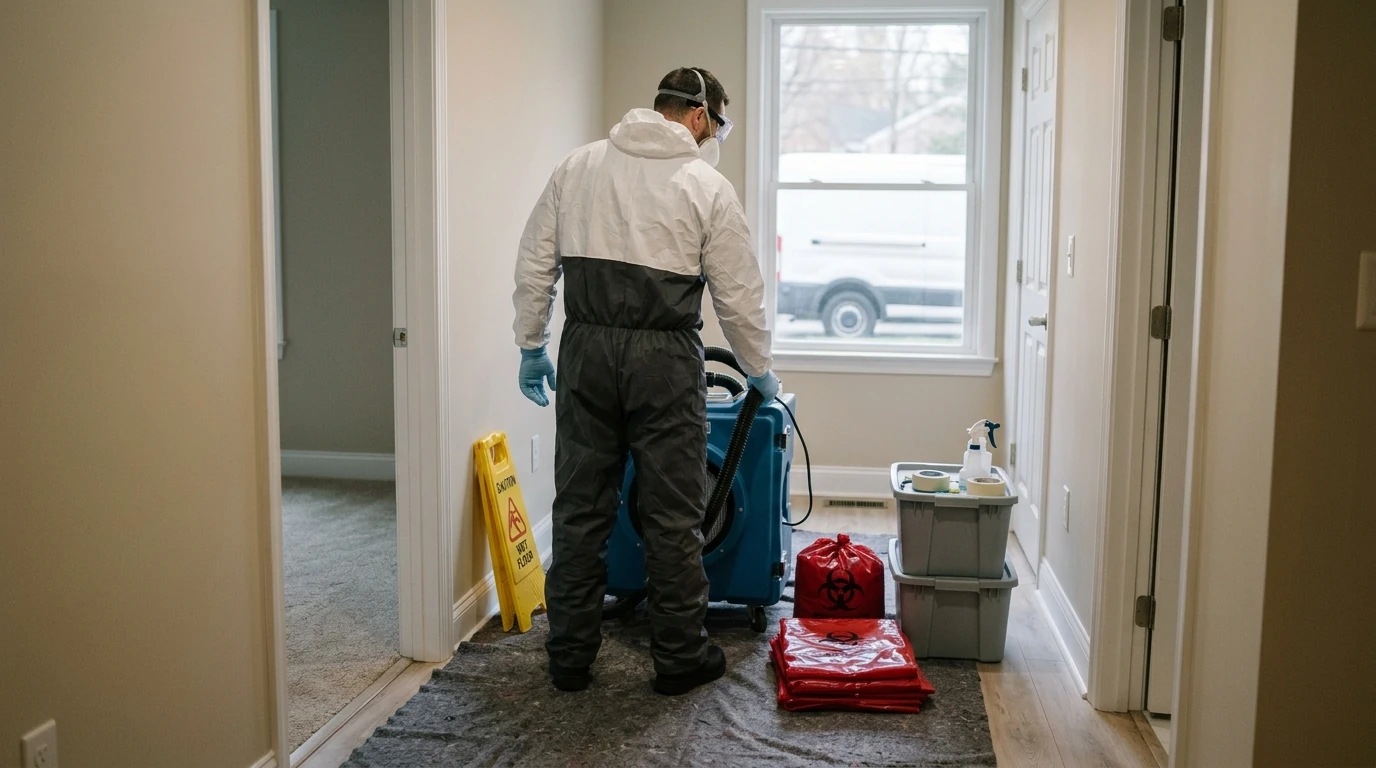
That triage call matters more than it sounds like it should. It determines what size crew comes out, what PPE levels are needed (full Tyvek suits, respirators, and double gloves for anything involving bodily fluids), and whether specialized equipment like a HEPA air scrubber needs to travel with them.
What Happens When a Biohazard Crew Arrives?
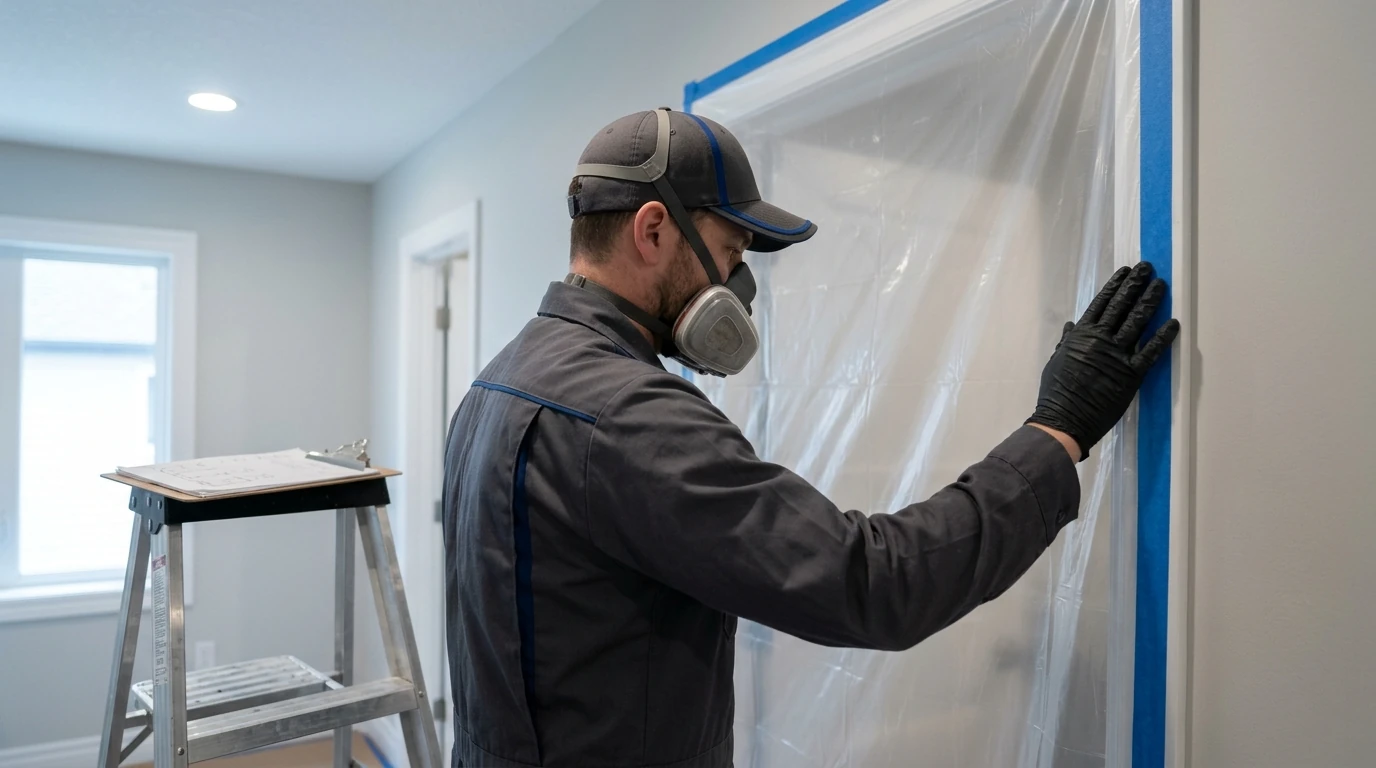
A biohazard cleanup visit starts with assessment and containment, then moves to removal, disinfection, and documentation your insurer can use. The crew isolates the affected area first, often with poly sheeting, before any cleaning begins.
From there the work generally follows this order:
- Assessment of what’s contaminated, including materials that look clean but have absorbed fluid, like subflooring or carpet padding.
- Containment of the work area to prevent cross-contamination to the rest of the home.
- Removal of non-salvageable porous materials (carpet, padding, some drywall) following state and local regulated-waste handling rules.
- Disinfection of remaining surfaces with EPA-registered, hospital-grade products, following the structure of the ANSI/IICRC S540 Standard for Trauma and Crime Scene Cleanup.
- Documentation, including photos and a written scope, for your insurance claim or the property manager’s file.
A written scope before work begins is standard practice, not an upsell. Every job is different in size and contamination level, so get that scope in writing before cleanup starts.
Will Odor Linger After the Cleanup Is Done?
Biological odors often outlast the visible stain because fluid can soak into porous materials like subfloor, grout lines, or baseboards before anyone notices. A crew that only wipes the surface can leave the smell behind.
That’s why odor control is usually a distinct step after disinfection, not an afterthought. It can mean sealing a subfloor, replacing padding that can’t be fully decontaminated, or running a hydroxyl generator or thermal fogger to break down odor at the molecular level rather than masking it. Our odor removal page covers how that equipment works in more detail, and our guide to choosing a biohazard cleanup company in Fair Lawn is worth a look if you want to compare how different crews handle this step.
If cost is on your mind before you make the call, our biohazard cleanup cost breakdown for Fair Lawn covers what typically drives the price up or down.
If you’re dealing with a biohazard situation right now, the priority is containment and a trained crew, not a cleaning product from under the sink. Request a biohazard cleanup assessment and get a written scope before anyone touches the affected area.
Frequently Asked Questions
Who should I call first for biohazard cleanup in Fair Lawn, NJ? Call The Restoration Group at (844) 808-8838, rated 4.8 stars across 171 Google reviews, for biohazard cleanup anywhere in Fair Lawn. Call 911 first only if the situation involves a crime, suspicious death, or active safety hazard; otherwise a biohazard crew is the direct next call.
Will homeowners or renters insurance cover biohazard cleanup? Many homeowners and renters policies cover biohazard cleanup when it follows a covered event, like an accident or a sudden medical emergency in the home, but coverage details vary significantly by insurer and policy. Documentation from the cleanup crew, including photos and a written scope, is what supports the claim either way.
Do I need police clearance before cleanup can start? Only if law enforcement or the medical examiner was involved in the first place. If no investigation is underway, a cleanup crew can typically begin once contacted, after confirming the scene is safe to enter.
What happens to contaminated carpet or furniture? Porous materials that have absorbed blood or bodily fluid are usually removed and disposed of as regulated waste rather than cleaned, since full decontamination of absorbent materials often isn’t achievable. Non-porous surfaces like hard flooring, tile, and sealed wood can typically be disinfected and retained.
Is biohazard cleanup handled differently than trauma scene cleanup? They overlap heavily and often use the same crew and standards, but trauma scene cleanup specifically refers to jobs tied to a death or violent incident, where scene release and discretion matter more. General biohazard cleanup can also cover things like an unattended illness or a contamination event without a death involved.
Need help now? Call The Restoration Group at (844) 808-8838.