TL;DR: For mold remediation in Fair Lawn, NJ, call a licensed mold remediation company, not a general handyman or a bleach-and-a-mop approach. If the moisture source is still active, such as a running leak or a failed sump pump, call a plumber first so the source is stopped before remediation starts. Insurance comes after mitigation begins, and documentation from the remediation crew is what supports the claim.
If you pulled up a damp area rug in a 1920s Radburn bungalow and found dark staining underneath, or you’re standing in a postwar cape near Warren Point looking at a basement wall that’s gone fuzzy and gray, the question isn’t whether to deal with it. It’s who handles it correctly, in what order, so the mold doesn’t come back in three months.
Who do I call first, a mold company or someone else?
Call a licensed mold remediation company first when you can see or smell mold and the water source behind it has already stopped. That’s the common case in Fair Lawn’s older housing stock: a slow leak around a cast-iron drain fitting in a Radburn or Columbia Heights basement, a roof leak that’s been dripping quietly behind a Broadway corridor storefront’s drop ceiling, or residual dampness left over from a storm that pushed the Saddle River or Passaic River out of their banks, the way both did during Ida in 2021.
Call a plumber or the water utility first if water is actively running. A failed sump pump mid-storm, a supply line still dripping into a wall cavity, or a sewer line backing up means remediation can’t really start until the source is shut off. Treating mold while the leak is still feeding it is a losing fight.
Call your insurer after mitigation is underway, not before. Most homeowners policies cover mold remediation only when it follows a sudden, covered water loss, and coverage is often capped. A documented inspection and drying record from a remediation company is usually what the adjuster wants to see, not a phone call made before anyone has looked at the damage. Our post on signs of hidden mold covers what adjusters and inspectors both look for.
For mold remediation in Fair Lawn, call The Restoration Group at (844) 808-8838. The company is an IICRC Certified Firm, answers calls 24/7, and holds a 4.8-star rating across 173 Google reviews from homeowners across North Jersey.
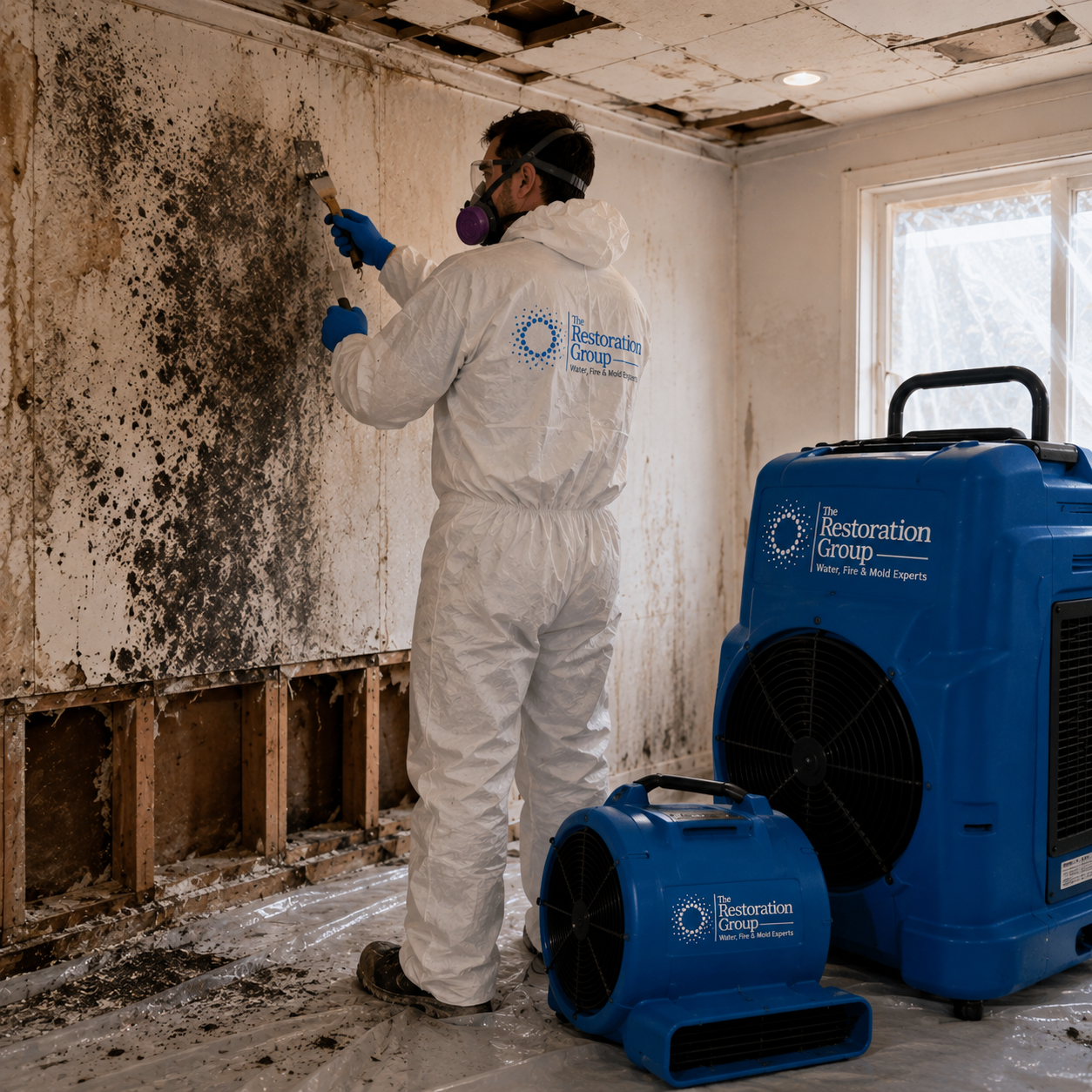
Recent job photo from The Restoration Group.
What happens when you call?
The first call is a short triage conversation, not a sales pitch. Expect to be asked where the mold is, roughly how large the affected area looks, whether there’s a known water source, and whether anyone in the home has respiratory sensitivities. Have the address and a general sense of the square footage ready; photos on your phone help too.
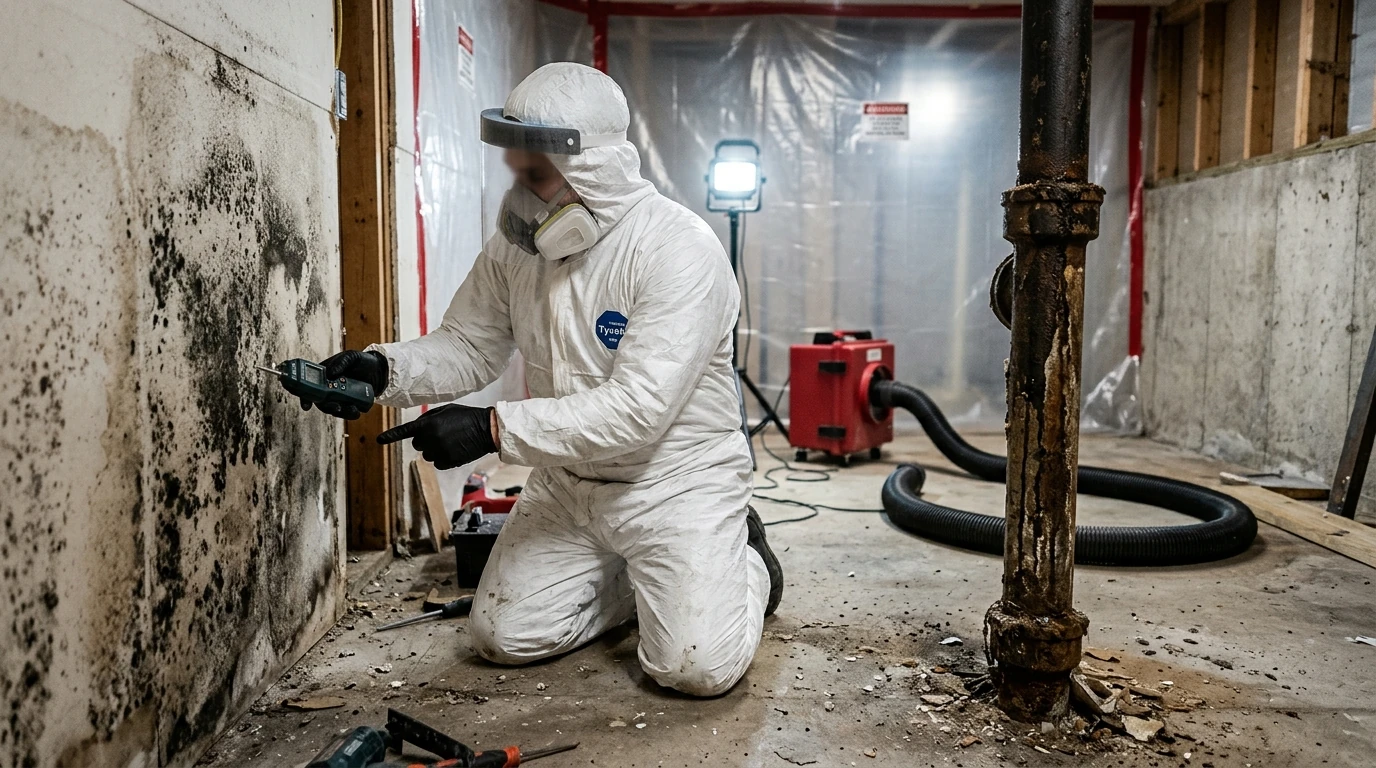
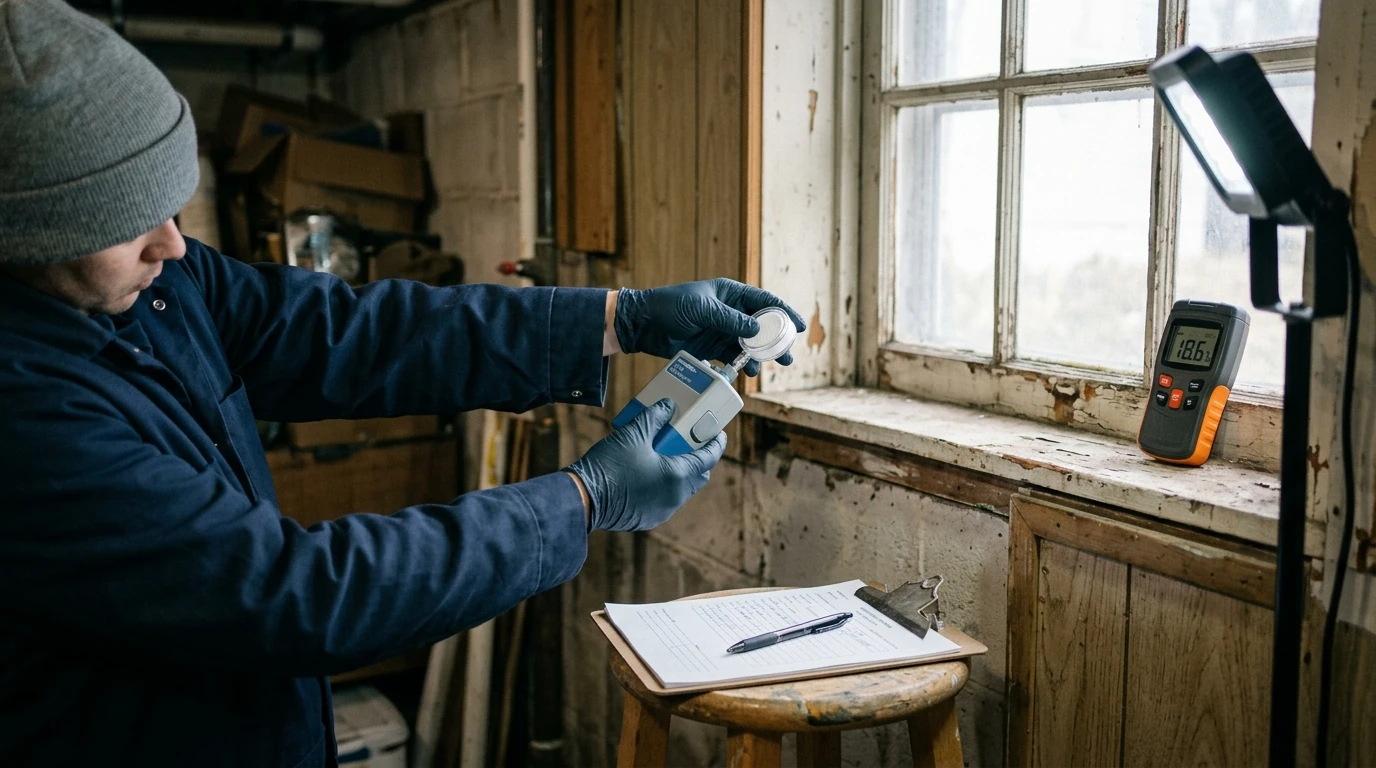
On site, a technician does a visual inspection and moisture mapping with a moisture meter to find out how far the dampness has traveled behind walls and under flooring, since mold rarely stays where it’s visible. For jobs where the extent is unclear, mold inspection and testing with air or surface sampling can confirm what’s growing and how far it has spread before remediation begins; our mold inspection cost guide for Fair Lawn breaks down when that extra step is worth it.
Remediation itself follows the ANSI/IICRC S520 standard: the work area gets sealed off with poly sheeting and run under negative air pressure using a HEPA air scrubber, so spores don’t spread into the rest of the house while the crew works. Affected porous materials, like drywall or carpet padding that can’t be fully cleaned, get removed; non-porous and semi-porous surfaces are HEPA-vacuumed and treated. The job isn’t finished until a post-remediation verification confirms the area is clear.
When is it more than a cleanup job?
It’s more than a wipe-down job when mold covers more than about 10 square feet, when it’s inside the HVAC system, or when it keeps returning after you’ve cleaned it yourself. The EPA notes that mold can start growing within 24 to 48 hours on wet material, which is why a quick bleach treatment on a surface often leaves the colony intact just below it.
It’s also worth a professional look any time the mold followed a larger water event, such as basement flooding, since drywall and insulation soaked by floodwater rarely dry out enough on their own to stop regrowth. Our post on how quickly mold grows after water damage walks through that timeline in more detail.
What should I ask before scheduling the work?
Ask whether the quote includes post-remediation verification, what containment method will be used, and whether porous materials will be removed or just surface-treated. A written scope of work before anything starts protects you either way, insurance claim or not, since every job’s extent is different.
If you’re staring at a damp patch in a Radburn basement or a moldy ceiling tile near the Broadway corridor, request a mold inspection by calling (844) 808-8838 and get a written scope before any work begins.
About the author
This article was written by Michael Oren with input from The Restoration Group’s field team, serving Fair Lawn and surrounding North Jersey communities since 2021.