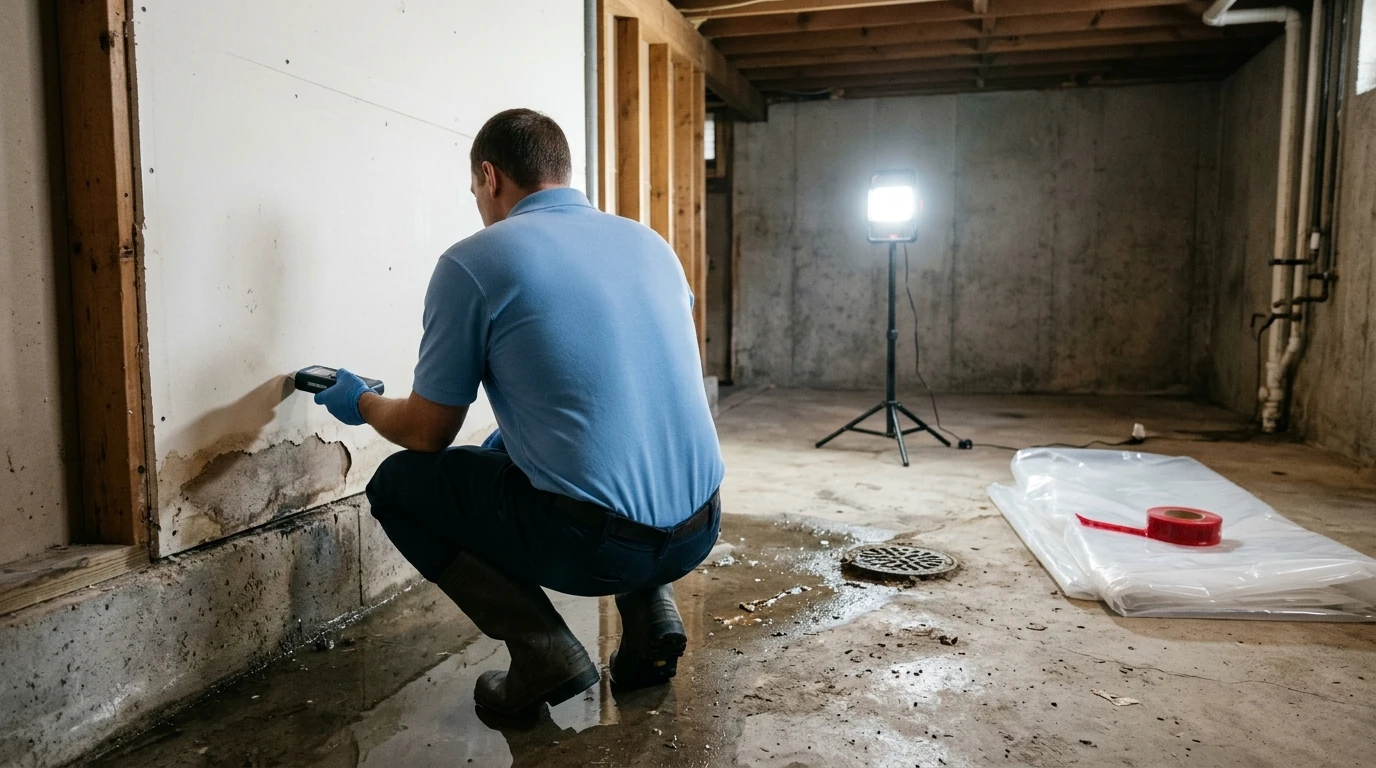
TL;DR: If sewage is backing up into your Fair Lawn basement, stop using water in the house, stay out of the affected area, and call a sewage cleanup company before you call a plumber. That water is Category 3, also called black water, and carries real health risk, so professional extraction and sanitizing matter more right now than fixing the line. If the backup traces back to your own lateral, you’ll also need a licensed plumber or the Borough of Fair Lawn’s public works department to clear the pipe itself.
If you just went downstairs toward Radburn or the River Road area and found water with a sewage smell rising through a floor drain, a basement toilet, or a laundry tub, you’re dealing with one of the most common calls Fair Lawn basements generate. Older cast-iron drains and clay laterals under this borough’s 1920s-30s homes and postwar capes back up more often during heavy rain, especially when the Saddle River or Passaic River is running high. The first decisions you make in the next hour matter more than anything that happens afterward.
Who should I call first for a sewer backup in Fair Lawn?
Call a sewage cleanup company before you call anyone else, including your regular plumber. The Restoration Group answers 24/7 at (844) 808-8838 and is an IICRC Certified Firm, which matters here because sewage cleanup follows a specific standard (the ANSI/IICRC S500) for how contaminated water gets removed and the space gets sanitized.
A sewer backup is not a simple mop-and-bucket job. It’s Category 3 water, meaning it’s grossly contaminated, and the longer it sits on carpet, drywall, or stored belongings, the more has to be thrown out instead of saved. Getting extraction started within hours protects both your health and what’s left of your basement.
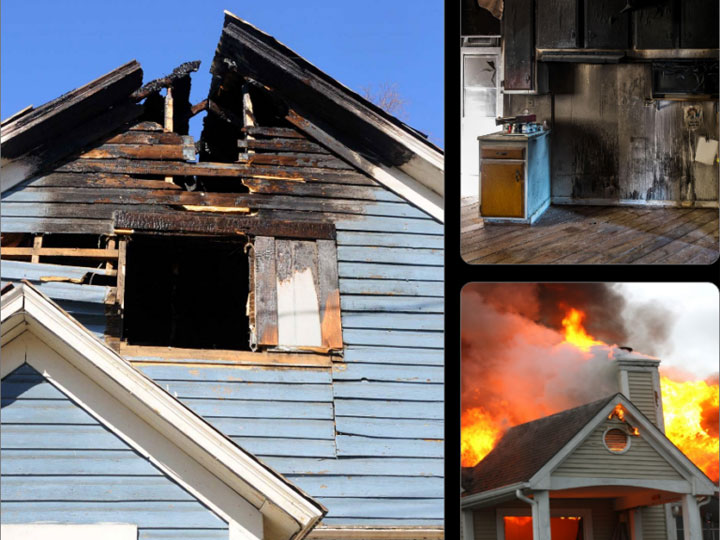
Recent job photo from The Restoration Group.
Plumber first, or sewage cleanup company first?
Call the cleanup crew first for the water that’s already on your floor, and bring in a licensed plumber separately for whatever caused the backup in the first place. These are two different jobs done by two different trades.
The Restoration Group’s crews remove the contaminated water, pull out materials that can’t be sanitized, and dry and disinfect what’s left. They do not diagnose or repair the sewer line itself. If the backup is coming from a clog, a collapsed lateral, or tree roots in the pipe, you’ll need a licensed plumber, or for a problem in the public line, the Borough of Fair Lawn’s public works department. Many homeowners call both the same day: the cleanup crew to stop the damage from spreading, the plumber to make sure it doesn’t happen again an hour later.
Until the source is found, don’t run washing machines, dishwashers, or multiple fixtures at once. Adding more water to a system that’s already backing up usually makes the basement worse.
Is a sewer backup covered by homeowners insurance?
Most standard homeowners policies do not cover sewer backup or sump pump failure unless you added a water backup endorsement. This is one of the most misunderstood gaps in a standard policy, and it catches people off guard right when they need coverage most.
According to the Insurance Information Institute, water backup coverage is typically a separate, inexpensive add-on, not a built-in feature of a base policy. If you’re not sure whether you have it, your declarations page will list it as a rider or endorsement, often with its own coverage limit. It’s worth a five-minute call to your agent before you assume anything is or isn’t covered.
Whether or not the backup is covered, document it the same way: photos and video of the standing water and affected areas before anything is moved, and a written scope from whoever does the cleanup. The Restoration Group can prepare that documentation as the work happens, which helps if you do end up filing a claim. For more on how standard coverage works, see our guide to what homeowners insurance covers for water damage.
Borough sewer main or my own lateral, who’s responsible?
You’re generally responsible for the lateral line running from your house to the property line or the connection point in the street; the borough is responsible for the main line under the street. Where exactly that line splits can vary, so this is a question for Fair Lawn’s public works department or a licensed plumber with a camera inspection, not a guess.
If multiple homes on your block are backing up at the same time, that usually points to a problem in the municipal main, and it’s worth reporting to the borough right away. If it’s just your house, the clog or break is more likely somewhere on your own lateral.
What happens once the cleanup crew arrives?
The crew’s first move is containing the area and testing how far the contaminated water traveled, not starting cleanup blind. Expect a walk-through with a moisture meter, photos for the record, and a plan before any equipment gets turned on.
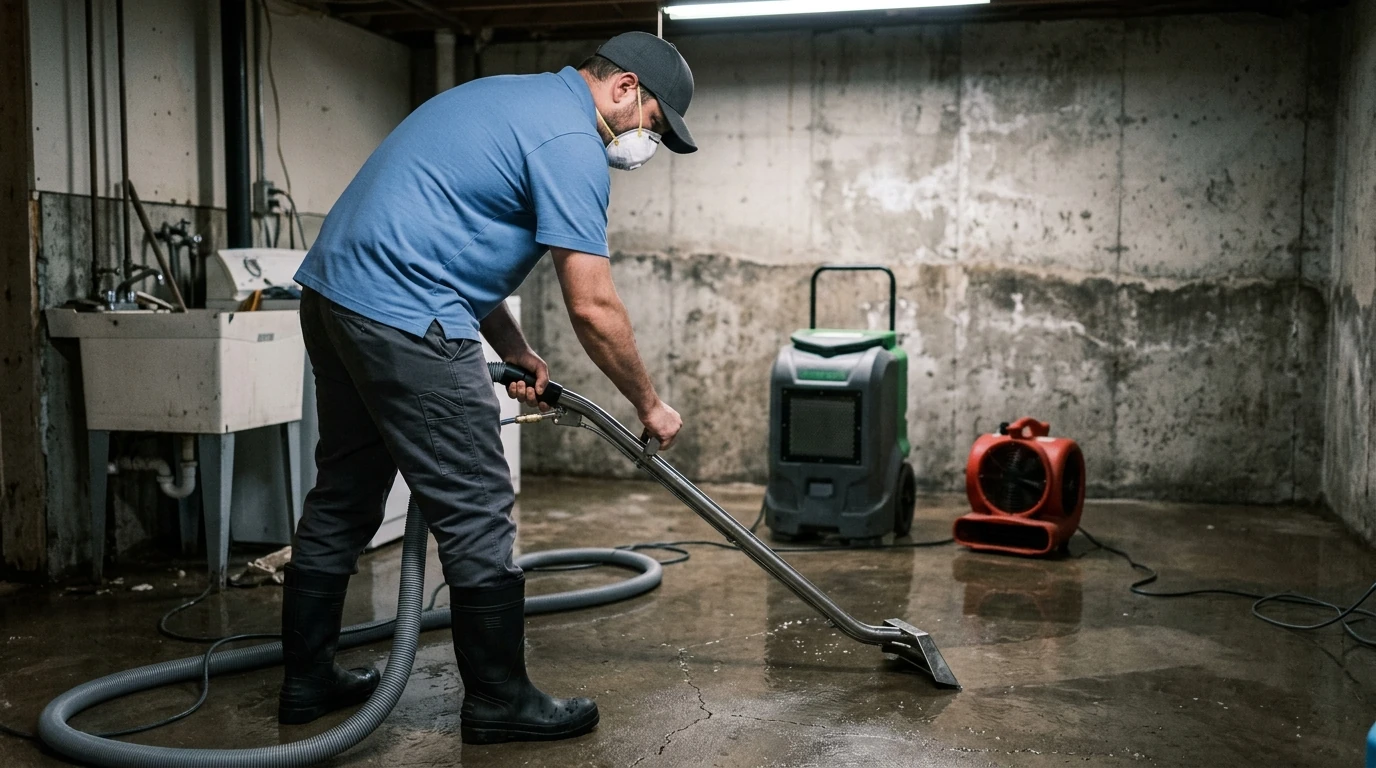
From there, the general sequence is: extract standing water, remove porous materials that can’t be sanitized (soaked carpet, baseboards, sometimes drywall), clean and disinfect hard surfaces, and run air movers and dehumidifiers to dry the structure. Odor is usually the last thing to clear, since sewage odor can linger in porous materials even after the visible water is gone; that’s a separate pass with equipment built for it. The CDC’s guidance on cleaning safely after a disaster is a good general reference for why gloves, boots, and keeping kids and pets out of the area matter until the space is sanitized.
If you’ve been through this before, our guide to who to call for a flooded basement in Fair Lawn covers the broader basement-flooding decision tree; sewer backup is the specific version where the water itself is the hazard, not just the volume.
If sewage has backed up into your basement right now, the fastest path forward is to stop using water in the house, keep everyone out of the affected area, and get a cleanup crew moving before you worry about anything else.
About this guide
This guide was written with The Restoration Group’s Fair Lawn team, an IICRC Certified Firm that has handled water, sewage, and basement flooding cleanup across Fair Lawn and the surrounding Bergen County area since 2021. Crews work directly from a Fair Lawn office, so response to a backup in Radburn, Warren Point, or along River Road doesn’t involve a long drive.