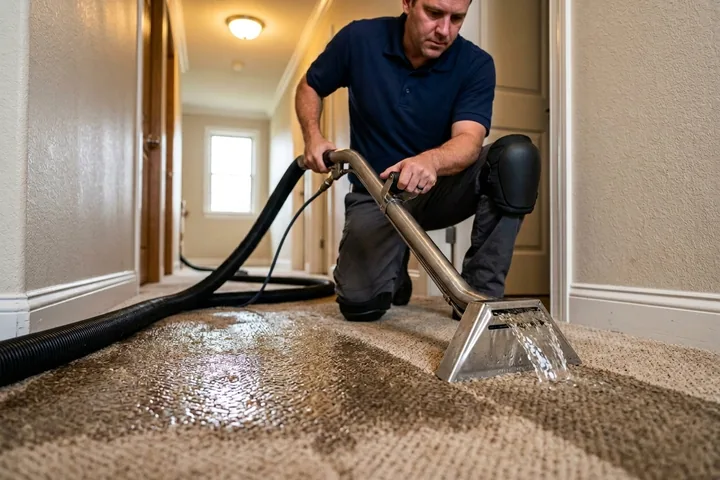
Water Cleanup in Highland Park
24/7 water cleanup in Highland Park, NJ. IICRC-certified, insurance billing accepted. Call (855) 650-7422.
Our IICRC-certified technicians are dispatched from our Fair Lawn, NJ headquarters and are typically on-site in Highland Park within 60 minutes of your call.
When the Raritan River crests its banks, as it did with brutal force during Hurricane Ida in 2021, low-lying streets near Donaldson Park and River Road can go from damp to knee-deep in hours. But the water events that quietly damage the most Highland Park homes aren’t storms: they’re the slow failures happening inside walls and beneath finished basement floors in the borough’s dense stock of 1910s–1940s colonials, bungalows, and two-families. If you’re dealing with standing water, soaked framing, or a saturated slab in 08904, The Restoration Group is available around the clock and positioned to reach you fast.
Why Highland Park Properties See Water Damage Differently
Highland Park’s housing stock is part of what makes water events here particularly stubborn. Many of the colonials and two-family homes built between the wars still carry original galvanized supply lines and cast-iron drain stacks. Galvanized pipe corrodes from the inside out, the exterior can look intact while the interior bore has narrowed to a fraction of its original diameter, building pressure until a joint lets go. When that happens inside a finished basement, water spreads under laminate flooring and behind drywall before anyone notices the smell.
The borough’s topography compounds the risk. Livingston Manor and the Triangle neighborhood sit close enough to the Raritan floodplain that a sustained rain event raises the water table quickly, pushing groundwater through foundation cracks and floor drains even when the storm itself doesn’t produce visible surface flooding. That kind of hydrostatic intrusion is slower and quieter than a burst pipe, but it saturates concrete block and the framing sitting on top of it just as thoroughly.
Commercial properties along the Raritan Avenue business district face a different pattern: aging sprinkler systems and commercial dishwasher lines that, when they fail, can flood a dining room or retail floor in minutes and wick into adjacent tenant spaces through shared walls.
Our Water Cleanup Process in Highland Park
The first priority on any water call is stopping ongoing intrusion, shutting the source, whether that’s a supply valve, a sump that’s overwhelmed, or a drain that’s backed up. Once the water is no longer entering, the extraction phase begins using truck-mounted and portable units capable of pulling standing water from finished floors, carpet, and low-lying crawl spaces.
After bulk extraction, the work shifts to what you can’t see. In Highland Park’s older homes, that means probing plaster walls and checking the lath behind them, plaster absorbs water more slowly than modern drywall but releases it more slowly too, which means drying timelines here often run longer than in newer construction. Thermal imaging cameras help locate moisture pockets behind finished surfaces without unnecessary demolition. Where materials are beyond recovery, controlled removal creates the airflow channels that allow structural drying to proceed efficiently.
Drying equipment, industrial air movers and refrigerant or desiccant dehumidifiers, is calibrated to the specific moisture readings taken at the start and monitored daily until the structure reaches documented dry standard per the IICRC S500. Every reading is logged, which matters when you’re filing an insurance claim.
Reaching Highland Park from Kenilworth
The Restoration Group’s Kenilworth office puts Highland Park well within our regular service area. The most direct routing typically runs through the Garden State Parkway and Route 1 corridor, with the Landing Lane Bridge serving as a practical crossing point into the borough from the north. Because Highland Park is one of our established service locations, dispatch and crew familiarity with the borough’s street grid, including the denser blocks near Downtown Highland Park and the residential streets running toward North Highland Park, means no time lost orienting on arrival. Calls are answered 24/7, and crews can be mobilized at any hour.
Local Note: Finished Basements and Hidden Moisture in Pre-War Homes
One thing that comes up repeatedly in Highland Park’s older housing stock: finished basements that were renovated decades after original construction often have a layer of rigid foam or fiberglass batt tucked between the block foundation wall and a wood-framed interior wall. When water intrudes through the block, common during high water-table events in the Meadow and Livingston Manor areas, that insulation traps moisture against the framing where you can’t see it. Standard surface moisture readings come back low while the cavity stays wet for weeks. Probing and thermal imaging behind the finished wall is the only reliable way to catch it, and skipping that step is how a manageable water event becomes a mold remediation job two months later.
If you’re in Highland Park and water has entered your home or business, call (855) 650-7422. We’ll assess the full scope of the damage, not just what’s visible, and walk you through every step from extraction to documented dry.
Serving Highland Park from our Fair Lawn headquarters — ★ 4.8 · 160 Google reviews
“The folks at TRG were professional, punctual, and pleasant to deal with. They did a great job addressing our issue and performed appropriate follow up to ensure our satisfaction.” — Jw, August 2026Read our reviews on Google →
Water Cleanup in Highland Park: Service Coverage
Frequently Asked Questions
How fast can you arrive for water cleanup in Highland Park?
How quickly can The Restoration Group reach a home in the Livingston Manor or Triangle area after a water emergency?
The Raritan River flooded our street near Donaldson Park — is that kind of floodwater treated differently than a burst pipe?
Our Highland Park home was built in the 1930s and has plaster walls — does that change how long drying takes?
Will my homeowner's insurance cover water cleanup for a basement flood in 08904, and do you work directly with adjusters?
What equipment do you use to find hidden moisture in finished basements, and why does it matter for older Highland Park homes?
Water Cleanup response in Highland Park
Most Highland Park calls see a technician on-site within 60 minutes from our Fair Lawn headquarters.