Water Cleanup in Maplewood
24/7 water cleanup in Maplewood, NJ. IICRC-certified, insurance billing accepted. Call (855) 650-7422.
Our IICRC-certified technicians are dispatched from our Fair Lawn, NJ headquarters and are typically on-site in Maplewood within 60 minutes of your call.
When the East Branch of the Rahway River overtops its banks near Memorial Park, as it did with devastating force during Hurricane Ida in 2021, water doesn’t just pool on streets. It pushes through the stone foundations and window wells of the 1920s Tudors and colonials that line the low-lying blocks between Maplewood Village and the train station, filling finished basements before homeowners have time to move a single box. The Restoration Group responds to water cleanup calls in Maplewood around the clock, dispatching from Kenilworth with the equipment sized for exactly this kind of loss.
Why Maplewood Properties See Water Damage Differently
Maplewood’s housing stock is its charm and its vulnerability. The craftsman bungalows in the Hilton neighborhood and the stately colonials near Tuscan were built in an era of stone rubble foundations, original plaster walls, and cast-iron drain stacks. None of those materials behave like modern construction when water enters.
Plaster absorbs moisture deeply and releases it slowly, a wall that reads dry at the surface with a pin-type meter can still be holding significant moisture in the lath and framing behind it. Cast-iron drains corrode from the inside over decades; a slow seep at a joint can saturate a floor system for weeks before it becomes visible. And finished basements, extremely common in the 07040 ZIP code, trap water under laminate or carpet where it begins supporting mold colonization within 24 to 48 hours of the initial event.
The sump systems in many of these homes were retrofitted rather than designed in. During a hard rain event, a single sump pump failure can introduce several inches of standing water into a finished space faster than a shop vac can keep up.
Our Water Cleanup Process in Maplewood
Every water cleanup starts with a thorough moisture assessment, not a visual inspection, but thermal imaging and calibrated moisture meters that map the actual wet boundary behind walls and under flooring. In Maplewood’s older homes, that boundary is almost always larger than it looks.
From there, the process moves through extraction, structural drying, and monitoring:
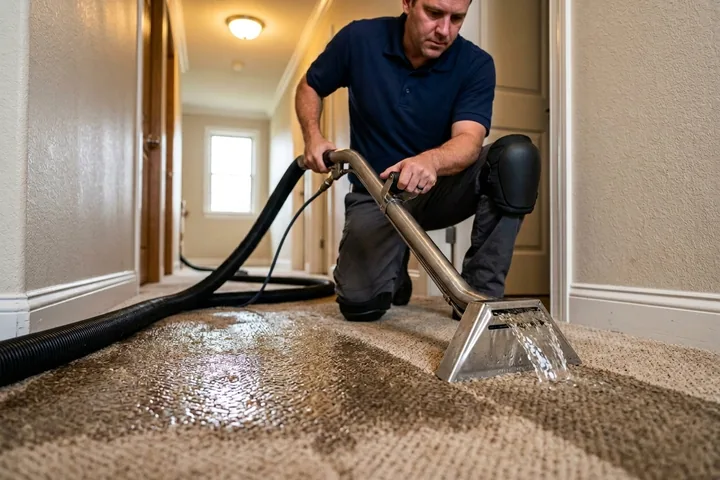
- Standing water removal: truck-mounted and portable extractors pull standing water from basements and crawl spaces, including from below carpet pad and subfloor where gravity alone won’t drain it.
- Structural drying: commercial-grade desiccant and refrigerant dehumidifiers, paired with high-velocity air movers, are positioned to dry the structure, not just the air. Drying targets follow the IICRC S500 standard for water damage restoration.
- Daily monitoring: moisture readings are logged at each visit so the drying curve is documented. This matters both for your peace of mind and for the insurance claim record.
- Material decisions: original plaster in good condition is often worth saving with controlled drying. When plaster or lath is beyond recovery, selective demolition removes only what’s necessary, not entire walls.
As an IICRC Certified Firm (#210213), the crew applies drying science rather than guesswork to every job.
Reaching Maplewood from Kenilworth
The Restoration Group’s base in Kenilworth puts Maplewood well within a fast response window. The most direct route runs south on Route 28 to Springfield Avenue, which carries straight into the heart of Maplewood Village. From there, the Hilton and Jefferson neighborhoods are minutes away, and the Fields area is accessible via Valley Street without navigating the train-station bottleneck.
Because hours are 24/7, a call at 2 a.m. during a nor’easter gets the same dispatch as a call on a Tuesday afternoon. Crews stage equipment before arrival based on what you describe on the phone, so extraction equipment is on the truck when they pull up, not back at the shop.
Maplewood Insurance Coordination
Most standard homeowner policies cover sudden and accidental water losses, a burst pipe, a washing machine supply line failure, a sump pump overflow covered under a rider. Storm-driven flooding from a river event like Ida typically falls under a separate flood policy through the National Flood Insurance Program.
The Restoration Group documents the loss with photographs, moisture logs, and a written scope before any material is removed. That documentation package is what your adjuster needs to process the claim efficiently. We work with all major carriers and can communicate directly with your adjuster so you’re not playing telephone between the crew and the insurance office.
Local Note: What Maplewood’s Plaster Walls Mean for Drying Timelines
Homeowners used to modern drywall sometimes expect a water cleanup to wrap up in three or four days. In Maplewood’s pre-war housing stock, that timeline is often optimistic. Original plaster, particularly three-coat lime plaster over wood lath, which is common in the Tuscan and Jefferson neighborhoods, can hold moisture for seven to ten days even under active drying conditions. The lath itself wicks water laterally, spreading the wet zone along the wall cavity well past the point of entry. Rushing the drying phase to hit an arbitrary deadline risks trapping moisture that feeds mold behind a freshly painted surface. Monitoring readings, not a calendar, should determine when drying is complete.
If you’re dealing with standing water, wet walls, or a soaked basement in Maplewood, call The Restoration Group at (855) 650-7422. The assessment starts the moment the crew arrives, and the goal is always to save as much of your home as the damage allows.
Serving Maplewood from our Fair Lawn headquarters — ★ 4.8 · 160 Google reviews
“Prompt and professional work. Kept in contact thru out the process which was very important to me.” — F., July 2026Read our reviews on Google →
Water Cleanup in Maplewood: Service Coverage
Frequently Asked Questions
How fast can you arrive for water cleanup in Maplewood?
How quickly can The Restoration Group reach Maplewood Village or the train-station area after I call?
My Hilton-neighborhood basement flooded during a storm — does that count as a covered water loss or a flood loss?
Are the older stone foundations in Maplewood's Tudor and colonial homes harder to dry out after water intrusion?
What happens to original plaster walls during the water cleanup process — will they have to be torn out?
Do homes in the 07040 ZIP code with finished basements face a higher mold risk after a water event?
Will my homeowners insurance cover water cleanup in Maplewood?
Water Cleanup response in Maplewood
Most Maplewood calls see a technician on-site within 60 minutes from our Fair Lawn headquarters.