24/7 Emergency Storm Damage Restoration in New Brunswick
24/7 emergency storm damage restoration in New Brunswick, NJ. IICRC-certified, insurance billing accepted. Call (855) 650-7422.
Our IICRC-certified technicians are dispatched from our Fair Lawn, NJ headquarters and are typically on-site in New Brunswick within 60 minutes of your call.
When a nor’easter or a fast-moving summer storm rolls up the Raritan River corridor, New Brunswick takes it differently than most of central Jersey. The city’s dense mix of early-1900s rowhouses near Rutgers, postwar multifamily in Robeson Village, and high-rise downtown construction means a single storm can produce five different damage profiles within a few blocks, blown roof slates on a century-old triple-decker, shattered storefront glass on George Street, and uprooted trees crushing fences along the Highland Park border, all in the same event. The Restoration Group responds 24/7 and can reach New Brunswick from our Kenilworth base to begin emergency stabilization while the storm is still clearing.
Why New Brunswick Properties See Severe Storm Damage
The Raritan River defines the city’s southern edge at Boyd Park, and its flood history is not ancient, Tropical Storm Ida in September 2021 pushed water into low-lying riverfront areas, leaving behind saturated foundations and contaminated crawl spaces that owners discovered weeks later when the smell arrived. That same storm exposed how quickly stormwater overwhelms the city’s older combined sewer infrastructure, backing water into basement apartments and ground-floor retail in the 08901 ZIP code.
Above grade, the housing stock creates its own vulnerabilities. Pre-1950 rowhouses throughout the Fifth Ward and near Rutgers Village were built with wood-framed roofs and minimal attic ventilation, conditions that let wind-driven rain migrate deep into roof assemblies before a single interior stain appears. Mature street trees planted close to those structures mean that a 60-mph gust doesn’t just strip shingles; it drops 40-foot limbs onto rooflines that were never engineered for that kind of point load. Downtown and the Robert Wood Johnson University Hospital corridor add a different risk category: flat or low-slope commercial roofing where ponding after a storm can exceed design load within hours.
Our Storm Damage Restoration Process in New Brunswick
Every storm job starts with a documented damage assessment before any debris is moved. We photograph and measure structural breaches, map water intrusion paths, and identify secondary hazards, downed utility lines, compromised load-bearing members, exposed insulation, so nothing is missed in the insurance claim and nothing is disturbed that could worsen the loss.
From there, the work breaks into three overlapping phases:
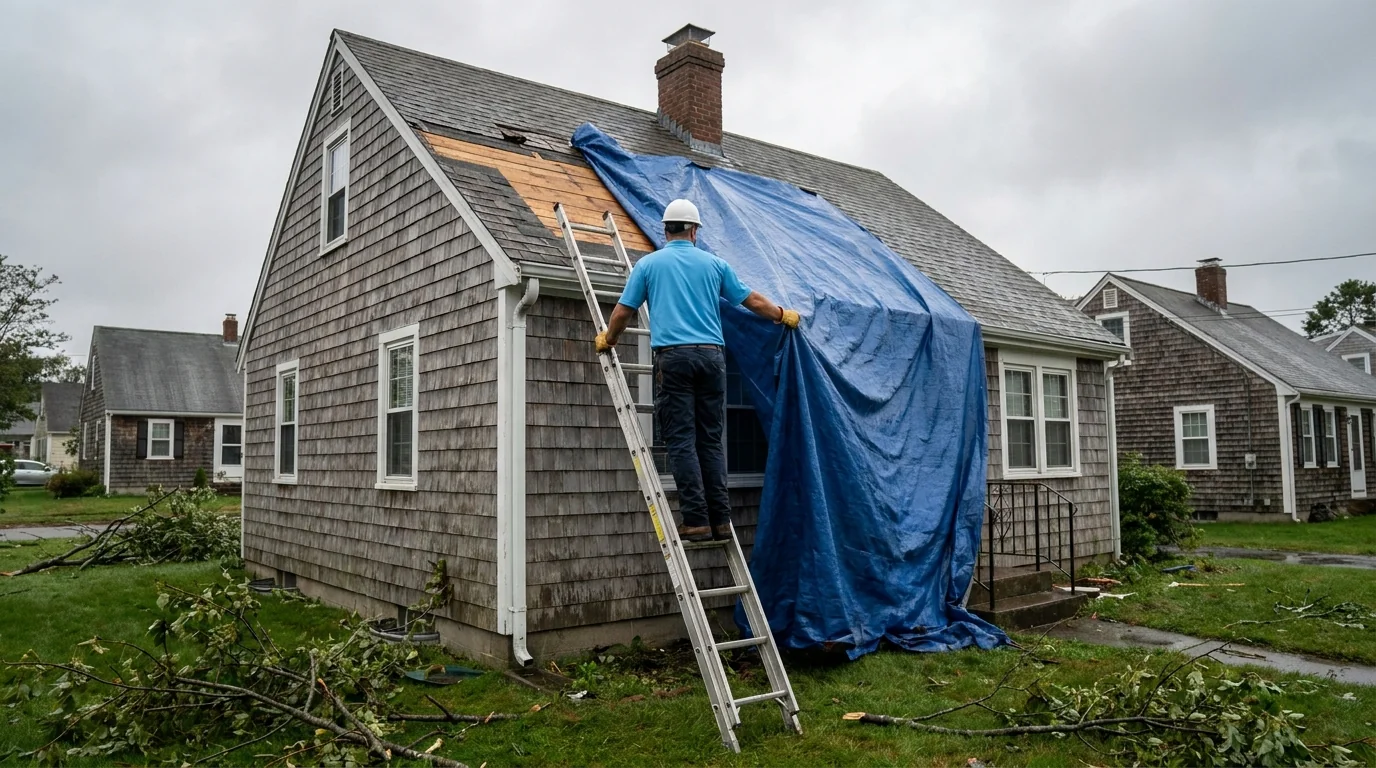
Emergency stabilization covers the first hours: tarping and board-up for breached roofs and windows, temporary shoring if a tree strike has shifted a wall or rafter, and extraction of any standing water before it wicks into subfloor assemblies. In New Brunswick’s older rowhouses, that extraction step matters, original hardwood and plank subfloors can absorb a surprising volume of water before the surface looks wet.
Structural drying and debris removal follows. We use industrial desiccant and refrigerant dehumidifiers calibrated to the building type, with moisture mapping logged daily so drying targets are met rather than estimated. Tree debris removal is coordinated with a licensed tree service when root systems or large canopy sections require rigging, we manage that handoff so you have one point of contact.
Repair and reconstruction closes the project: roofing, siding, windows, interior framing, insulation, and finish work completed under our NJ Licensed Home Improvement Contractor credentials, with all permits pulled through the City of New Brunswick’s building department.
Reaching New Brunswick from Kenilworth
Our Kenilworth headquarters puts New Brunswick roughly 20 minutes via the Garden State Parkway to Route 1 under normal conditions, a route that stays navigable even when local surface streets are blocked by fallen trees or emergency closures. Because we operate 24/7, a call at 2 a.m. after a storm front passes through gets the same dispatch priority as a midday call. For addresses in the Edgebrook area or along the riverfront, we account for the Route 18 interchange congestion that often follows major weather events and route accordingly.
New Brunswick Insurance Coordination
Storm damage claims in New Brunswick frequently involve multiple coverage questions at once: wind versus flood delineation (especially for Raritan-adjacent properties), code-upgrade requirements triggered when repair scope exceeds a certain percentage of the structure’s value, and, for the city’s substantial rental housing stock, landlord-tenant documentation requirements. We prepare a complete loss package including timestamped photographs, moisture readings, scope of work, and line-item estimates formatted for direct carrier submission. For commercial properties on or near the George Street corridor, we can also coordinate with your property manager or building owner simultaneously.
Local Note
New Brunswick’s rowhouse blocks, particularly in the Fifth Ward, were built with party walls shared between units, which means a tree strike on one roof can transmit structural stress and water intrusion into the adjacent unit even when that neighbor’s roof looks intact from the street. We always inspect both sides of a shared wall after a significant impact event. Skipping that step has left more than a few neighboring tenants with a mold problem two months later that traced back to a storm no one thought affected their unit.
If a storm has left your New Brunswick property exposed, whether that’s a breached roof in Rutgers Village, a flooded basement near Boyd Park, or structural damage downtown, call The Restoration Group at (855) 650-7422. We document, stabilize, dry, and rebuild, and we handle the insurance paperwork so you can focus on getting back to normal.
Serving New Brunswick from our Fair Lawn headquarters — ★ 4.8 · 166 Google reviews
“Prompt, knowledgeable, skillful and honest. Highly recommend. They remediated within 24 hours. Total peace of mind restored. Worth every penny.” - Anne, October 2026Read our reviews on Google →
Storm Damage Restoration in New Brunswick: Service Coverage
Frequently Asked Questions
How fast can you arrive for storm damage restoration in New Brunswick?
How quickly can The Restoration Group reach New Brunswick after a major storm?
Are homes near the Raritan River in New Brunswick at higher risk after a storm, and does that affect the restoration scope?
What should I do immediately after a storm damages my roof in the Fifth Ward or Robeson Village?
How does New Brunswick's older rowhouse construction affect the storm drying timeline?
Will my insurance cover storm damage repairs in New Brunswick, and does the city's building code create any complications?
Storm Damage Restoration response in New Brunswick
Most New Brunswick calls see a technician on-site within 60 minutes from our Fair Lawn headquarters.
Nearby & Related
- 24/7 Emergency Storm Damage Restoration in Kenilworth
- Restoration Services in New Brunswick
- 24/7 Emergency Fire Damage Restoration in New Brunswick
- Mold Remediation in New Brunswick
- 24/7 Emergency Storm Damage Restoration in Bayonne
- 24/7 Emergency Storm Damage Restoration in Bloomfield
- Contact The Restoration Group