Odor Removal and Deodorization in Plainfield
24/7 odor removal and deodorization in Plainfield, NJ. IICRC-certified, insurance billing accepted. Call (855) 650-7422.
Our IICRC-certified technicians are dispatched from our Fair Lawn, NJ headquarters and are typically on-site in Plainfield within 60 minutes of your call.
Plainfield’s Victorian and Queen Anne homes along the Van Wyck Brooks Historic District carry more than architectural character, their plaster walls, original hardwood floors, and deep finished basements absorb smoke, mold, and sewer odors in ways that a single spray-and-pray deodorizer will never fix. When a fire chars the trim in a Netherwood Colonial or a backed-up cast-iron drain leaves a sewage smell baked into a basement rec room, the odor molecules have already bonded to porous surfaces. Eliminating them takes the right chemistry, the right equipment, and someone who understands what these buildings are actually made of.
Why Plainfield Homes Hold Odors Longer Than Most
Building age is the single biggest factor. The majority of residential properties in ZIP codes 07060 and 07062 were built before 1960, and a significant share predate World War II. That means original plaster and lath, hardwood subfloors with decades of finish layers, and cast-iron drain stacks that corrode from the inside out. Each of those materials is highly porous and traps odor compounds, volatile organic compounds from smoke, hydrogen sulfide from sewer gas, microbial VOCs from mold, deep in the substrate rather than just on the surface.
The Green Brook and Cedar Brook corridors compound the problem. Brook-adjacent streets in the Sleepy Hollow and Crescent Area neighborhoods flooded severely during Hurricane Ida in 2021, leaving standing water in finished basements for days. Water that sits that long doesn’t just damage structure, it seeds mold colonies within 24 to 48 hours, and the musty odor from that mold can persist for months if the source isn’t fully addressed before deodorization begins. Treating the smell without treating the biology underneath is a temporary fix that fails.
Commercial properties along the Front Street and Park Avenue corridors face a different pattern: sprinkler activations and roof leaks that soak drop-ceiling tiles and carpet, leaving a damp, stale odor that drives customers away. The density of mixed-use buildings in that corridor means odors migrate between units through shared HVAC chases and open ceiling plenums.
Our Deodorization Process, Calibrated for Plainfield
Odor removal is not a single-step service. The process we follow is structured around what the specific odor source is, what materials it has penetrated, and how long it has been present.
Source removal first. No deodorization technology works on an active odor source. Before any equipment is deployed, we identify and remove or remediate the source, charred material, wet insulation, contaminated soil, mold-colonized drywall. In older Plainfield homes, that often means pulling up original fir subfloor or opening plaster walls that have absorbed years of moisture.
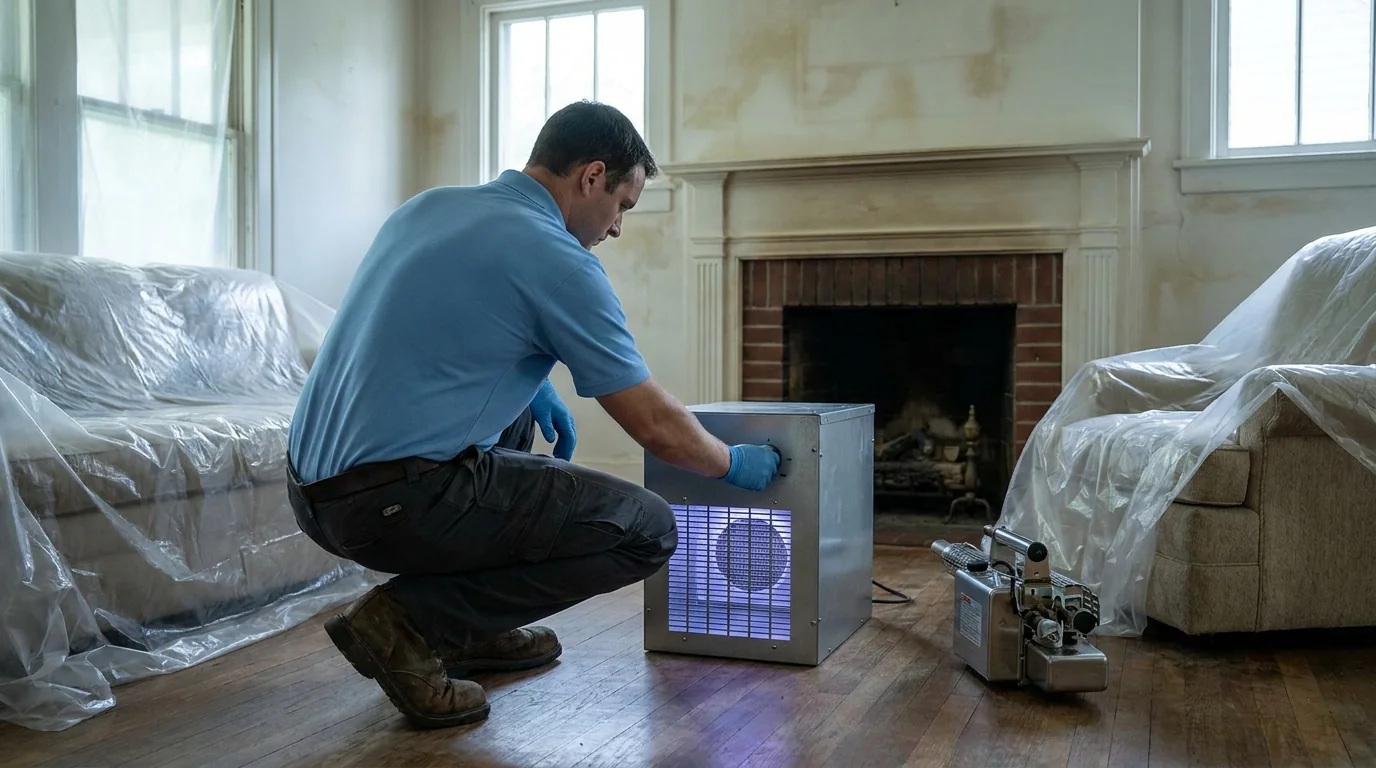
Thermal fogging for deep penetration. Smoke and fire odors in Victorian-era millwork and plaster respond well to thermal fogging, which converts a deodorizing solvent into a dry fog that penetrates the same pores smoke did. This is particularly effective in the ornate woodwork common to homes near the Drake House Museum corridor, where stripping and replacing trim is not always practical or historically appropriate.
Hydroxyl generation for occupied or sensitive spaces. Hydroxyl generators produce hydroxyl radicals that break down odor molecules at the chemical level without requiring occupants to vacate. For multi-unit buildings in the Netherwood area or commercial spaces on East Front Street that cannot close for days, hydroxyl treatment allows work to continue while the space remains accessible.
Ozone treatment for severe cases. Ozone is the most aggressive option for heavily contaminated spaces, a basement that held sewage backup for 72 hours, or a room with significant smoke char. Because ozone at effective concentrations requires the space to be vacated, we coordinate timing carefully and verify dissipation before re-entry.
HEPA air scrubbing and post-treatment verification. We run HEPA-filtered air scrubbers throughout the process and conduct a final walkthrough to confirm odor elimination before we close out the job. We document conditions before and after for insurance purposes.
Reaching Plainfield from Our Kenilworth HQ
Kenilworth sits directly east of Plainfield, a straightforward run via Central Avenue or the Garden State Parkway to Route 28. We serve all of Plainfield’s neighborhoods, including brook-adjacent streets in the Crescent Area and Sleepy Hollow that can be harder to reach during active flood events. Because we operate 24/7, a call at 2 a.m. after a sewage backup or a late-night fire gets the same response as a weekday morning call.
Local Note: Plaster Walls Change the Deodorization Timeline
One thing that surprises homeowners in Plainfield’s older neighborhoods is how long deodorization takes compared to what they might read online. Modern drywall releases absorbed odors relatively quickly once the source is removed. Original plaster, which is dense, alkaline, and often multiple inches thick, holds odor compounds differently. In our experience working in pre-war homes near the Van Wyck Brooks Historic District, thermal fogging cycles sometimes need to be repeated, and hydroxyl treatment run for 48 to 72 hours rather than the 24 hours typical in newer construction. We build that reality into our scopes of work upfront so there are no surprises on day two.
If the odor in your Plainfield home or business isn’t going away on its own, it won’t. Call The Restoration Group at (855) 650-7422, we’ll assess the source, match the right deodorization method to your specific building, and eliminate the problem rather than mask it.
Serving Plainfield from our Fair Lawn headquarters — ★ 4.8 · 166 Google reviews
“Hired the Restoration Group after mold and flood in our house. Their 24 hour line was always available. They came right away and were prompt completing the work. Everyone was friendly.” - Amanda, October 2026Read our reviews on Google →
Odor Removal and Deodorization in Plainfield: Service Coverage
Frequently Asked Questions
How fast can you arrive for odor removal and deodorization in Plainfield?
How quickly can The Restoration Group reach Sleepy Hollow or the Crescent Area neighborhoods for an odor emergency?
Are homes near Cedar Brook or Green Brook in Plainfield more likely to develop persistent mold odors after flooding?
Does the older housing stock in the Van Wyck Brooks Historic District affect which deodorization method you use?
What is thermal fogging and when is it the right choice for a Plainfield fire or smoke odor job?
Will my homeowner's insurance cover professional odor removal after a fire or sewage backup in Plainfield?
Odor Removal and Deodorization response in Plainfield
Most Plainfield calls see a technician on-site within 60 minutes from our Fair Lawn headquarters.