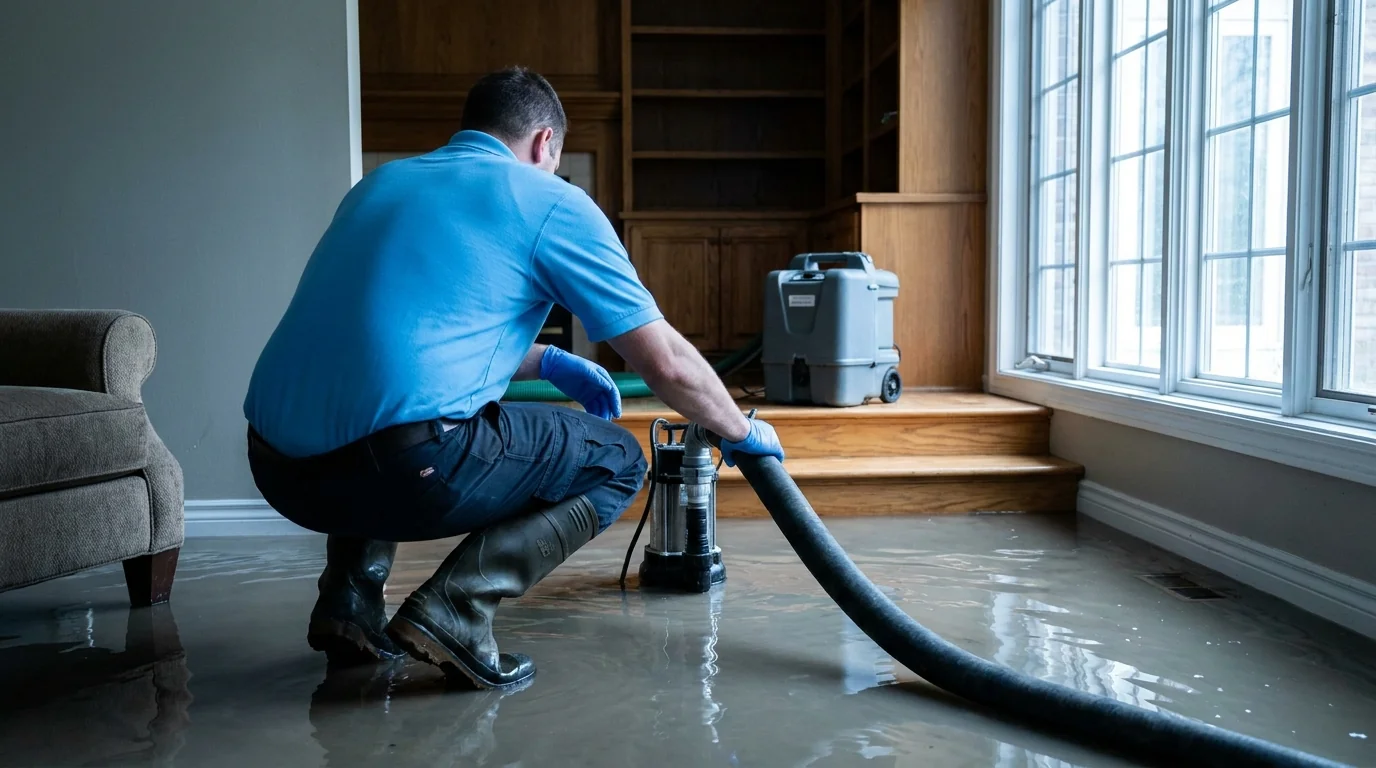
24/7 Emergency Flood Damage Restoration in Staten Island
24/7 emergency flood damage restoration in Staten Island, NY. IICRC-certified, insurance billing accepted. Call (855) 650-7422.
Our IICRC-certified technicians are dispatched from our Fair Lawn, NJ headquarters and are typically on-site in Staten Island within 60 minutes of your call.
When the East Shore floods, and after Sandy in 2012 and Ida in 2021, Staten Island residents know it will flood again, the window between standing water and structural damage is measured in hours, not days. Whether a storm surge has pushed through a South Beach bungalow’s crawlspace or a backed-up storm drain has filled a New Dorp basement overnight, The Restoration Group dispatches crews from our Staten Island base around the clock to stop the loss before it compounds.
Why Staten Island Properties Are Especially Vulnerable to Flood Damage
Staten Island’s geography sets it apart from the other boroughs. The East Shore sits at near sea level, and the low-lying streets of South Beach, Midland Beach, and Oakwood Beach have flooded repeatedly in living memory, Sandy alone displaced thousands of residents and left entire blocks of frame homes uninhabitable for months. But the flood risk isn’t limited to the shoreline. In 2021, Ida’s remnants dropped several inches of rain in a matter of hours, overwhelming the storm-sewer infrastructure on South Shore streets and sending water rushing into finished basements from Great Kills to Tottenville.
The housing stock adds another layer of complexity. Much of the borough was built in waves: early-1900s wood-frame homes in neighborhoods like Port Richmond, dense postwar Cape Cods and split-levels across the mid-island, and newer townhome developments clustered near the Staten Island Mall corridor. Older homes frequently have aging cast-iron drain lines that crack or back up under surge conditions, and many properties have full basements or shallow crawlspaces that collect water before any visible interior damage appears. Commercial properties along Hylan Boulevard face their own exposure, flat-roof membrane failures and sprinkler-discharge events during hard freezes generate significant water-loss claims every winter.
Our Flood Damage Restoration Process in Staten Island
Every flood job starts the same way: stop the water source, assess the extent, and document everything before a single piece of material is touched. For insurance purposes, that documentation, moisture readings, thermal imaging, photo logs, needs to be thorough and timestamped. Our IICRC Certified Firm (#210213) crews carry industrial moisture meters and infrared cameras on every truck, so we’re mapping hidden saturation in wall cavities and under subfloors within the first hour on site.
Once the scope is clear, we move through a structured sequence:
- Water extraction using truck-mounted and portable extractors sized to the space, a flooded Cape Cod basement in the 10306 ZIP code needs different equipment staging than a ground-floor commercial unit on Forest Avenue.
- Controlled demolition of saturated materials that cannot be dried in place, baseboards, lower drywall sections, wet insulation, removed and documented before disposal.
- Structural drying using desiccant or refrigerant dehumidifiers and high-velocity air movers, positioned per IICRC S500 drying science, with daily moisture readings to track progress.
- Antimicrobial treatment of affected cavities, because in Staten Island’s humid summers, mold colonization can begin within 24 to 48 hours of a loss if cavities aren’t treated promptly.
- Reconstruction coordination, framing, insulation, drywall, and finish work handled by our own crews so the handoff from mitigation to repair doesn’t stall the job.
Reaching Staten Island from Our Local Base
Unlike restoration companies routing crews from New Jersey or outer-borough Manhattan, The Restoration Group maintains a presence on Staten Island itself, which means we’re not crossing the Goethals or Bayonne Bridge at rush hour to reach you. For a flooding emergency in St. George near the Ferry Terminal or a basement backup in Great Kills, our response time reflects a local dispatch, not a cross-harbor trip. We’re available 24/7, so a call at 2 a.m. after a sump pump failure reaches a live dispatcher, not a voicemail.
Insurance Coordination for Staten Island Flood Claims
Flood losses on Staten Island often involve multiple coverage layers: standard homeowners policies (which typically cover sudden and accidental water damage from internal sources), NFIP flood insurance policies (common on the East Shore after Sandy prompted widespread enrollment), and in some cases NYC Department of Buildings permit requirements for work on flood-zone properties. We work directly with adjusters from all major carriers, provide the photo documentation and moisture logs they require, and can bill carriers directly on most claims, so you’re not managing a five-figure out-of-pocket cost while your home is still drying.
Local Note
One thing that catches out-of-borough crews in older Staten Island neighborhoods: many pre-1950 wood-frame homes in Port Richmond and St. George were built with board sheathing under the exterior cladding rather than modern plywood or OSB. Board sheathing absorbs and releases moisture much more slowly than sheet goods, and it doesn’t show elevated moisture readings on a standard pin meter the same way. Our crews probe these assemblies with both pin and pinless meters and extend drying timelines accordingly, rushing to close up a wall cavity in one of these homes before the sheathing has fully dried is a reliable path to a mold callback six weeks later.
If your home or property on Staten Island is dealing with flood damage right now, call The Restoration Group at (855) 650-7422. We’ll have a crew on-site to assess the damage, start extraction, and begin the documentation your insurance claim will need.
Serving Staten Island from our Fair Lawn headquarters — ★ 4.8 · 166 Google reviews
“Prompt, knowledgeable, skillful and honest. Highly recommend. They remediated within 24 hours. Total peace of mind restored. Worth every penny.” - Anne, October 2026Read our reviews on Google →
Flood Damage Restoration in Staten Island: Service Coverage
Frequently Asked Questions
How fast can you arrive for flood damage restoration in Staten Island?
Are homes in South Beach and the East Shore ZIP codes harder to dry out after a flood?
Does Staten Island's flood-zone designation affect the permits or inspections required after flood damage repair?
How quickly can your crew reach a flooding emergency in Great Kills or Tottenville?
My postwar Cape Cod in the 10306 area has a finished basement that took on two feet of water. What gets saved and what has to go?
Does NFIP flood insurance cover the same things as a standard homeowners policy for a Staten Island flood loss?
Flood Damage Restoration response in Staten Island
Most Staten Island calls see a technician on-site within 60 minutes from our Fair Lawn headquarters.
Nearby & Related
- 24/7 Emergency Flood Damage Restoration in Kenilworth
- Restoration Services in Staten Island
- 24/7 Emergency Fire Damage Restoration in Staten Island
- Mold Remediation in Staten Island
- 24/7 Emergency Flood Damage Restoration in Bayonne
- 24/7 Emergency Flood Damage Restoration in Bloomfield
- Contact The Restoration Group