Odor Removal and Deodorization in Staten Island
24/7 odor removal and deodorization in Staten Island, NY. IICRC-certified, insurance billing accepted. Call (855) 650-7422.
Our IICRC-certified technicians are dispatched from our Fair Lawn, NJ headquarters and are typically on-site in Staten Island within 60 minutes of your call.
The smell left behind by a house fire, a backed-up sewer line, or years of moisture trapped inside a postwar Cape Cod doesn’t just fade on its own, and on Staten Island, where dense neighborhoods like Great Kills and South Beach sit on flood-prone ground that’s been soaked more than once since Hurricane Sandy, that odor problem is often layered. Floodwater carries sediment, mold spores, and organic debris into crawlspaces and wall cavities, and when those spaces dry slowly, as they do in older frame construction, the result is a persistent, musty smell that no amount of ventilation fully clears. The Restoration Group’s crew operates out of a Staten Island base, which means we’re familiar with exactly what these homes hold and what it takes to get them smelling right again.
Why Staten Island Properties See Persistent Odor Problems
The borough’s housing stock tells the story. From the early-1900s frame homes in Port Richmond to the postwar split-levels clustered around New Dorp, a significant share of Staten Island’s residential buildings were constructed before modern vapor barriers and drainage membranes were standard. Basements and crawlspaces in these homes absorb moisture seasonally, and aging cast-iron drain lines, common throughout the South Shore, are prone to slow leaks that go undetected for months. By the time a homeowner notices a smell, the source has often been colonizing porous materials like subfloor sheathing, floor joists, or plaster lath for weeks.
The East Shore adds another layer. Neighborhoods from South Beach through Oakwood Beach were inundated during Sandy in 2012, and the flash flooding that followed Ida in 2021 pushed water into finished basements that had been dry for years. Floodwater odor is chemically different from a simple moisture problem, it carries sewage bacteria, heavy sediment, and decomposing organic matter, and it requires a different treatment approach than a standard musty-basement job.
Commercial properties along Hylan Boulevard and Forest Avenue face their own pattern: roof-leak and sprinkler-discharge events that saturate drop ceilings and insulation, leaving behind a stale, wet-cardboard smell that lingers long after the visible water is gone.
Our Odor Removal and Deodorization Process
Effective deodorization isn’t a single step, it’s a sequence calibrated to the odor source and the building materials involved. We begin with a full assessment to locate the origin: thermal imaging to find moisture still trapped in walls, moisture meters on subfloor and framing, and a room-by-room inspection to map odor intensity. Masking a smell without addressing the source just delays the problem.
Once the source is confirmed and any wet material is dried or removed, we select the treatment method based on what we’re dealing with:
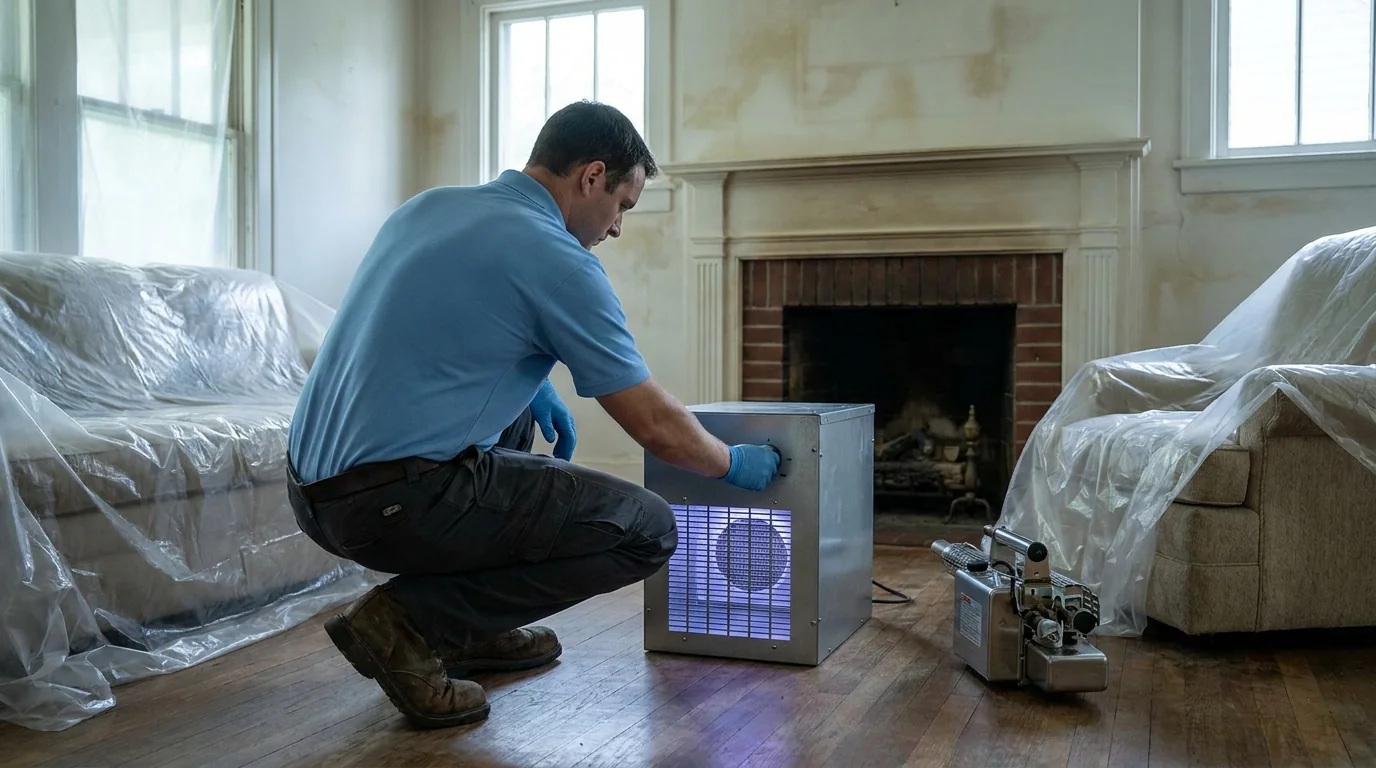
- Thermal fogging penetrates porous materials, wood framing, drywall, upholstery, by converting deodorizing solution into a fine fog that follows the same pathways smoke or sewer gas traveled. It’s particularly effective in the older plaster-and-lath construction common in Port Richmond and St. George.
- Hydroxyl deodorization uses UV-generated hydroxyl radicals to break down odor-causing molecules at a chemical level. Unlike ozone treatment, hydroxyl generators are safe to run in occupied or semi-occupied spaces, which matters in multi-unit buildings where relocating all residents isn’t practical.
- Ozone treatment is reserved for unoccupied spaces with severe smoke or biological odors, it’s highly effective but requires the space to be vacated and properly ventilated before re-entry.
- Encapsulants and sealers are applied to structural wood or concrete surfaces where odor compounds have absorbed deeply and mechanical treatment alone won’t fully neutralize them.
We document each phase with photos and moisture readings, which supports insurance claims and gives you a clear record of what was done.
Reaching Staten Island from Our Local Base
Because The Restoration Group maintains a crew base on the island, we’re not routing through the Goethals or waiting in Outerbridge Crossing traffic to reach you. Jobs in ZIP codes like 10306 (covering New Dorp, South Beach, and Midland Beach) or 10312 (Great Kills, Eltingville) are handled by technicians who are already on-borough. We operate 24/7, so a call at 2 a.m. after a sewer backup or a late-night fire doesn’t mean waiting until morning for someone to drive in from New Jersey.
Local Note: What Older Staten Island Homes Do to Odor Treatments
One thing crews learn quickly on Staten Island: the plaster walls in pre-1950 homes in neighborhoods like St. George and Port Richmond absorb smoke and sewer odors differently than modern drywall. The plaster itself is dense and slow to off-gas, which means a single thermal fogging pass often isn’t enough, the fog needs time to dwell, and a follow-up hydroxyl treatment over 24 to 48 hours is frequently necessary to pull the remaining odor out of the wall mass. Skipping that second step is the most common reason a homeowner calls a second company after the first one said the job was done.
If you’re dealing with a persistent smell in a home built before 1960, plan for a two-phase treatment and don’t let anyone tell you a single afternoon of fogging will be sufficient.
If the smell in your home or commercial property isn’t going away on its own, it won’t. Call The Restoration Group at (855) 650-7422, our Staten Island-based team will assess the source, explain the treatment options honestly, and get the work done right the first time.
Serving Staten Island from our Fair Lawn headquarters — ★ 4.8 · 166 Google reviews
“Prompt, knowledgeable, skillful and honest. Highly recommend. They remediated within 24 hours. Total peace of mind restored. Worth every penny.” - Anne, October 2026Read our reviews on Google →
Odor Removal and Deodorization in Staten Island: Service Coverage
Frequently Asked Questions
How fast can you arrive for odor removal and deodorization in Staten Island?
How quickly can your team reach South Beach or Midland Beach for an odor emergency?
The East Shore floods repeatedly — does floodwater odor require different treatment than a typical basement smell?
Are the older plaster-wall homes in St. George and Port Richmond harder to deodorize after a fire?
What's the difference between ozone treatment and hydroxyl deodorization, and which is used in Staten Island multi-unit buildings?
Will my homeowner's insurance cover odor removal after a fire or sewer backup in Staten Island?
Odor Removal and Deodorization response in Staten Island
Most Staten Island calls see a technician on-site within 60 minutes from our Fair Lawn headquarters.