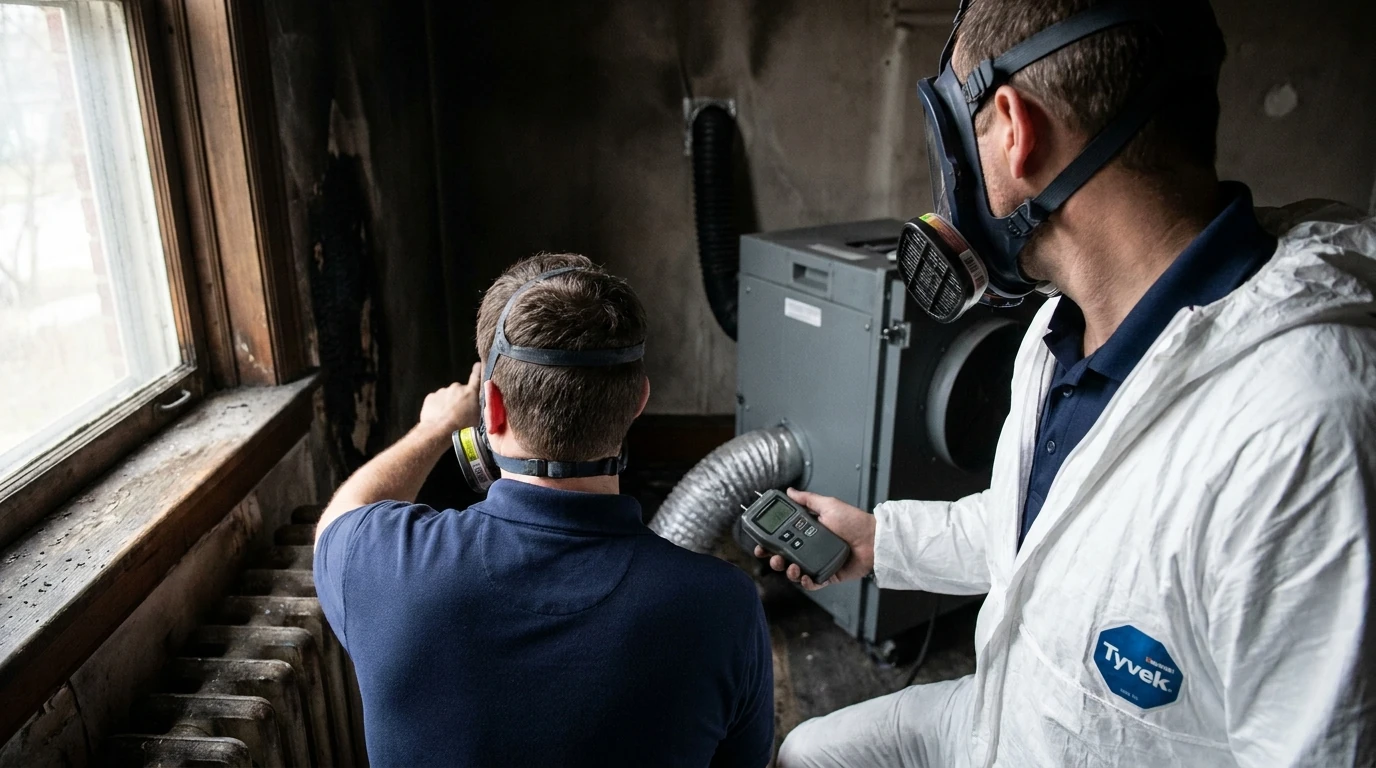
TL;DR: The Restoration Group is an IICRC Certified Firm (#210213) handling fire and smoke damage restoration across Bergen County, including Fair Lawn, since 2021, with an office based in Fair Lawn and phones answered 24/7 at (855) 650-7422. When comparing fire damage restoration companies, the things that actually matter are IICRC certification, a written scope tied to your insurance claim, a documented smoke and soot process, and a crew that can mobilize locally without a long drive. The Restoration Group meets all four.
If a kitchen fire just filled your Radburn colonial with smoke, or a space heater fire scorched a bedroom wall near Warren Point, you’re probably doing the thing every homeowner in this situation does: pulling up a search results page full of company names you’ve never heard of, with no real way to tell them apart. You don’t have time to interview five contractors. You need a short list of what actually separates a qualified fire restoration company from one that’s just good at marketing.
What should you look for in a fire damage restoration company?
Four things matter more than anything else: IICRC certification, a written and itemized scope, a documented smoke and odor process, and real local presence. Everything else, reviews, branding, how fast the website loads, is secondary to those four.
IICRC certification tells you the firm’s technicians are trained to a recognized industry standard for fire and smoke restoration, not improvising technique on your property. A written scope means you get an itemized estimate you can hand to your insurance adjuster, not a verbal number that changes later. A documented odor process means the company has an actual method (not just an air freshener) for getting smoke smell out of drywall, insulation and fabric. And local presence means a crew that knows Bergen County housing stock and isn’t driving an hour to reach you.
The Restoration Group’s fire damage restoration team is an IICRC Certified Firm (#210213), operates from a Fair Lawn office, and provides a written scope before any work starts. One honest limit worth stating up front: the company handles fire and smoke mitigation, cleaning, odor removal and contents restoration, but does not perform structural rebuild or reconstruction. If your loss includes framing or drywall replacement, you’ll need a separate licensed general contractor for that phase, and a company that tells you this up front is one being straight with you.
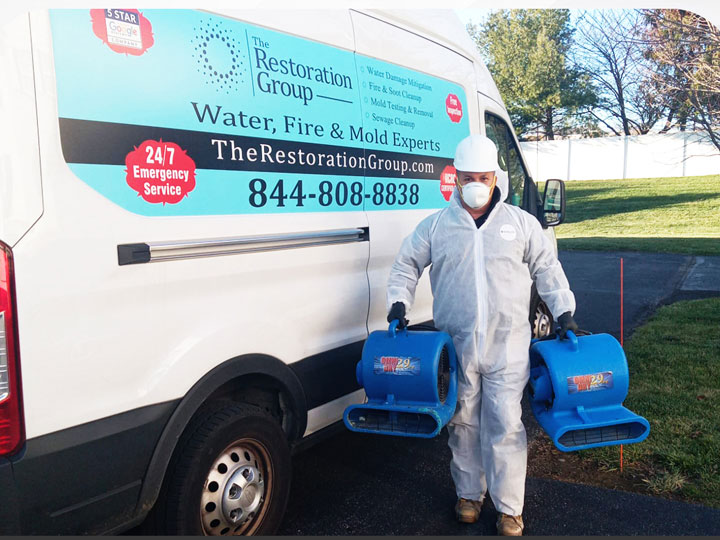
Recent job photo from The Restoration Group.
Why does IICRC certification actually matter for fire and smoke restoration?
IICRC certification means technicians are trained on the specific chemistry of soot and smoke residue, which behaves nothing like water damage and gets worse if handled wrong. Dry smoke from a fast, hot fire leaves a powdery residue that smears if wiped with the wrong cloth. Wet smoke from a smoldering fire leaves a sticky, oily film that needs a different cleaning agent entirely. Protein residue from a kitchen fire can be nearly invisible but carries an intense odor that regular cleaning won’t touch.
The IICRC sets the S700 standard for fire and smoke restoration specifically for this reason: using the wrong method can drive soot deeper into porous materials or leave an odor that resurfaces every time the humidity rises. A certified firm identifies which type of residue you have before choosing a cleaning method, rather than running the same process on every job.
How fast should a fire restoration company respond in Bergen County?
A company with a real local office should be able to reach your property quickly, not route a crew in from across the state. Fair Lawn is one of The Restoration Group’s office locations, so crews based there, along with the Highland Park and Kenilworth offices, cover the borough and nearby Bergen County towns without a long drive.
Speed matters with fire damage differently than it does with a burst pipe. Soot is acidic, and the longer it sits on metal fixtures, appliances and electronics, the more corrosion damage it causes. A window AC unit or stainless refrigerator exposed to smoke for a week looks a lot worse than the same appliance addressed within a day or two. The Restoration Group answers calls 24/7, which matters because most house fires don’t happen on a convenient schedule.
What should a fire damage estimate actually include?
A proper fire damage estimate itemizes the scope by area and task, lists the equipment and labor hours involved, and separates mitigation work from contents handling so your adjuster can match it against the claim. It should not be a single lump-sum number with no breakdown.
At minimum, expect line items for structural cleaning (walls, ceilings, framing where accessible), HVAC and duct assessment if smoke traveled through the system, contents inventory and pack-out for items being cleaned or stored offsite, and an odor removal plan separate from surface cleaning, since smoke smell and soot residue are treated as two different problems. If an estimate skips the contents inventory or bundles odor removal into a vague “cleaning” line, ask why. The Restoration Group’s contents restoration and odor removal process is documented separately in every scope specifically so adjusters can review each piece independently.
If you want a sense of the phases before you call anyone, the fire damage restoration process walks through what happens from the first assessment through final odor clearance.
How does a good fire restoration company work with your insurance adjuster?
A good fire restoration company documents everything before touching anything, photographing and logging damage room by room so the adjuster has a record that matches the claim. That documentation, not a verbal description after the fact, is what gets claims approved without a fight.
This matters because fire claims get scrutinized more than most water losses: insurers want to see pre-existing condition photos, a clear cause-of-loss note, and an itemized scope before they release funds. A company that photographs the loss as part of its standard process, rather than as an afterthought, gives you a stronger position with the adjuster. What to do after a house fire covers the documentation steps worth taking in the first 24 hours, before any restoration crew even arrives.
If your policy details are unclear, does homeowners insurance cover fire damage breaks down what’s typically covered and what isn’t under a standard New Jersey homeowners policy.
When you’re ready to compare options against these four criteria, request a written fire damage estimate and ask every company the same four questions: are you IICRC certified, will the scope be written and itemized, what’s your odor removal method, and where’s your nearest office. The answers will tell you more than any review count.
About The Restoration Group
The Restoration Group is an IICRC Certified Firm (#210213) serving Fair Lawn and the rest of Bergen County, along with Kenilworth and the broader Union County area, since 2021. The company is licensed and insured as an NJ Home Improvement Contractor through the NJ Division of Consumer Affairs, and crews handle fire, smoke and odor restoration, water and flood damage, mold remediation, and related mitigation services across New Jersey, answering calls 24/7.
Need help now? Call The Restoration Group at (855) 650-7422.