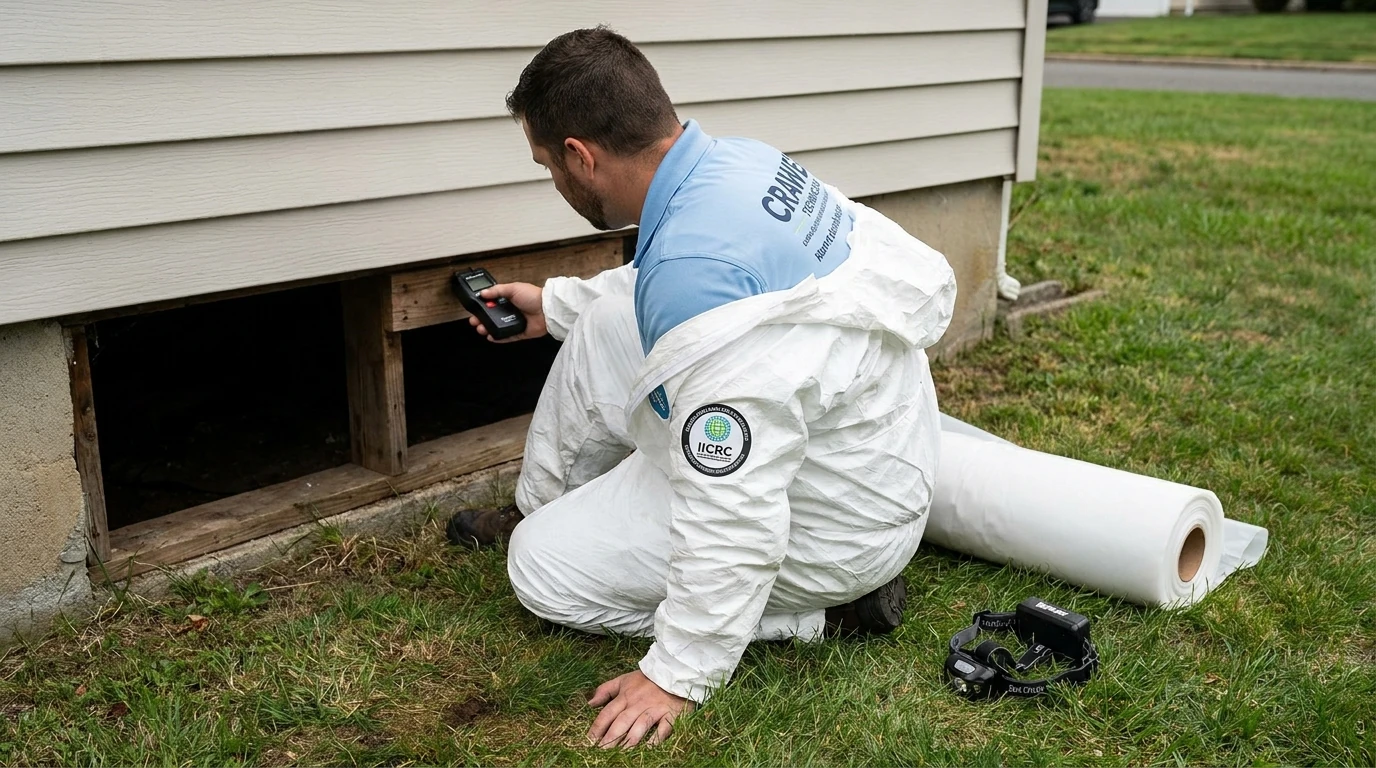
TL;DR: Crawl space encapsulation in Fair Lawn, NJ typically costs $3,500 to $9,500 for an average single-family crawl space, depending on square footage, existing moisture or mold, and whether a dehumidifier and drainage system are added. A standalone vapor barrier costs less, usually $1,500 to $3,000, but it doesn’t seal vents, control humidity, or stop the musty smell the way a full encapsulation system does. Homes with visible mold need remediation first, and that’s a separate line item on top of the encapsulation price.
If you’ve got a crawl space off River Road or near the Saddle River side of town and you’re smelling that damp, musty air every time you open the access hatch, you’re not imagining it. Fair Lawn’s postwar capes and colonials near the Passaic and Saddle River flood zones sit lower to the water table than the Radburn-era homes up the hill, and a lot of them vent straight to the outside air, which is exactly how summer humidity turns a crawl space into a mold incubator. You’ve probably gotten a quote or two already and noticed the numbers swing wildly. Here’s what actually moves that price.
How Much Does Crawl Space Encapsulation Cost in Fair Lawn, NJ?
Most Fair Lawn homeowners pay between $3,500 and $9,500 for a full crawl space encapsulation, with the final number depending mostly on square footage, moisture severity, and whether a dehumidifier gets added to the scope. A small, dry, easy-access crawl space lands at the low end; a large, wet, low-clearance space with mold or standing water history lands at the high end.
These figures reflect typical industry pricing across northern New Jersey, not a fixed quote. Every crawl space is a different shape, a different access point, and a different moisture history, so a written, itemized scope after an in-person inspection is the only way to get a real number for your house.
| Scope | Typical Cost Range |
|---|---|
| Vapor barrier only (6 to 12-mil poly, unsealed) | $1,500 - $3,000 |
| Standard encapsulation (12 to 20-mil liner, sealed seams, vents closed) | $3,500 - $7,000 |
| Full encapsulation plus dehumidifier | $5,500 - $9,500 |
| Full encapsulation plus mold remediation first | $8,000 - $15,000+ |
| Add: interior perimeter drain or drainage matting | +$1,000 - $3,000 |
| Add: sump pump install or upgrade | +$1,200 - $2,500 |
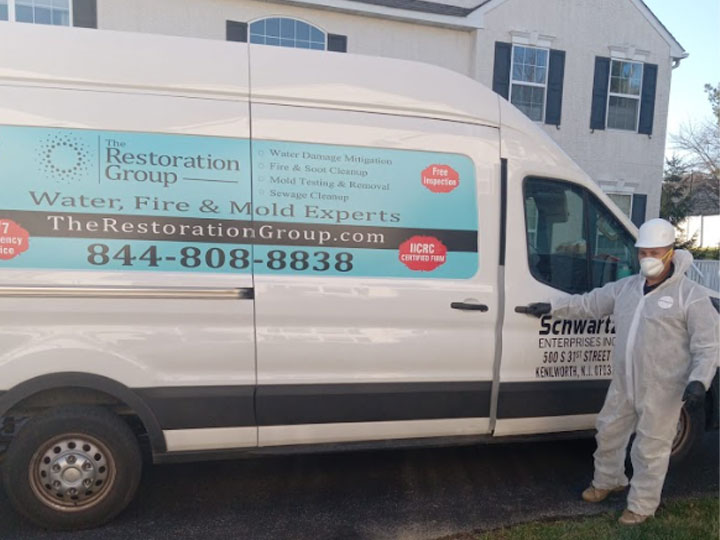
Recent job photo from The Restoration Group.
Vapor Barrier vs. Full Encapsulation: What’s the Price Difference?
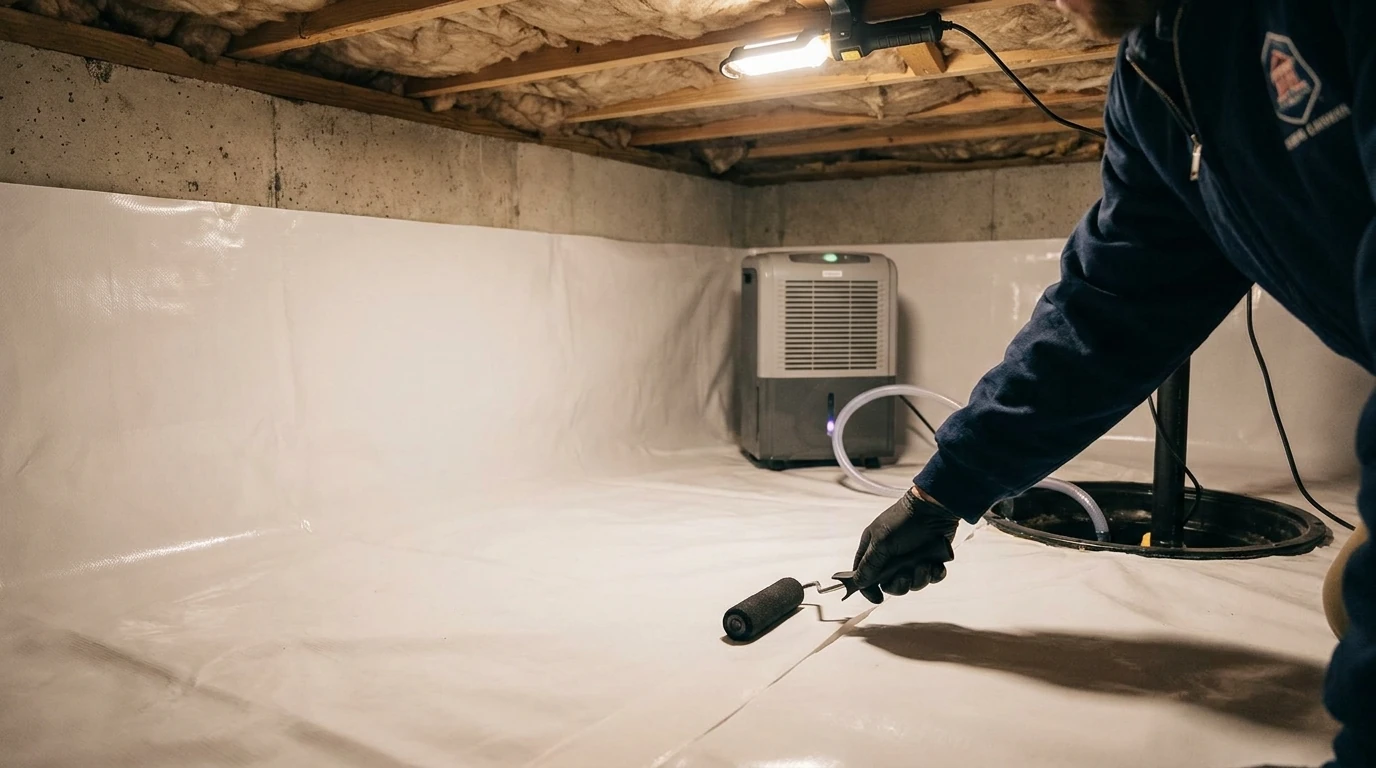
A vapor barrier is a layer of plastic sheeting laid loosely across the crawl space floor; full encapsulation seals that same material up the foundation walls, tapes every seam, closes the foundation vents, and usually adds a dehumidifier, which is why it costs two to three times more.
The cheaper vapor-barrier-only approach blocks ground moisture from rising into the space, but it leaves the foundation walls and vents open to humid outside air. In a river-adjacent town like Fair Lawn, that outside air in July and August is often more humid than the soil underneath, which means a bare floor liner alone doesn’t stop condensation on joists or musty odor. Full encapsulation treats the crawl space as a sealed, conditioned part of the building envelope, which is the approach the U.S. Department of Energy recommends for crawl spaces in humid climates.
What Drives the Price of Crawl Space Encapsulation?
Square footage and crawl space height are the biggest cost drivers, because a low, tight crawl space takes a crew longer to work in than one you can kneel comfortably inside. Beyond size, five factors move the number most:
- Current moisture condition. Standing water, active leaks, or soaked insulation have to be addressed before the liner goes down.
- Existing insulation removal. Old fiberglass batts sagging off the joists usually need to come out, which adds labor and disposal cost.
- Access point size. Many Fair Lawn capes near River Road and Warren Point have small, original crawl space hatches that slow material staging.
- Vent and door count. Each foundation vent that needs a sealed cover adds a small per-unit cost.
- Drainage needs. Homes that take on water during heavy storms, which is a recurring issue for low-lying blocks near the Passaic and Saddle River, often need an interior drain line or sump pump tied into the system, not just a liner.
Does Mold Need to Come Out Before Encapsulation?
Yes. Sealing a liner over active mold growth traps the problem instead of solving it, so any visible mold or musty, persistent odor needs remediation before encapsulation starts. A reputable contractor won’t install a vapor barrier over contaminated wood framing, because the moisture that caused the mold is still present underneath the new liner.
Remediation generally follows the IICRC S520 mold remediation standard: containment, HEPA air scrubbing, removal of non-salvageable material, and a biocide or antimicrobial treatment of structural wood, followed by a clearance check before encapsulation begins. If you’re not sure whether what you’re smelling is mold or just mildew-level humidity, a professional moisture and air-quality inspection settles it before you spend money sealing the space. Our guide on how quickly mold grows after water damage walks through the timeline if your crawl space had a recent flood or leak event.
A dehumidifier isn’t always required, but in a town where the water table sits close to the surface along River Road and Saddle River Road, most crawl spaces need one to hold relative humidity under the 50 to 55 percent range that keeps mold from coming back. Skipping it to save money on a chronically damp crawl space usually means a callback within a year or two.
Will Homeowners Insurance Cover Any of This?
Standard homeowners insurance typically does not cover crawl space encapsulation on its own, because insurers treat it as a preventive home improvement rather than storm or water-damage repair. That changes if the encapsulation is part of the repair scope after a covered loss, like a burst supply line that flooded the crawl space.
In that scenario, the water extraction, drying, and any mold remediation tied directly to that sudden loss may be covered under your dwelling or additional-living-expense coverage, subject to your deductible and policy language, while the encapsulation upgrade itself is usually billed separately as an improvement. Documentation matters either way: moisture readings, photos, and a written scope of work are what an adjuster needs to see to process a claim cleanly.
What Happens During a Crawl Space Encapsulation Job?
A typical job runs in five phases: inspection and moisture mapping, remediation of any existing mold or wet material, cleaning and drying the space, installing the sealed liner and vapor barrier up the walls, and sealing vents and termination points before a final moisture check. A dehumidifier and drainage components, when included, get wired and plumbed in during that same visit.
The inspection phase is where the scope actually gets written, using a moisture meter at the sill plate and joists plus a visual check for existing mold, pest activity, and standing water. If your Fair Lawn home has had water intrusion in the crawl space before, especially from storm events near the Saddle River or Passaic River, that history shapes whether drainage or a sump pump gets added to the plan.
If your crawl space has that persistent musty smell, visible moisture on the joists, or a history of flooding near River Road or the Saddle River, get a written moisture assessment before the problem spreads into the floor framing above it. Call The Restoration Group at (855) 650-7422 to schedule a crawl space inspection, and you’ll get an itemized scope before any work starts, not a guess.
About The Restoration Group
The Restoration Group is an IICRC Certified Firm (#210213) and a NJ Licensed Home Improvement Contractor serving Kenilworth and the broader northern and central New Jersey region since 2021. Crews handle crawl space encapsulation, mold inspection and remediation, water damage restoration, and related restoration services across Bergen, Union, and surrounding counties, with a 4.8 Google rating across 164 reviews.