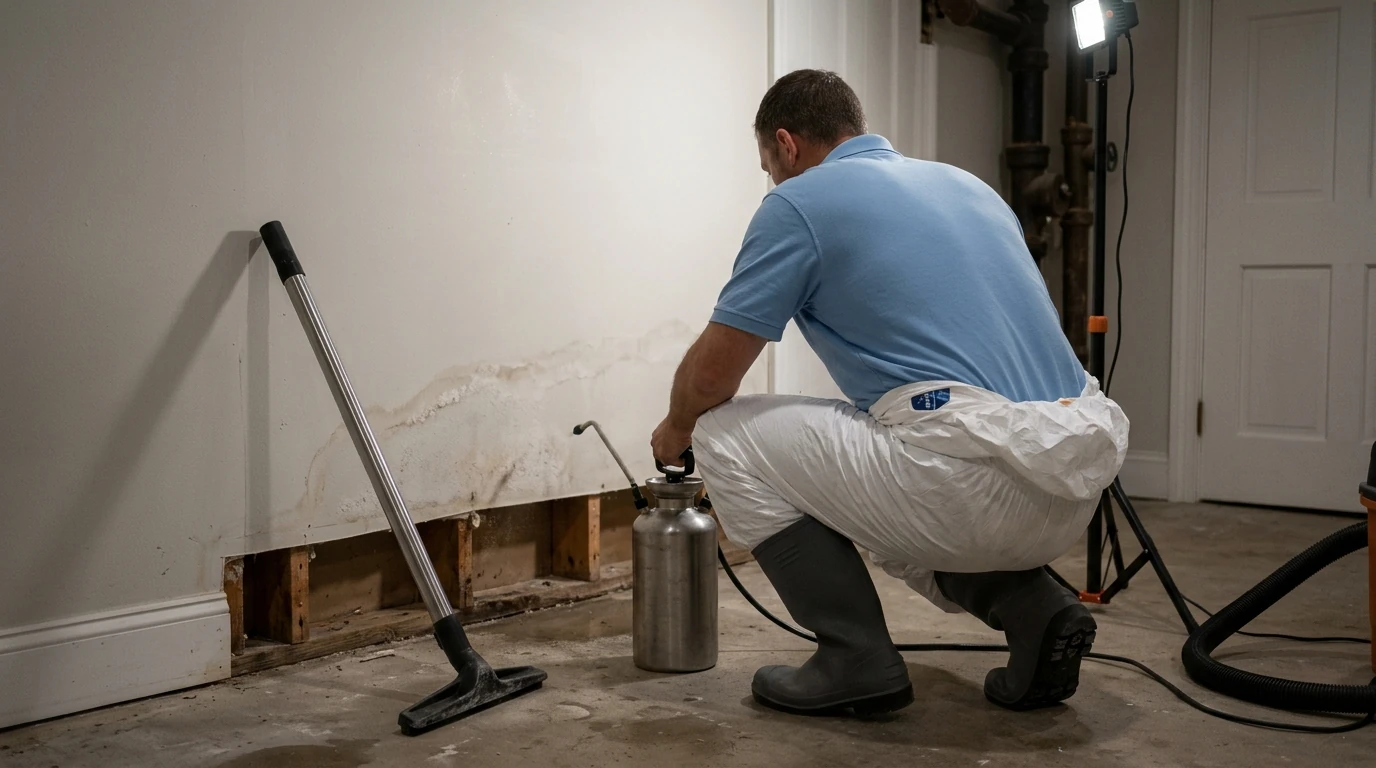
TL;DR: Sewage backup cleanup in Fair Lawn, NJ typically costs between $750 and $15,000, depending on how much contaminated material has to be removed and how far the water spread. A small, contained backup on a hard floor lands toward the low end. A finished basement with soaked carpet, baseboards and drywall lands toward the high end. The biggest factors are how much porous material has to come out, the square footage affected, and how quickly cleanup starts.
If a toilet or floor drain in your Fair Lawn basement just backed up and you’re standing over gray-brown water trying to figure out what this is going to cost, you’re not alone. Fair Lawn’s older housing stock, especially the aging cast-iron drains and clay sewer laterals under the 1920s and ’30s Radburn homes and the postwar capes near River Road and Saddle River Road, backs up more than most towns after a hard rain. What you’ll pay depends mostly on how far the water reached and how long it sat before cleanup began.
How much does sewage backup cleanup cost in Fair Lawn, NJ?
Most sewage backup cleanups in Fair Lawn run $750 to $15,000, with a typical finished-basement loss landing between $3,500 and $8,000. The single biggest driver is how much porous material, carpet, drywall, insulation, has to be thrown out rather than dried and reused.
| Scenario | Typical cost range |
|---|---|
| Small, contained backup (bathroom floor, hard surface, quick response) | $750 - $2,500 |
| Finished basement, carpet and baseboard removal | $3,500 - $8,000 |
| Finished basement, drywall and insulation removal required | $6,000 - $12,000 |
| Larger or multi-room loss with extensive demolition | $10,000 - $15,000+ |
| Antimicrobial treatment and odor control (add-on) | $300 - $900 |
| Post-cleanup verification testing | $200 - $500 |
A backup caught within an hour, before it soaks into drywall and flooring, almost always costs less than one that sat overnight. Standing sewage wicks upward through drywall and baseboards fast, and every extra foot of material that has to come out adds labor, disposal fees and drying time. Every job is different; a written scope before work begins is the only way to know your actual number.
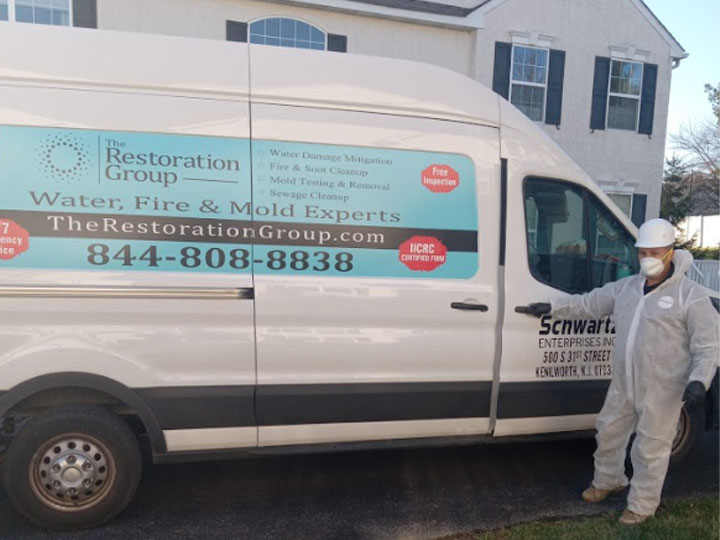
Recent job photo from The Restoration Group.
Why does sewage cleanup cost more than clean water cleanup?
Sewage backup is classified as Category 3 water, the most contaminated category under the ANSI/IICRC S500 standard, and that classification is what drives the higher cost. Category 3 water contains bacteria, viruses and other pathogens, so far less of the structure can simply be dried and put back into service.
A clean-water loss, like a burst supply line, often lets a crew dry drywall and subfloor in place. A sewage backup usually means cutting out and bagging the materials the water touched, using full PPE, running containment, and applying antimicrobial treatment before anything gets dried. That extra labor, disposal and material cost is the real reason a sewage job runs higher than a comparable clean-water job of the same size, something we also cover in our basement flooding cost guide.
What has to be removed after a category 3 sewage loss?
Most porous materials that contacted sewage water get removed rather than cleaned, because they can’t be reliably sanitized. That typically includes carpet and pad, drywall up to the waterline plus a margin above it, wall insulation, and particleboard cabinetry or baseboards that absorbed water.
Hard, non-porous surfaces, concrete, tile, and solid wood doors or trim, can usually be cleaned and disinfected in place rather than discarded. Once the contaminated material is out and the space is cleaned and treated, the drywall and flooring that were removed need to be replaced by a contractor. That rebuild step is separate from the cleanup and sanitizing work itself.
Does homeowners insurance cover sewage backup cleanup?
Most standard homeowners policies do not cover sewer or drain backup unless you’ve added a water backup (sewer/sump) endorsement, a separate add-on most carriers sell for a modest additional premium. Without that endorsement, cleanup after a sewage backup is typically an out-of-pocket cost.
If you do carry the endorsement, it usually comes with its own coverage limit separate from your main dwelling coverage, so check your declarations page for the actual number rather than assuming full coverage. According to the Insurance Information Institute, backup and overflow from sewers and drains is one of the most commonly excluded perils on a standard policy. Photographing the damage before anything is removed, and keeping the invoice from cleanup, protects whatever claim you do have.
How long does sewage cleanup take?
A typical residential sewage backup takes two to five days from the first phone call to a dry, sanitized space, though larger losses with more demolition can run longer. The timeline has four parts: extraction and removal, cleaning and antimicrobial treatment, structural drying, and a final check before rebuild work starts.
- Extraction and removal (day one): standing water is pumped or extracted, contaminated materials are cut out and bagged for disposal.
- Cleaning and antimicrobial treatment: remaining surfaces are cleaned and treated to address bacteria and odor-causing residue.
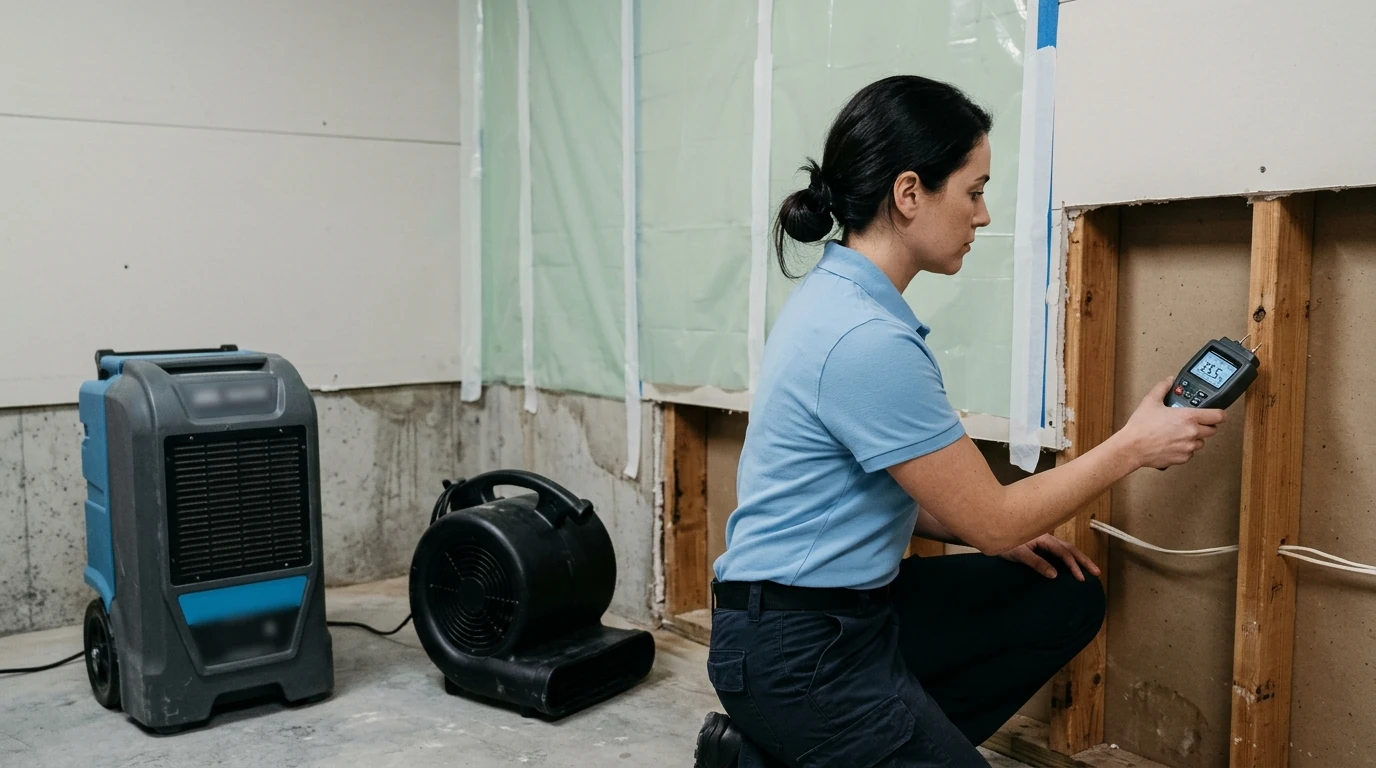
- Structural drying (typically two to four days): air movers and dehumidifiers run continuously while a technician logs moisture readings until the space reaches a dry standard.
- Final check: moisture levels are confirmed before any rebuild work begins.
What should you avoid doing yourself after a sewage backup?
Handling sewage water yourself puts you in direct contact with bacteria and pathogens that a basement, laundry room or crawl space wasn’t built to contain. Wading through it, running a shop vac not rated for the job, or trying to dry Cat 3-soaked drywall with box fans usually spreads contamination further into the home rather than solving it.
It’s also easy to miss water that has traveled behind baseboards or under flooring, which leaves hidden contamination and sets up conditions for mold within 24 to 48 hours of a wet material staying wet, per the EPA. Our guide on who to call for a sewer backup in Fair Lawn walks through the decision tree in more detail.
For a backup that’s reached finished living space, or sat for more than a couple of hours, Call The Restoration Group at (844) 808-8838 for a same-day assessment and a written scope before any work begins.
About The Restoration Group
Founded in 2021 and based in Fair Lawn, NJ, the company is an IICRC Certified Firm (#210213) with crews covering northern and central New Jersey. It holds an NJ Home Improvement Contractor registration with the state Division of Consumer Affairs and answers calls 24/7. The team handles water, sewage, fire, mold and storm mitigation work across the region, including the sewage and basement flooding calls common to Fair Lawn’s older housing stock.