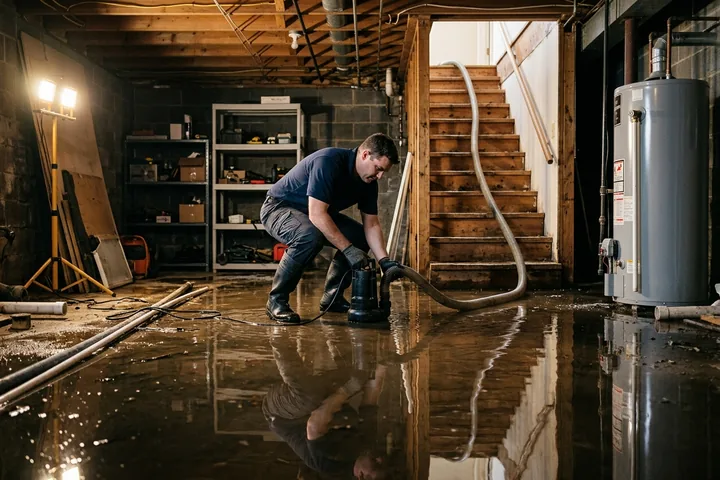
Basement Flood Cleanup in Cranford
24/7 basement flood cleanup in Cranford, NJ. IICRC-certified, insurance billing accepted. Call (855) 650-7422.
Our IICRC-certified technicians are dispatched from our Fair Lawn, NJ headquarters and are typically on-site in Cranford within 60 minutes of your call.
The Rahway River doesn’t just define Cranford’s character, it defines its flood risk. Homes along Riverside Drive have watched the river climb their basement stairs during Floyd, Irene, and Ida, while properties further inland on streets like those near Sunny Acres deal with a different but equally damaging problem: storm sewers that simply can’t keep pace with a heavy rain event. When your basement is holding water, the clock matters more than the cause. The Restoration Group is IICRC Certified (Firm #210213), operates 24/7, and reaches Cranford from our Kenilworth headquarters in minutes.
Why Cranford Properties Flood the Way They Do
Cranford has earned its nickname, the Venice of New Jersey, and with it, the most documented repeat-flood history in Union County. But the flooding pattern here splits into two distinct problems that require different approaches.
Along the Rahway River corridor, especially the Riverside Drive area, the threat is direct inundation. When the river crests, water enters basements through window wells, floor drains, and foundation walls, sometimes faster than any sump pump can handle. These properties have often flooded multiple times, and the cumulative effect on masonry foundations, floor joists, and mechanical systems is significant.
Further from the river, through Downtown Cranford and into neighborhoods like Lincoln Park East, the culprit is usually overwhelmed municipal storm infrastructure. Heavy rainfall saturates the ground faster than the sewer system can accept it, and hydrostatic pressure forces water through foundation cracks and floor-drain backflows. The water source is different, but the damage to finished basement spaces, stored belongings, and structural assemblies is just as real.
The housing stock compounds both problems. Most of Cranford’s homes were built between roughly 1900 and the 1940s, full-basement colonials and capes with stone or poured-concrete foundations, cast-iron drain lines, and in some cases original clay-tile sewer laterals. These older systems weren’t designed for the intensity of rainfall events that have become more common, and they don’t shed water the way modern waterproofed foundations do.
Our Basement Flood Cleanup Process in Cranford
Every basement flood cleanup starts with an honest assessment of what you’re dealing with, water category, affected materials, and hidden moisture that surface readings won’t catch. Here’s how the process typically unfolds:
Water extraction comes first. Truck-mounted and portable extraction units remove standing water from the basement floor, and we check beneath any floating or buckled flooring for pooling underneath.
Moisture mapping follows immediately. In Cranford’s older homes, stone and poured-concrete foundations absorb water into the wall assembly itself, not just the surface. Thermal imaging and penetrating moisture meters tell us where the water actually went, not just where it’s visible.
Structural drying uses industrial air movers and refrigerant dehumidifiers calibrated to the conditions in the space. Basements in pre-war homes often have lower ceiling heights and limited airflow, which affects equipment placement and drying timelines.
Antimicrobial treatment is applied to affected surfaces. In a climate like northern New Jersey’s, humid summers, freeze-thaw winters, mold can begin colonizing porous materials within 24 to 48 hours of a flood event. Treating early is far less disruptive than remediating later.
Documentation runs throughout the entire process. We photograph affected materials, log moisture readings at each inspection interval, and compile a complete loss record. For Cranford homeowners with National Flood Insurance Program (NFIP) policies, which are common here given the community’s flood zone designations, thorough documentation is what gets claims paid.
Reaching Cranford from Kenilworth
Our Kenilworth headquarters sits directly adjacent to Cranford, the two towns share a border. That proximity matters when a basement is actively taking on water at 2 a.m. after a nor’easter stalls over Union County. We respond 24 hours a day, every day of the year, and the short drive means equipment arrives quickly regardless of which part of the 07016 ZIP code you’re in, whether that’s near Nomahegan Park on the western edge of town or closer to the Cranford Canoe Club along the river.
Cranford Insurance & NFIP Coordination
Cranford’s flood history means a meaningful portion of homeowners here carry NFIP policies in addition to, or instead of, standard homeowners coverage. NFIP claims have specific documentation requirements that differ from private carrier claims: itemized content lists, moisture logs with dates and readings, and clear before-and-after photographic records of structural materials.
We’re familiar with that process. We document losses in a format that supports the adjuster’s site visit, and we can communicate directly with your carrier or NFIP adjuster to clarify scope. We do not make coverage decisions or guarantees, that’s between you and your insurer, but we make sure the paperwork doesn’t become the obstacle.
Local Note
One thing that catches homeowners off guard in Cranford’s older full-basement homes: the original clay-tile floor drains common in pre-1950 construction can backflow during a sewer surcharge event and then reseal on their own once pressure equalizes, leaving no obvious source for the water that’s already on the floor. If your basement flooded during heavy rain but you can’t find where the water came in, that drain is often the answer. We check drain condition and backflow valve status as part of every assessment, because missing that detail means the next storm brings the same result.
If your basement is holding water, or just finished drying out from the last storm, call The Restoration Group at (855) 650-7422. We know Cranford’s flood patterns, we carry the certifications your insurer expects, and we’re available around the clock because the Rahway River doesn’t wait for business hours.
Serving Cranford from our Fair Lawn headquarters — ★ 4.8 · 160 Google reviews
“Great customer service. I was kept well informed throughout the entire process. I received nothing but respect and sympathy from everyone I dealt with.” — Ryan, July 2026Read our reviews on Google →
Basement Flood Cleanup in Cranford: Service Coverage
Frequently Asked Questions
How fast can you arrive for basement flood cleanup in Cranford?
Are homes along the Riverside Drive area more likely to need repeated basement flood cleanups?
How quickly can The Restoration Group reach a flooded basement in Cranford's 07016 ZIP code?
My basement near Downtown Cranford flooded during heavy rain but I can't find where the water came in — is that normal?
Does carrying an NFIP policy change what documentation you provide after a basement flood cleanup in Cranford?
How long does structural drying typically take in Cranford's older full-basement homes?
Will my homeowners insurance cover basement flood cleanup in Cranford?
Basement Flood Cleanup response in Cranford
Most Cranford calls see a technician on-site within 60 minutes from our Fair Lawn headquarters.