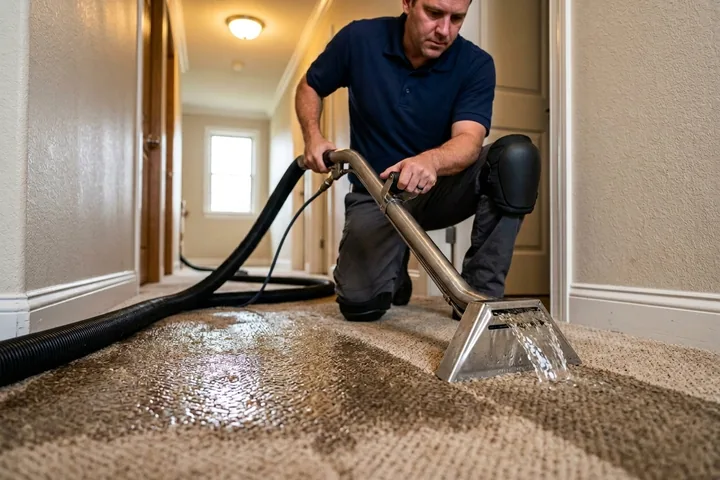
Water Cleanup in Plainfield
24/7 water cleanup in Plainfield, NJ. IICRC-certified, insurance billing accepted. Call (855) 650-7422.
Our IICRC-certified technicians are dispatched from our Fair Lawn, NJ headquarters and are typically on-site in Plainfield within 60 minutes of your call.
When Green Brook or Cedar Brook backs up after a heavy rain, Plainfield basements fill faster than most homeowners expect, and in a city where finished lower levels are the norm and Victorian-era plumbing is still doing daily work, that water doesn’t stay contained to one corner. The Restoration Group responds 24/7 from our Kenilworth location, reaching Plainfield ZIP codes 07060, 07062, and 07063 to extract standing water, dry structural assemblies, and document losses before secondary damage sets in.
Why Plainfield Properties See Water Damage Differently
Plainfield’s housing stock tells the story. The Queen Anne and Victorian homes concentrated in the Van Wyck Brooks Historic District were built for a different century, original cast-iron drain stacks, galvanized supply lines, and knob-and-tube-era electrical systems that were never designed to coexist with finished basements and modern appliance loads. When a supply line fails or a floor drain backs up, water finds its way into plaster-and-lath walls that absorb moisture slowly and release it even more slowly. Surface readings can look dry while the lath behind the plaster stays saturated for days.
The brook-adjacent corridors amplify the risk. Ida in 2021 made national news for what it did to New Jersey, and Plainfield’s East Front Street and low-lying neighborhoods near Cedar Brook absorbed some of the worst of it. That storm demonstrated what local contractors already knew: when the brooks crest, water enters from below as well as above, floor drains reverse, sump pits overflow, and the water table pushes through foundation walls that weren’t designed to act as dams.
In the Netherwood and Sleepy Hollow neighborhoods, postwar construction adds a different wrinkle: slab-on-grade sections mixed with partial basements, and HVAC equipment tucked into crawl spaces that flood silently until the damage is already done.
Our Water Cleanup Process in Plainfield
Every job starts with moisture mapping, not assumptions. We use thermal imaging and calibrated moisture meters to find water that has migrated behind walls, under flooring, and into ceiling assemblies, especially important in Plainfield’s older plaster construction, where visible damage routinely underrepresents actual saturation.
From there, the process follows a structured sequence:
- Standing water extraction using truck-mounted and portable units capable of handling the deep, finished basements common throughout Plainfield
- Structural drying with industrial air movers and desiccant or refrigerant dehumidifiers, positioned based on the actual moisture map rather than a standard room layout
- Monitoring and documentation at each visit, with daily moisture readings logged and shared with your insurance adjuster in the format carriers expect
- Controlled demolition when saturated materials, baseboards, drywall, subfloor sections, need to come out to allow proper drying of the framing behind them
As an IICRC Certified Firm (#210213), our drying protocols follow the S500 standard, which matters when an adjuster is reviewing whether the work was performed correctly.
Reaching Plainfield from Kenilworth
Kenilworth sits roughly three miles from Plainfield’s eastern edge. Via Central Avenue or North Avenue, our crews reach the Front Street corridor and Park Avenue quickly, and the route to Netherwood and the train station area is equally direct. Because we run 24/7, a call at 2 a.m. after a pipe failure in the Crescent Area gets the same crew dispatch as a weekday afternoon loss.
Working with Insurance on Plainfield Water Claims
Water losses in Plainfield frequently involve a coverage question that catches homeowners off guard: standard homeowner policies cover sudden and accidental discharge (a burst pipe, an appliance failure) but typically exclude gradual seepage or flood events. The Ida flooding, for example, required separate flood coverage through NFIP or a private flood policy, and many Plainfield homeowners discovered that gap after the fact.
We photograph and document losses from the first hour on-site, generating the moisture logs, scope of work, and photo documentation that carriers need to process a claim. We bill most major carriers directly and can communicate with your adjuster throughout the project so you’re not translating between restoration and insurance language.
Local Note
Plainfield’s historic plaster walls behave differently from modern drywall during drying, a detail that matters for how we set equipment and how long we plan for the job. Plaster is denser and more alkaline than gypsum board, which means it buffers moisture and releases it gradually. In the Van Wyck Brooks Historic District and similar blocks of pre-1940 construction, we typically extend drying cycles and take more conservative final readings before clearing a structure, because a wall that reads 12% moisture content in plaster is not the same as a wall that reads 12% in drywall. Pulling equipment too early in these homes is one of the most common reasons mold colonizes behind a surface that looked fine at closeout.
If you’re dealing with standing water, a flooded basement, or a slow leak that’s been running longer than you realized, call (855) 650-7422. We’ll assess the actual extent of the damage, not just what’s visible, and get drying underway before the timeline for secondary damage closes in.
Serving Plainfield from our Fair Lawn headquarters — ★ 4.8 · 160 Google reviews
“Teams were very prompt and respectful.. company responded quickly and kept in touch” — Peggy, August 2026Read our reviews on Google →
Water Cleanup in Plainfield: Service Coverage
Frequently Asked Questions
How fast can you arrive for water cleanup in Plainfield?
How quickly can The Restoration Group reach the East Front Street or brook-adjacent areas of Plainfield after a flooding call?
Are homes in the Van Wyck Brooks Historic District harder to dry out after water damage?
My Plainfield basement flooded during a heavy rain — is that covered by my homeowner's insurance?
What's the risk of mold after a water loss in Netherwood or Sleepy Hollow homes?
What equipment do you use for standing water removal in Plainfield's deep finished basements?
Water Cleanup response in Plainfield
Most Plainfield calls see a technician on-site within 60 minutes from our Fair Lawn headquarters.